IN Brief:
- Portsmouth Water has appointed Clancy for pumping and pipeline works valued at £26.84m.
- An 8.5km treated-water connection will have a design transfer capacity of 32.4 million litres per day.
- Construction is scheduled from December 2026 to early 2030, with selected trenchless sections intended to limit disturbance.
Clancy has been appointed by Portsmouth Water to deliver a £26.84m pumping station and pipeline package serving the Havant Thicket Reservoir development in Hampshire. The work will create a route for distributing treated drinking water from Farlington Water Treatment Works, linking new storage capacity to the wider network that supplies customers across the region.
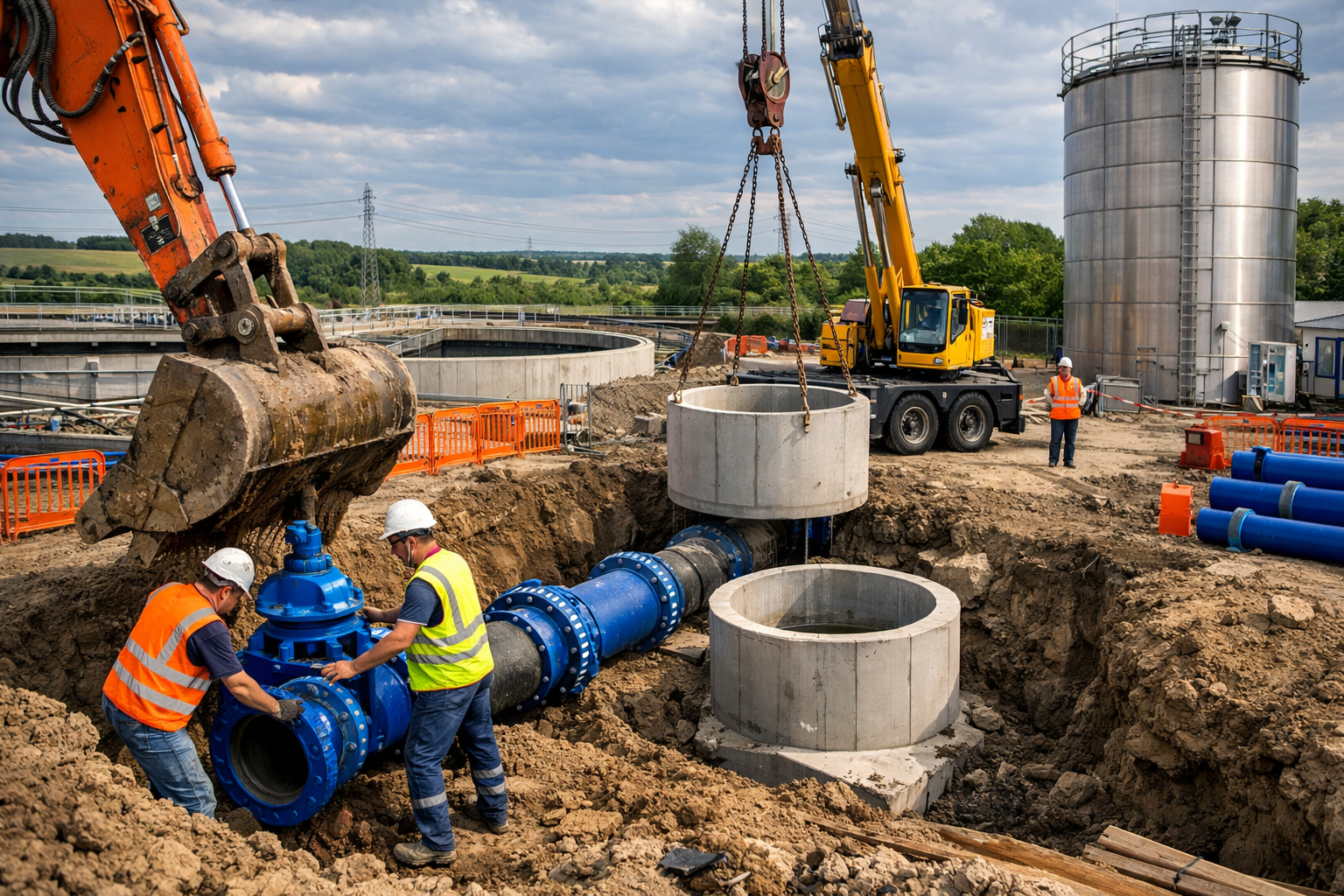
Clancy’s scope includes a new pumping station at Farlington Water Treatment Works and approximately 8.5km of pipeline to treated-water storage, including Nelson Service Reservoir north of Portchester. The connection is designed to transfer up to 32.4 million litres of potable water each day. Construction is expected to begin in December 2026, with the works scheduled for completion in early 2030.
Portsmouth Water’s approved scheme separates the storage and treatment stages from the subsequent movement of potable water. Raw water held in the Havant Thicket reservoir will be transferred to Farlington for treatment to drinking water standards. The new connection being delivered by Clancy will then move treated water onwards through the network, allowing it to be used as part of a wider programme intended to reduce abstraction from the River Test and River Itchen.
The Clancy connection therefore serves the treated-water distribution system, not the untreated-water transfer into Farlington. Its pumping equipment, pipeline integrity and commissioning must be appropriate for drinking water that has already passed through treatment. Portsmouth Water has not specified the pipe diameters, pump configuration or control architecture in the announcement, so those details should not be inferred from the published capacity.
Much of the planned pipeline route crosses farmland rather than highways, a choice Portsmouth Water says will limit disruption. At selected points, the contractor intends to use trenchless installation methods instead of continuous open excavation. Crossings constructed in this way still need launch and reception areas, suitable ground conditions, and coordination around buried services, even where disturbance at the surface can be reduced.
The contract also requires a sequence of temporary works, site access, excavations, pipe jointing, pressure testing, connections to existing assets, and integration of the pumping station. Civil construction must be coordinated with the mechanical and electrical installation and the eventual commissioning of the treated-water connection. The length of the programme reflects more than the installation of pipe: the infrastructure must function reliably with operating water assets at both ends.
Clancy plans to use directly employed teams and specialist local suppliers, and has identified lower impact construction methods and materials as part of its approach. The contractor has mentioned what it calls ‘no-carbon concrete’, but neither a mix design nor a verified carbon assessment has been provided. Until a product specification and assessment boundary are established, that phrase should be treated as a proposed material claim rather than evidence that the works will have zero embodied emissions.
Bob Taylor, chief executive of Portsmouth Water, said the company had sought an alignment that limited disturbance while recognising that works of this duration and scale would still affect some communities. The water company intends to hold meetings and drop-in sessions during delivery, allowing residents and affected land users to be informed about the route and planned construction activity.
The contract follows the reservoir’s 2021 planning permission and runs alongside the main storage construction programme. Building the reservoir, transferring its untreated water to Farlington and pumping treated water onwards are separate engineering activities with different testing and operating requirements. The service reservoirs and connections must be commissioned before the additional storage capacity can support the intended drinking water network operation.
Portsmouth Water describes the reservoir as the first new reservoir to be built in the UK for more than 30 years. Its purpose includes reducing pressure on the two Hampshire chalk streams by creating an additional water resource for the region. Whether the abstraction benefits are realised depends on completion and operation of the associated transfer and treatment assets as well as the reservoir itself.
Infrastructure investor Ancala and a group of banks are providing upfront project funding, with costs to be recovered over time through Southern Water customers’ drinking water bills. The Clancy contract forms part of the approved reservoir programme and is distinct from the separate proposed Hampshire Water Transfer and Water Recycling Project. That separation should remain clear as several water infrastructure schemes are being considered in the same region.
Construction is due to begin in December and continue into early 2030. Installation of the pipeline, completion of the Farlington pumping station and commissioning at the service reservoirs remain the principal delivery steps. Portsmouth Water’s stated transfer capability of 32.4 million litres a day will remain a design figure until the new connection has been completed, tested and placed into operation.