IN Brief:
- New English permitted development rights took effect on 21 October 2026 for qualifying domestic cross-pavement EV charging channels.
- Installations must be carried out or authorised by the relevant highway authority and cannot use the new right in conservation areas, scheduled monuments or listed-building curtilages.
- The reform removes one planning step but does not dispense with highway consents, safe installation, or subsequent pavement reinstatement obligations.
The Department for Transport has confirmed that a new permitted development right for domestic cross-pavement electric vehicle charging came into force in England on 21 October 2026. Qualifying channels set into public footways can now be installed without an individual planning application, provided a highway authority undertakes or authorises the work. The measure forms part of the Town and Country Planning (General Permitted Development) (England) (Amendment) (No. 2) Order 2026, made under the housing department’s planning powers. Separate highway permissions and three location exclusions remain in place.
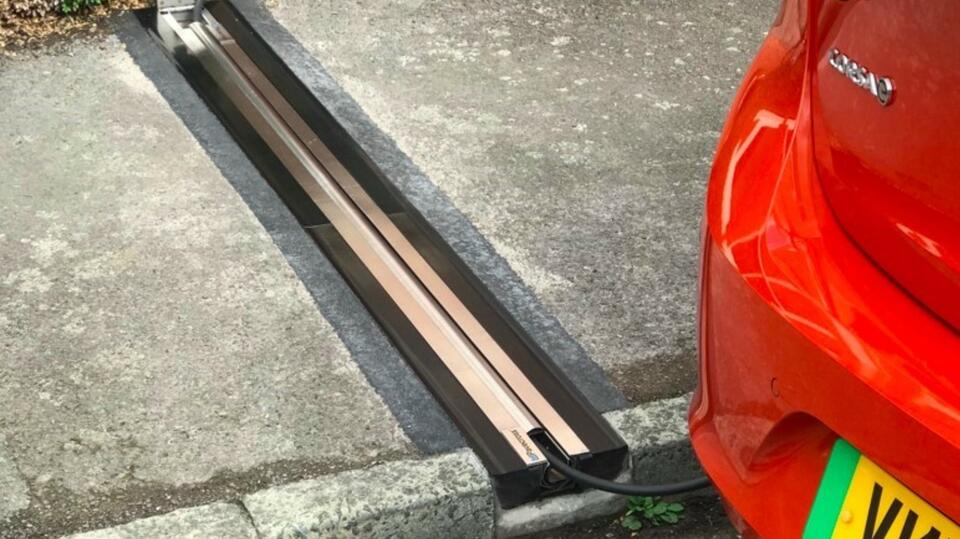
The change concerns households whose vehicles are parked on the street rather than on a driveway. Running a loose charging lead across a footway can obstruct pedestrians, while a purpose-made channel carries the cable within the pavement. The statutory definition is deliberately specific: a cross-pavement solution is an embedded cable channel allowing an electric vehicle charging cable to cross safely from domestic premises to a parked vehicle. The new right therefore does not authorise every form of roadside charger, kerbside electrical cabinet, or cable laid on the surface.
Article 7 of the amendment inserts Class F into Part 9 of Schedule 2 to the General Permitted Development Order. Class F covers installation, alteration, and replacement by a highway authority, on its behalf, or with its authorisation. The highway authority’s role is a condition of the planning right itself, so a householder cannot rely on the order to excavate a public footway independently. Permitted development also does not replace other controls that may apply to highway works, electrical installations, or the physical management of street space.
The physical work typically involves opening a narrow section of footway, fitting the channel, and reinstating a safe walking surface. Local arrangements must account for pedestrian movement, pavement condition, buried services, electrical cable handling, and subsequent maintenance. The legislation does not prescribe a manufacturer’s channel design, an installation specification, or an approval timetable. Highway authorities remain responsible for assessing the individual location and deciding what authorisation and technical conditions are appropriate; the removal of an individual planning application does not guarantee acceptance of every proposal.
Class F cannot be used where the channel would lie within a scheduled monument site, within the curtilage of a listed building, or in a conservation area. These are explicit statutory exclusions rather than discretionary design preferences. The same Class requires the channel to be removed when it is no longer needed and the pavement reinstated to its previous condition as soon as reasonably practicable. Where the new right is unavailable, any installation would need a separate lawful planning basis as well as the relevant highway approvals.
The amendment also adjusts existing permitted development rights for domestic charging equipment. Changes to Classes D and E of Part 2 address charging outlets and upstands in circumstances involving an authorised cross-pavement solution, subject to the limitations that govern those forms of equipment. A permitted channel should not be treated as blanket approval for a charger, pole, or other structure. Separate amendments address certain electricity infrastructure, including larger substations, but they are distinct from the domestic footway measure.
The Department for Transport estimates that avoiding the planning application could save drivers up to £300. The figure is a potential saving, not a reduction guaranteed to every installation. Households may still have to pay for an approved channel, electrical equipment, the highway authority’s application or authorisation arrangements, and associated reinstatement. Actual feasibility and price will depend on the street, the proposed contractor’s work, and how the relevant local authority administers such schemes.
Existing government guidance for highway authorities addresses ownership, installation, accessibility, liability, maintenance, and interactions with local transport policies. A shallow or narrow channel is still an intervention in public infrastructure, and the pavement must remain usable by wheelchair users, people with pushchairs, and other pedestrians. Contractors need to establish which permissions, inspections, reinstatement standards, and safety procedures apply in that authority’s area. Neither the statutory instrument nor the October transport announcement selects an approved nationwide product or installation technique.
The commencement coincides with separate consultations on charging arrangements for tenants and leaseholders and on provision for covered car parks. Those proposals remain consultations, with responses requested by 16 December 2026; they should not be described as rules that came into force alongside Class F. Building owners, housing developers, and parking operators may have to distinguish the newly permitted pavement channel from proposed changes to building regulations or rights relating to privately managed accommodation.
There is also a transition for some charging equipment that qualified under the previous forms of Classes D or E but ceases to qualify under the amended rules. Article 10 allows defined previously permitted work to proceed until the end of 20 October 2027. That transitional provision is limited to the specified existing rights: it does not waive Class F’s conservation and heritage exclusions, or create a general permission to dig footways for a year without highway authorisation.
The immediate administrative change is the removal of a separate planning application for an authorised, qualifying channel. Local highway authorities must still decide whether a channel can be installed safely at a particular address and who will maintain and eventually remove it. The government’s announcement does not establish a nationwide installation programme or a date by which individual councils must approve applications. Uptake will become measurable through actual local authorisations and completed works rather than through the new planning provision alone.