IN Brief:
- Wolverhampton's £42m New Park Village regeneration will replace ageing maisonettes with 179 council homes across two phases.
- Keon Homes has completed site surveys, utility diversions, a new access road and turning head before beginning the first 98 homes.
- The first phase is expected to take 24 months, with phase two following further demolition and providing another 81 homes.
Keon Homes has moved into the housebuilding phase of Wolverhampton’s £42m New Park Village estate regeneration after completing a programme of underground surveys, utility diversions and road enabling works. The first phase will deliver 98 council homes, forming part of a two-stage replacement of outdated maisonettes with 179 energy efficient properties for affordable rent.
City of Wolverhampton Council confirmed on 22 October that construction had started on the new homes following demolition of the first blocks of 1960s maisonettes last year. Before building work could proceed, the contractor had to establish the layout of existing services and coordinate diversions affecting water, gas, electricity and telecommunications infrastructure. It has also installed a new road and turning head to provide access to the redevelopment area.
Replacing homes on an occupied estate places unusual demands on site preparation. The underground surveys established where existing water, gas, power and communications routes crossed the proposed building areas; the diversions then had to be coordinated with the new road and turning head. Those activities determine where foundations, construction traffic and subsequent service connections can be accommodated without treating the estate as an empty site. The council has not itemised the cost or detailed sequence of individual utility works.
The first 98 homes are scheduled to be constructed over the next 24 months. Only after that initial phase does the council plan to demolish the remaining maisonettes and build the further 81 properties. The two-stage approach makes demolition and the release of later building plots dependent on the wider estate programme. Although the council gives a clear numerical split, it has not supplied individual handover dates, a confirmed sequence of tenant moves or a separate completion date for phase two.
Planned homes range from one to four bedrooms and carry a target energy performance certificate rating of B. That is a specification for the new properties, rather than an assessment of buildings already handed over. Achieving it will require the completed insulation, glazing, ventilation and heating systems to work together as designed; thermal bridging at junctions and poorly coordinated service penetrations can undermine the performance of otherwise well insulated building fabric. No as-built ratings for the first 98 homes have yet been reported.
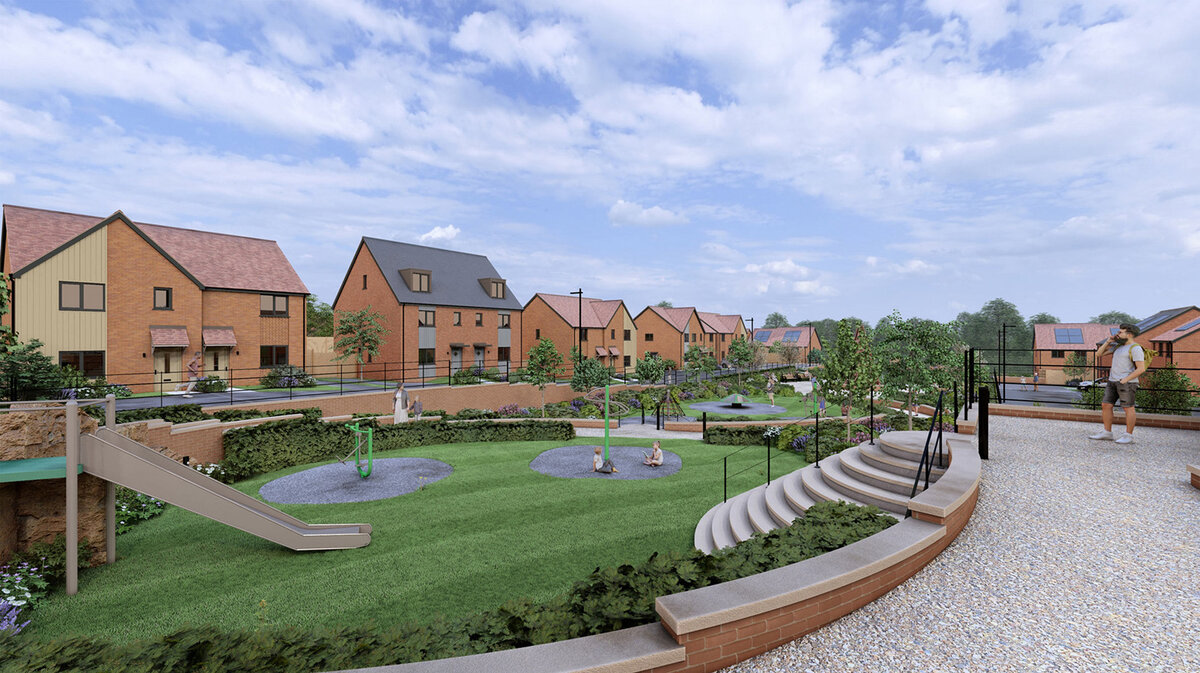
Alongside the dwellings, the council proposes additional parking, a redesigned central public space, a children’s play area, outdoor gym equipment and seating. A new office for the New Park Village Tenant Management Cooperative is also part of the estate-wide programme. The public areas and estate services will have to be delivered around construction access and the properties that remain occupied, with the final layout dependent on completion of the adjoining residential phases.
Seven one-bedroom wheelchair accessible council bungalows on Longford Road have already been completed and occupied under an earlier part of the masterplan. They are additional context for the redevelopment, not part of the newly commenced 98-home phase. The council previously reported EPC A ratings for those bungalows, but their measured or assessed performance provides no evidence that the planned EPC B homes have yet met their own target.
Allocation of the replacement homes will follow the estate’s local lettings plan. Existing New Park Village tenants receive first priority, with any remaining properties made available to other people on the local housing register. The council has set out that priority order, but has not published a house-by-house relocation timetable in its 22 October construction update; the practical arrangements should therefore not be inferred from the two construction phases alone.
Funding is being drawn from Wolverhampton’s Housing Revenue Account capital programme, alongside support from Homes England’s Social and Affordable Housing Programme. The £42m figure applies to the overall regeneration programme and should not be read as the value of the first 98-home construction phase alone. The council has not provided a separate contract value for each phase or a final handover date for the complete estate.
Councillor Steve Evans, Wolverhampton’s deputy leader and cabinet member for city housing and assets, linked the start of building work to the replacement of deteriorating 1960s accommodation. Resident representatives have also supported the prospect of warmer homes and upgraded surroundings. Those statements describe the purpose of the regeneration, while the immediate site achievement is more specific: surveys, service diversions and access works have been completed sufficiently for Keon to begin construction of the first new properties.
Construction will now proceed alongside existing estate activity, with access roads, utility interfaces and occupied homes shaping the available working areas. The seven completed bungalows provide an earlier, separate element of delivery, while the 179 homes are still divided between the 98-home first phase and the later 81-home phase. With demolition of the remaining maisonettes dependent on the programme’s next stage, the council’s immediate 24-month timetable applies to phase one rather than completion of the entire £42m regeneration.