IN Brief:
- Of 4,732 monitored residential buildings at least 11 metres high, 2,621 have started or completed remediation.
- Work is recorded as complete at 1,878 buildings, including some awaiting building control sign-off.
- A further 1,100–2,600 buildings may still need to be confirmed as eligible for government remediation programmes.
Ministry of Housing, Communities and Local Government figures show that remediation has started or finished at 2,621 residential buildings in England identified with unsafe cladding, representing 55% of the 4,732 buildings currently monitored across the department’s remediation programmes.
At the end of September 2026, work was recorded as complete at 1,878 buildings, equivalent to 40% of the monitored total. A further 743 buildings had remediation underway, while 2,111 remained without a recorded start, including a smaller number whose current status has not been confirmed.
The number of monitored buildings increased by eight during September. The started-or-completed total rose by 50 compared with August, while 29 additional buildings were recorded as complete. The figures indicate continued progress, although almost half the monitored portfolio remains outside the started-or-completed category.
The completed category includes buildings where physical remediation work has finished but building control sign-off is still outstanding. Completion of the construction activity and completion of the regulatory process are therefore not always recorded at the same point.
Cladding remediation involves identifying and addressing defects in external wall systems that create an unacceptable fire safety risk. Depending on the existing construction, works can include removal of unsafe materials, replacement of insulation or façade components, changes to fire barriers and remedial treatment of junctions around windows and other openings.
The required construction approach depends on the assessed defects, the building’s height, the external wall arrangement and the evidence available for any proposed replacement system. The national programme covers buildings with different construction methods and levels of risk, rather than a single standard façade replacement specification.
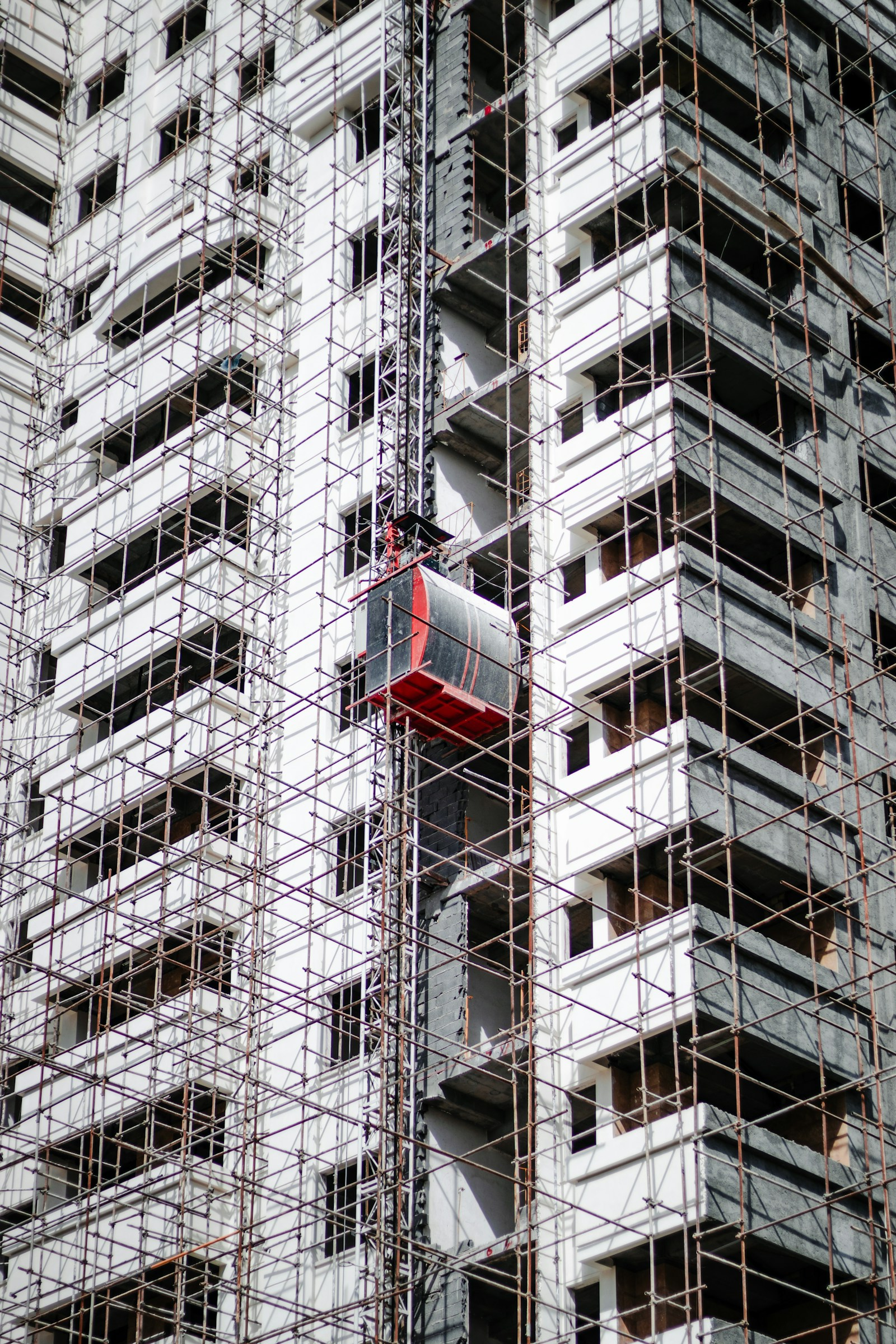
Projects may also involve scaffolding, temporary protection, opening-up inspections and the coordination of construction activities around occupied accommodation. Access to apartments, balconies and external areas can influence how contractors phase work while maintaining suitable arrangements for residents.
Design and procurement must address the performance of the complete external wall assembly. Substituting one material does not establish the fire performance of a finished system without considering the other components, their interfaces and the relevant test or assessment evidence.
The monitored portfolio represents an estimated 65% to 81% of the residential buildings at least 11 metres high expected to require remediation through the government programmes. Between 1,100 and 2,600 additional buildings may still need to be confirmed as eligible.
The 55% progress figure consequently applies to buildings already identified and monitored, rather than every potentially affected building in England. The monitored population can change as additional buildings are assessed, eligibility decisions are made and existing records are updated.
Approximately 250,000 occupied dwellings are estimated to be within the monitored private and social sector buildings. Of these, around 112,000 are in buildings with completed remediation, while a further 37,000 are in buildings where work has started.
The construction programmes have different levels of progress. In the Cladding Safety Scheme, 1,524 buildings at least 11 metres high had been assessed as eligible by the end of September, including buildings transferred from the Building Safety Fund.
Of those eligible buildings, 452 had started or completed remediation, representing 30%, while 151 were recorded as complete. A further 1,072 remained in the programme without works having started, illustrating the gap between securing eligibility and progressing to physical construction.
Pre-tender activity was more advanced. Some 1,306 eligible buildings had received a pre-tender support payment, covering 86% of the scheme’s eligible portfolio. These payments support preparatory activities but do not establish that a contractor has mobilised or façade replacement has commenced.
Design development, surveys, procurement and statutory approvals can all be required before construction starts. Where a building is occupied, access arrangements and the sequencing of disruptive works must also be established before the contractor can implement the approved remediation design.
The Cladding Safety Scheme also had 2,859 buildings in pre-eligibility stages, comprising properties undergoing checks or remaining in the application process. These are separate from the 1,524 buildings confirmed as eligible, and the categories must not be combined with the overall monitored total without accounting for programme overlap.
Under the developer remediation arrangements, 2,682 buildings had been identified with life-critical fire safety defects, including both cladding and non-cladding problems. Developers had reported 1,416 as having started or completed remediation and 613 as complete under the wider defect reporting measures.
Those developer figures cannot be added directly to the headline cladding total. Some buildings appear in several remediation programmes, and the wider developer commitments also cover buildings with other life-critical fire safety defects that do not involve unsafe cladding.
The reporting arrangements also distinguish between buildings where a developer has agreed to fund work and buildings where it will directly manage the remediation. A financial commitment alone does not confirm that physical construction has begun or that every defect has been resolved.
Social housing providers are another delivery route. At the end of September, 692 buildings were being monitored through the social housing self-funded remediation category, with 450 recorded as complete and 77 more underway.
The status of 67 buildings in that category was unknown because the relevant remediation dates had not been supplied. Those buildings contribute to the overall portfolio but should not be treated as confirmed physical non-starts simply because commencement has not been recorded.
Progress through the remaining projects will depend on completing investigations, finalising appropriate remedial designs and delivering work across occupied buildings. The next scheduled monthly figures will provide an updated measure of starts, completions and the number of additional properties identified for remediation.