IN Brief:
- Eight boiler units weighing approximately 800 tonnes each will be removed with associated plant and infrastructure.
- A specialist jack-and-slide system will support controlled movement of the redundant structures.
- The completed project will remove around one-third of the station's remaining above-ground structures.
Aureos has been awarded a contract worth up to £190 million to remove eight large boiler units from Dungeness A nuclear power station in Kent, advancing the dismantling of redundant infrastructure at the former Magnox generating site.
Nuclear Restoration Services (NRS), which manages the station on behalf of the Nuclear Decommissioning Authority, has appointed the engineering contractor to deliver one of the largest remaining structural removal packages. Each boiler weighs approximately 800 tonnes, with associated plant and infrastructure also included in the scope.
The contract follows four years of enabling work to prepare Dungeness A for heavy dismantling operations. The boilers will be moved using a specialist jack-and-slide system, allowing the large structures to be displaced in a controlled sequence rather than relying solely on conventional crane lifting.
Jack-and-slide techniques use hydraulic equipment to raise or transfer the weight of a structure onto engineered supports, enabling movement along a prepared route. The arrangement requires the load to remain supported throughout the operation, with the sliding equipment, temporary structures and working surface designed for the forces involved.
With each boiler weighing around 800 tonnes, movement of the eight units represents a substantial heavy engineering operation. The contractor must accommodate the dimensions and condition of equipment installed during the station’s original construction, while ensuring that the supporting structures and handling system remain suitable as loads are transferred.
The final movement route, lifting configuration and temporary works design have not been publicly established. These elements will determine how the contractor manages load distribution, positioning and the removal of each boiler from its existing location within the redundant generating infrastructure.
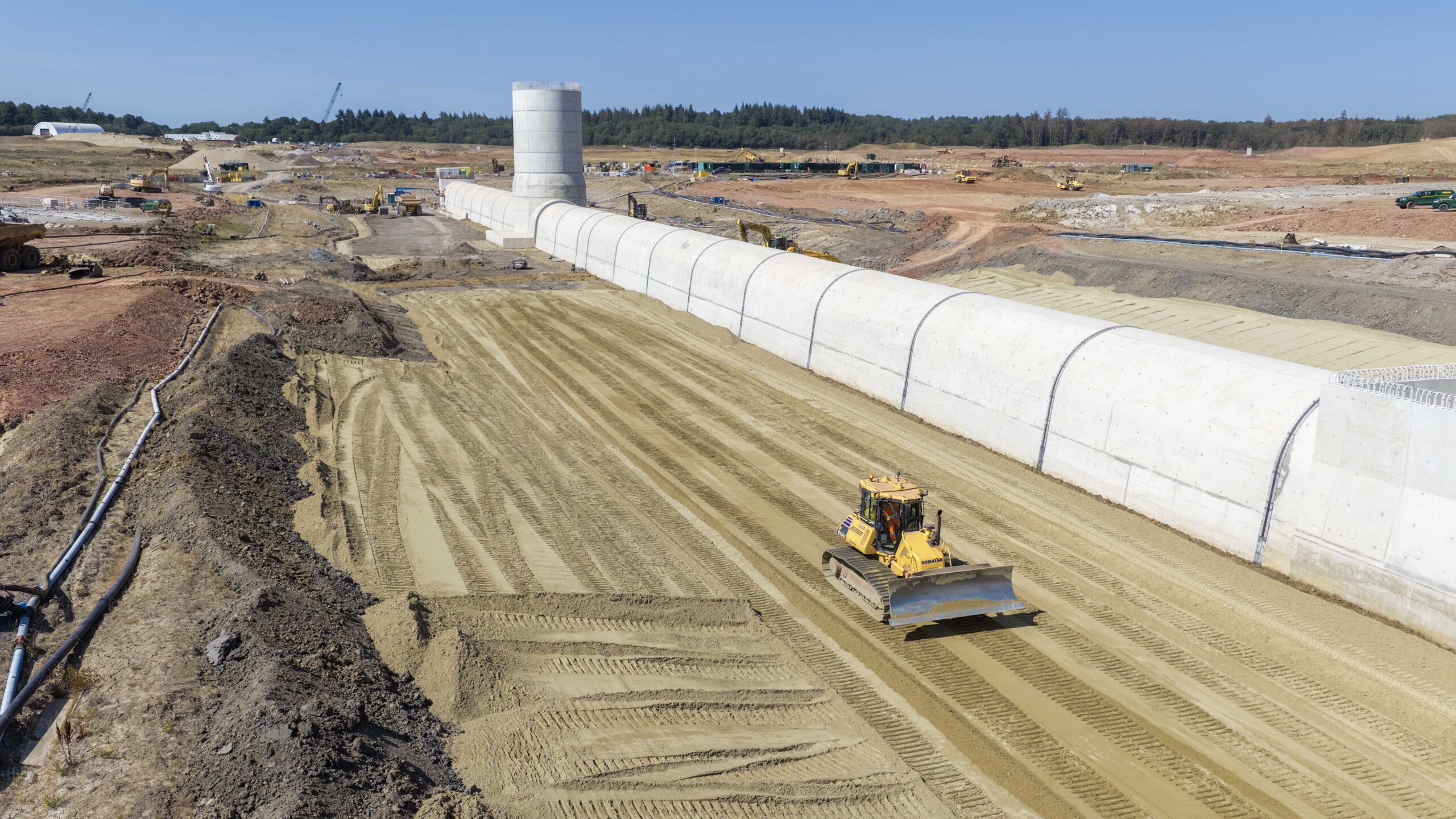
Preparatory work has already changed the physical arrangement of the site. NRS demolished the former turbine hall and subsequently filled its basement, creating a level working area intended to support the next stages of decommissioning.
The turbine hall stood approximately 26 metres above ground level before demolition and contained four turbogenerators that converted the station’s steam energy into electricity. Removal of the building left a substantial below-ground void, which required backfilling before the area could be used for further construction and dismantling activities.
More than 25,000 tonnes of material were used to fill the basement, comprising over 10,500 cubic metres of fill. The operation involved more than 1,400 lorry deliveries over approximately three and a half months, with material sourced from Lydd Quarry in Kent.
The completed infill provides a working area of more than 5,000 square metres. NRS has identified the former turbine hall footprint as a potential location for laying down the boilers during removal, bringing a former generating building into use as part of the dismantling infrastructure.
That arrangement addresses a significant site constraint. Large components cannot be moved or temporarily supported without considering the capacity and condition of the ground beneath them. Where substantial underground voids previously existed, establishing a suitable working surface is an important preparatory requirement for heavy equipment movements.
The removal programme also involves work around the existing boiler structures and their associated services. Redundant electrical installations must be appropriately isolated before demolition activities disturb equipment, cabling or other components formerly connected to the generating process.
The Office for Nuclear Regulation examined electrical isolation arrangements at Dungeness A during an inspection in June 2026, including the information available to contractors undertaking preparatory demolition work. The inspection considered the arrangements for managing construction and occupational safety risks associated with these activities.
Dungeness A ceased generating electricity in December 2006 and completed defuelling in 2012. The removal of nuclear fuel allowed the site to progress through further stages of decommissioning, although redundant structures, equipment and associated industrial infrastructure remain subject to controlled removal.
Work at a nuclear decommissioning site requires the management of construction hazards alongside the continuing safety and environmental obligations applying to the facility. Dismantling activities must therefore be coordinated with the site’s operational controls, specialist contractors and relevant regulators.
Aureos was selected through a competitive procurement process assessing technical capability, project certainty, innovation, social value and cost. The company, formerly operating as Keltbray Infrastructure Services, delivers major infrastructure projects across sectors including rail, highways, electricity networks and energy.
Rob Fletcher, chief executive of NRS, described the appointment as a major engineering challenge and identified collaboration with Aureos, its supply chain and regulators as part of the delivery approach. The contractor will also engage with local suppliers, educational institutions and community organisations during the programme.
Those activities will include supply chain opportunities, project information events and engagement with schools and universities. They accompany a construction package involving substantial specialist plant, temporary works, materials handling and the coordination of multiple engineering disciplines.
The contract value is a ceiling of up to £190 million rather than a fixed statement of expenditure already incurred. The delivery programme will establish the detailed sequence of removal operations, with individual activities required to proceed within the site’s safety and regulatory arrangements.
Once the boiler removal programme is complete, approximately one-third of Dungeness A’s above-ground structures will have been removed. The reduction will eliminate a substantial quantity of redundant industrial equipment from the site and decrease the infrastructure requiring inspection and maintenance during subsequent decommissioning activities.