IN Brief:
- Group turnover increased 53% from £157.5m to £240.5m, with the principal civil engineering business recording £232.8m.
- Capital investment rose from £10.8m to £20m, while average employment increased by 9%.
- Major reservoir, renewable energy, battery storage and coastal engineering projects supported activity across the UK.
Jones Bros has reported record consolidated turnover of £240.5 million for the financial year ending March 2026, an increase of 53% as the North Wales civil engineering contractor expanded its activity across major UK infrastructure projects.
The family-owned group’s turnover rose from £157.5 million in the previous financial year, representing an increase of £83 million. Its principal operating business, Jones Bros Civil Engineering UK, recorded turnover of £232.8 million, up 55% from £150.5 million.
The operating company figure forms part of the consolidated group results and is not additional revenue to be added to the £240.5 million total. Jones Bros has attributed the larger workload to activity across its established civil engineering markets, including renewable energy infrastructure, reservoirs, coastal protection and major earthworks.
Capital investment increased substantially, from £10.8 million to £20 million, alongside an expansion of the workforce. Average employment rose by 9%, from 498 to 545 people, as the contractor continued investing in plant, equipment and skills development.
The increase in capital expenditure reflects the equipment-intensive nature of the business. Major earthworks and infrastructure projects require excavators, earthmoving machinery, specialist plant and supporting transport equipment, often deployed across several construction sites with different ground conditions and project schedules.
Access to suitable machinery affects how contractors sequence excavation, material movement, embankment formation and construction of foundations. Plant selection also influences site logistics, particularly where large quantities of material must be moved within restricted construction programmes or across extensive working areas.
Jones Bros operates its own plant fleet and has continued expanding its equipment resources. The company has not provided a breakdown of the £20 million capital investment by machinery type, so the expenditure cannot be assigned to individual projects or specific categories of equipment.
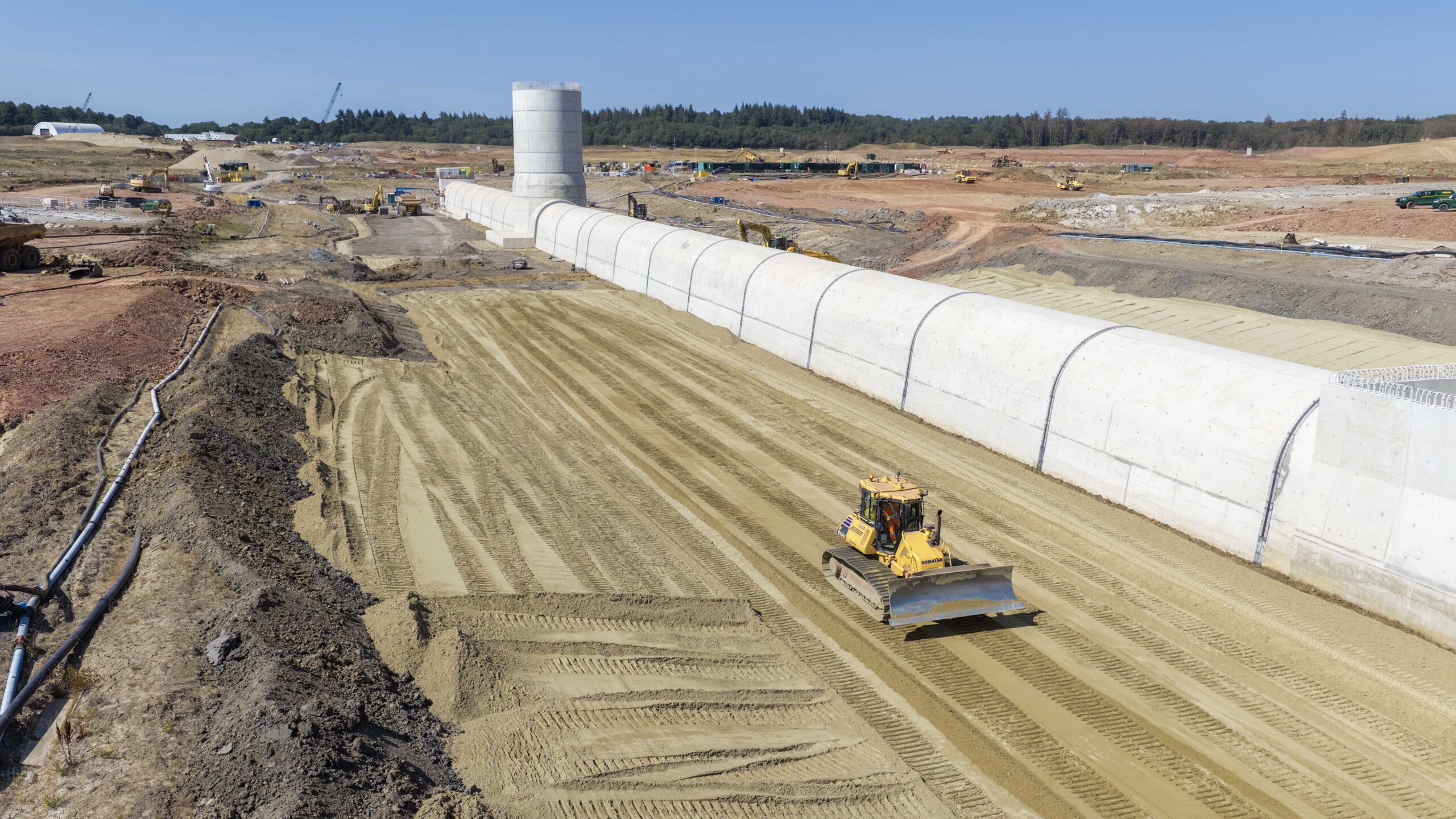
Among its principal assignments is Havant Thicket Reservoir in Hampshire, where Jones Bros and Mackley are working together through Future Water MJJV. The project involves the construction of a new reservoir and associated infrastructure for Portsmouth Water.
Reservoir construction requires substantial ground engineering activity, including excavation, formation of embankments, management of construction materials and the preparation of infrastructure that must perform under changing hydraulic loads. The construction methodology depends on the site’s geological conditions, earthworks design and the requirements for controlling water movement.
Jones Bros has also undertaken major civil engineering works at Sanquhar II Wind Farm, which spans Dumfries and Galloway and East Ayrshire. The development comprises 44 turbines, requiring foundations, access infrastructure and working areas capable of supporting large construction equipment and turbine component deliveries.
The contractor completed concrete pours for all 44 turbine foundations during October, with concrete produced through on-site batching facilities. Locating production close to the work areas reduces dependence on ready-mixed concrete deliveries from external plants, although the actual transport and carbon savings depend on the wider supply and construction arrangements.
Wind farm foundations must transfer significant loads from the turbine structure into the supporting ground. Their design takes account of the weight of the tower and generating equipment, together with wind-induced forces and the characteristics of the underlying soil and rock.
Jones Bros has also been active at North Kyle Wind Farm and on battery energy storage infrastructure projects at Uskmouth in South Wales and Thorpe Marsh in Yorkshire. These developments require substantial site preparation, access construction, groundworks and civil engineering interfaces before the associated electrical infrastructure can be installed and commissioned.
Battery storage construction can involve foundations for containerised equipment, internal roads, drainage, cable routes and the preparation of areas for transformers and other electrical plant. The extent of those works varies according to the site layout and the responsibilities allocated to individual contractors.
Coastal protection has provided a further source of work. Jones Bros delivered the Kinmel Bay Coastal Defence Scheme in North Wales and has continued its involvement in the Cydnerth tidal energy project at Holyhead, adding marine and coastal construction to its energy and reservoir portfolio.
The broader project mix requires employees with different technical competencies, including plant operation, setting out, site supervision, temporary works coordination and specialist engineering activities. Recruiting and retaining suitably qualified personnel remains a practical constraint when several major projects are being delivered concurrently.
Jones Bros has recruited more than 60 apprentices and trainees over the past three years, supported by training through its accredited in-house centre. The arrangements allow the contractor to develop employees in the operating methods, equipment and safety requirements associated with its own construction activities.
Huw Jones MBE, chairman of Jones Bros, said: “The shortage of skilled people is one of the biggest challenges facing our industry.” He identified apprenticeships and long-term career development as central to the company’s approach to maintaining its workforce.
Training is particularly important for heavy plant operations, where equipment competence must be matched with knowledge of ground conditions, operating limits and safe working practices. Investment in new machines does not remove the need for trained personnel capable of deploying them across different construction environments.
The group also reported a cumulative 22% reduction in its carbon energy performance indicators against a 2020 baseline. The measure describes improvement against the company’s reported performance indicators and must be distinguished from a 22% reduction in total absolute greenhouse gas emissions.
The financial results establish substantial growth in revenue, employment and capital expenditure, but turnover does not by itself demonstrate an equivalent increase in profitability. The company has not supplied comparable operating profit or margin figures within the results information used for this article.
Jones Bros maintains offices in Scotland and Cardiff alongside its North Wales headquarters. With a substantial order book, the contractor expects to continue investing in its workforce, plant fleet and technology as work progresses across its infrastructure and energy construction portfolio.