IN Brief:
- T&C completed its acquisition of Kal Tire's UK off-the-road tyre servicing assets on 21 November.
- Specialist servicing vehicles, equipment, and associated stock are included in the transaction.
- The acquisition also incorporates experienced personnel from Kal Tire's British servicing operation.
T&C Site Services has acquired Kal Tire’s UK off-the-road tyre servicing assets, expanding its capacity to support heavy machinery operating across construction sites, quarries, ports, and other industrial facilities.
The transaction, completed on 21 November, incorporates specialist service vehicles, equipment, and stock previously operated by Kal Tire (UK) Ltd. Members of Kal Tire’s British servicing team have also joined the Stoke-on-Trent-based company.
The acquisition adds to T&C’s existing operation, which provides tyre supply, fitting, repair, inspection, and maintenance services through a national network of depots and mobile servicing vehicles.
Neither the transaction value nor the number of vehicles and personnel transferred has been disclosed. The purchase concerns Kal Tire’s British servicing assets rather than its wider international business.
Before the acquisition, T&C operated more than 50 specialist servicing vehicles, designed to accommodate the handling and installation requirements of large earthmover tyres and wheel assemblies.
The company’s existing fleet includes vehicles incorporating remotely controlled cranes, hydraulic jacks rated at 25 tonnes, and compressed air systems capable of delivering pressures of up to 10 bar. These systems enable technicians to undertake maintenance at operating sites rather than requiring heavy machinery to be transported to a conventional workshop.
Some of T&C’s cranes incorporate additional capabilities for positioning wheel assemblies during installation, reducing the amount of manual handling required. Individual vehicle configurations can cost up to £250,000.
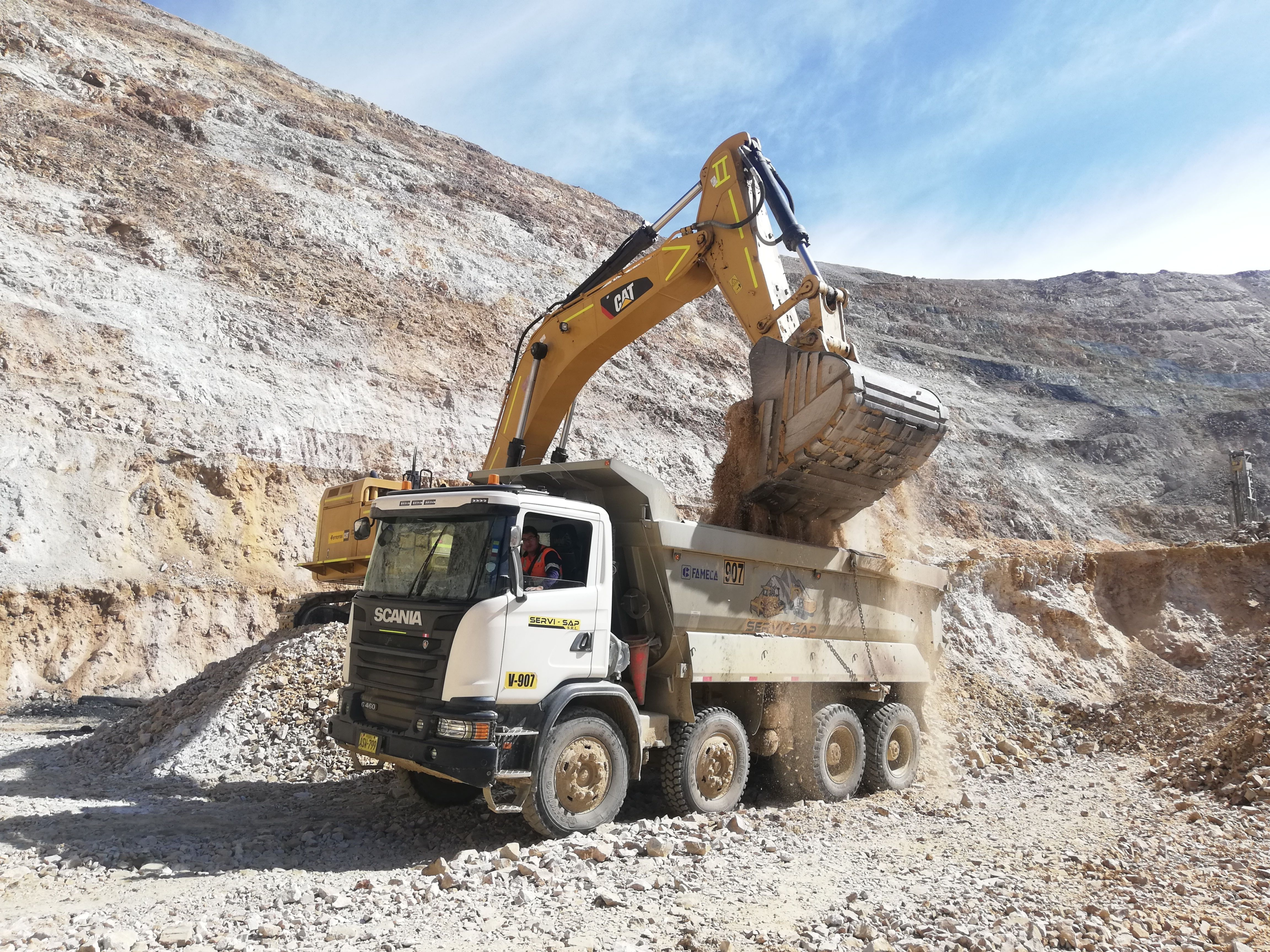
The engineering requirements of these vehicles reflect the substantial differences between servicing conventional commercial vehicle tyres and those fitted to large articulated haulers, rigid dump trucks, wheel loaders, and other heavy machinery.
Earthmover tyres must accommodate substantial loads while operating across surfaces that can cause accelerated wear or physical damage. Loose rock, demolition materials, gradients, and repeated turning movements all influence their operating conditions.
A wheel loader carrying material over relatively short distances encounters different mechanical and thermal demands from a dump truck undertaking repeated journeys along an extended haul road.
The suitability of a tyre therefore depends on more than its dimensions and maximum load rating. Operating speeds, journey lengths, surface conditions, and the rate at which accumulated heat can dissipate all influence performance.
Regular inspections can identify tread damage, irregular wear, sidewall deterioration, and changes in pressure before they result in machinery becoming unavailable. Inspection records can also help distinguish isolated damage from patterns affecting several vehicles working under comparable conditions.
Repeated tyre deterioration across machines using the same haul road, for example, may indicate that surface conditions or operating practices require attention alongside the maintenance of individual vehicles.
The financial consequences of equipment downtime extend beyond the cost of replacing damaged components. Where earthmoving operations depend on a coordinated fleet of loading and transport equipment, a reduction in available haulage capacity can leave other machines waiting between productive cycles.
These dependencies are particularly evident during major earthmoving programmes such as the heavy plant deployment supporting Kishorn Port’s expansion, where several types of equipment contribute to a continuous material movement process.
The availability of suitable replacement tyres, specialist handling equipment, and technicians consequently influences the speed at which an affected machine can return to service. Holding sufficient replacement stock requires an additional investment in inventory, particularly where fleets contain several machinery types and tyre specifications.
Tyre servicing also presents significant safety requirements. The mass of earthmover wheel assemblies creates mechanical handling risks, while inflated tyres contain stored energy that can be released during component failure.
The Health and Safety Executive identifies tyre removal, replacement, and inflation as activities requiring appropriate equipment, competent personnel, and measures to control the consequences of failure.
The design of mobile servicing vehicles must therefore account for the safe positioning and handling of heavy components, as well as the operational requirements of travelling between customer sites.
By acquiring Kal Tire’s specialist vehicles alongside its existing personnel and stock, T&C is incorporating several interdependent elements of servicing capacity rather than purchasing inventory or equipment in isolation.
The transaction also comes during a period of change in Britain’s heavy plant distribution market. Machinery often remains in operation for many years after its original purchase, sustaining requirements for specialist components, technical support, and maintenance independently of new equipment sales.
The integration of Kal Tire’s British servicing assets will expand the resources available through T&C’s national operation. Their distribution across its depot network, alongside the allocation of technicians and replacement stock, will determine how effectively the enlarged business can support earthmoving fleets at customer sites.