IN Brief:
- More than 20 Volvo and Caterpillar machines are supporting excavation, haulage, crushing, spreading, and compaction at Kishorn.
- RJ McLeod's works include a 100m by 60m rock cutting and more than one million tonnes of material reused on site.
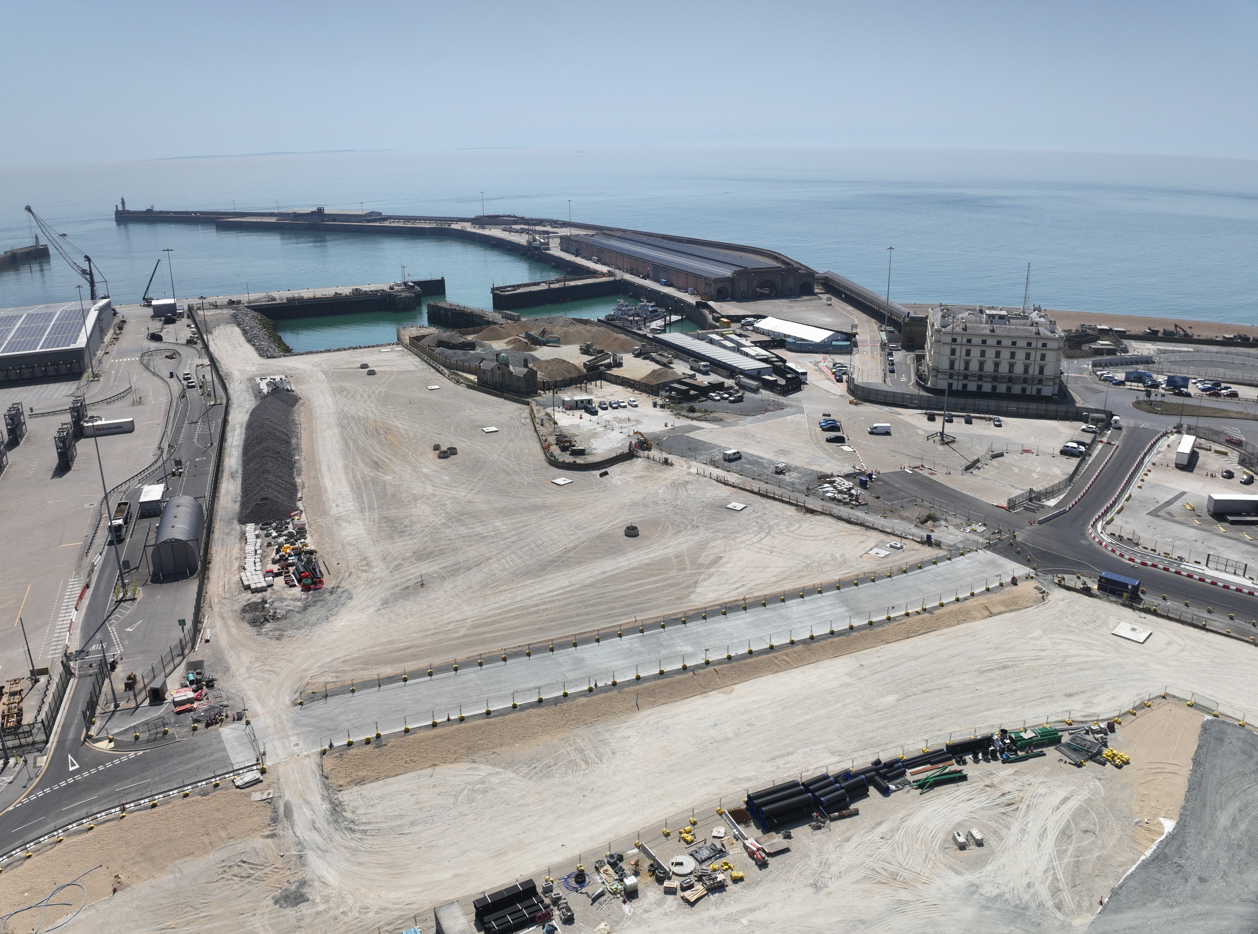
- The enlargement creates 8.5 hectares of reclaimed hardstanding and allows vessels up to 200m long to use the extended dock.
Stevens Equipment Rental has deployed more than 20 heavy machines to support RJ McLeod’s enlargement of the dry dock at Kishorn Port on Scotland’s west coast, where excavation and reclamation works are reshaping the marine facility.
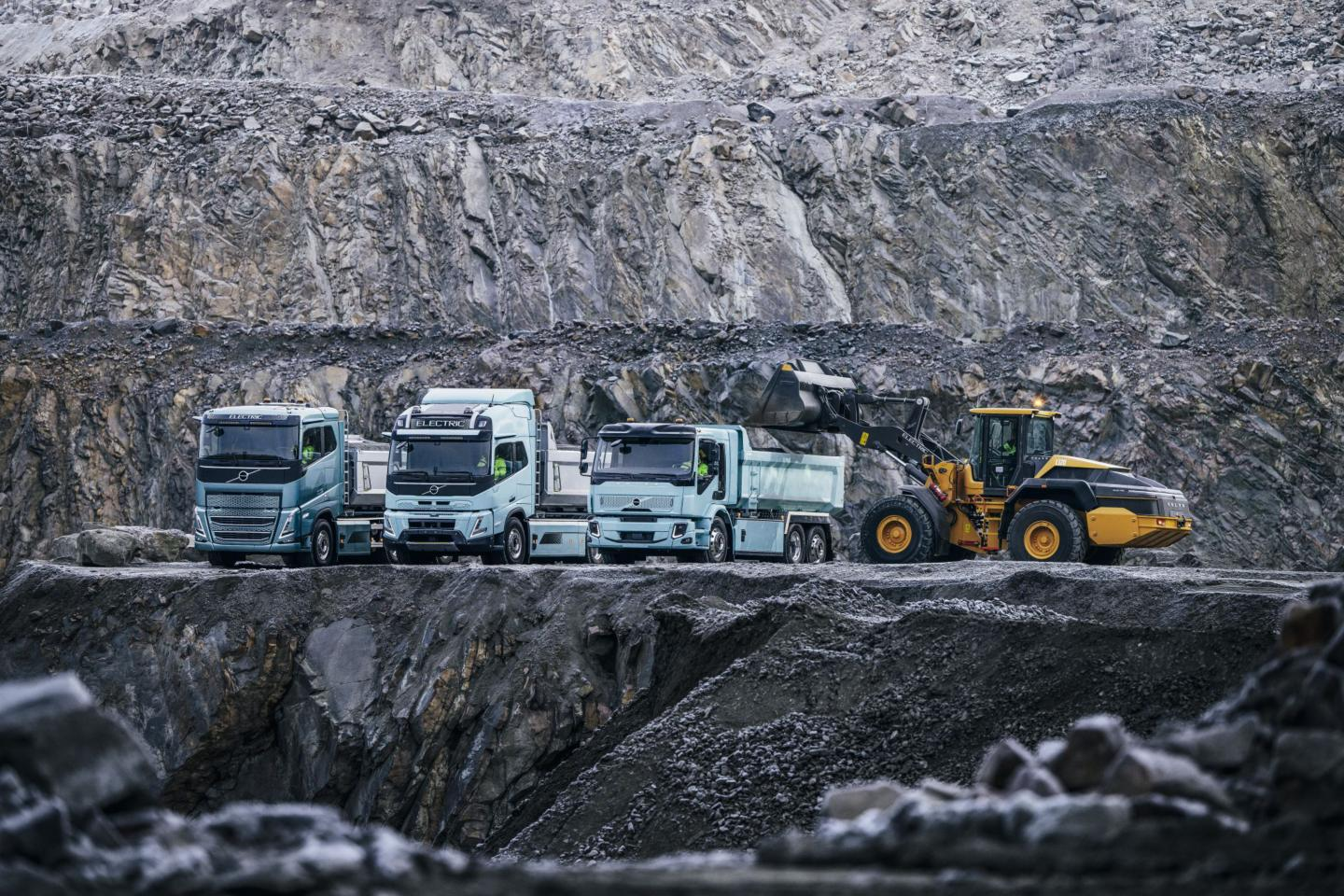
The fleet includes Volvo A45 and A30 articulated haulers, Volvo EC550, EC400, and EC300 excavators, Volvo L180 wheel loaders, Caterpillar 352 excavators, and Caterpillar D7 and D6 dozers. Together, the machines support excavation, loading, haulage, crushing, spreading, trimming, and compaction across a remote site where the earthworks programme depends on continuous material movement.
RJ McLeod’s project extends the existing dry dock through a rock cutting approximately 100 metres long, 60 metres wide, and 35 metres deep. The enlarged facility is intended to accommodate vessels up to 200 metres long, while material from the excavation is being reused to form around 8.5 hectares of reclaimed hardstanding beside the dock.
The contractor’s published quantities show the scale of the civil works. Around 181,000 cubic metres of overburden excavation sits alongside 415,000 cubic metres of rock excavation by blasting, while the project also includes 12,200 square metres of rock netting, 150 metres of new road, a 760-metre rock-armour bund, and a 3,800-cubic-metre reinforced-concrete slab.
More than one million tonnes of material generated by the new rock cutting is being retained for use within the site. Excavators load blasted rock into articulated haulers, oversized sandstone is reduced before crushing, and processed material is then moved into the reclamation works, where wheel loaders and dozers support placement and final formation.
Reusing the excavation in that way reduces the amount of imported fill required for the new hardstanding and avoids removing an equivalent mass of rock from a remote Highland location. The trade-off is that drilling, blasting, digging, haulage, crushing, spreading, and compaction have to remain balanced because a slowdown at one stage can interrupt the sequence that follows it.
The size of the plant reflects those production relationships. Larger articulated haulers increase payload across internal routes, while high-capacity excavators are needed to maintain loading rates from the blasted rock. Dozers then take over as processed material reaches the reclamation area, where spreading and trimming affect both productivity and the quality of the finished formation.
Torridonian sandstone creates a further maintenance demand. The equipment package includes reinforced buckets and specialist ground-engaging tools intended to protect wear surfaces under abrasive conditions, where bucket lips, teeth, and other contact parts can become consumable items rather than occasional replacements.
Plant availability is particularly important at Kishorn because the site is remote. Stevens Equipment Rental is supporting the fleet with parts and fluids held locally and an engineer based at the project for much of the working week, reducing the time lost if machines need scheduled servicing or suffer faults during the earthmoving programme.
The arrangement turns plant hire into a production-support function rather than a simple equipment supply. An excavator failure can leave haulers waiting, while lost haul capacity can starve a crusher or prevent reclaimed material from reaching the dozer fleet at the required rate. Maintaining output depends on the system remaining balanced rather than on any single machine achieving its maximum theoretical productivity.
RJ McLeod’s scope extends beyond excavation and reclamation. The works include surface-water drainage, rock netting, mooring points installed with rock anchors, the reinforced-concrete dock slab, and more than 500 metres of 17.5-metre-deep pre-split blast holes. The enlarged dock floor is formed around 13 metres below high-tide level.
The hardstanding also has to function as permanent marine infrastructure once the temporary earthmoving operation ends. Formation levels, compaction, drainage, edge treatment, and long-term load capacity must suit future heavy activity, meaning material placed during reclamation becomes part of the operating asset rather than simply a convenient destination for excavated rock.
Kishorn was originally developed during the 1970s for North Sea oil-platform fabrication. The current redevelopment is intended to support vessel decommissioning, oil and gas infrastructure work, aquaculture, and future manufacture of floating offshore-wind foundations, bringing the dry dock and surrounding land back into large-scale marine-industrial use.
The plant package therefore sits directly inside the construction method. More than 20 machines are being used to convert blasted rock from an enlarged dock cutting into the platform needed for future marine operations, with production, wear management, maintenance, and logistics all tied to the same material flow.
As excavation progresses, the earthworks fleet has to maintain enough output to keep crushing and reclamation advancing together. The finished dock may be the visible asset, but its new dimensions and surrounding working area are being created one load, one crushed batch, and one compacted layer at a time.