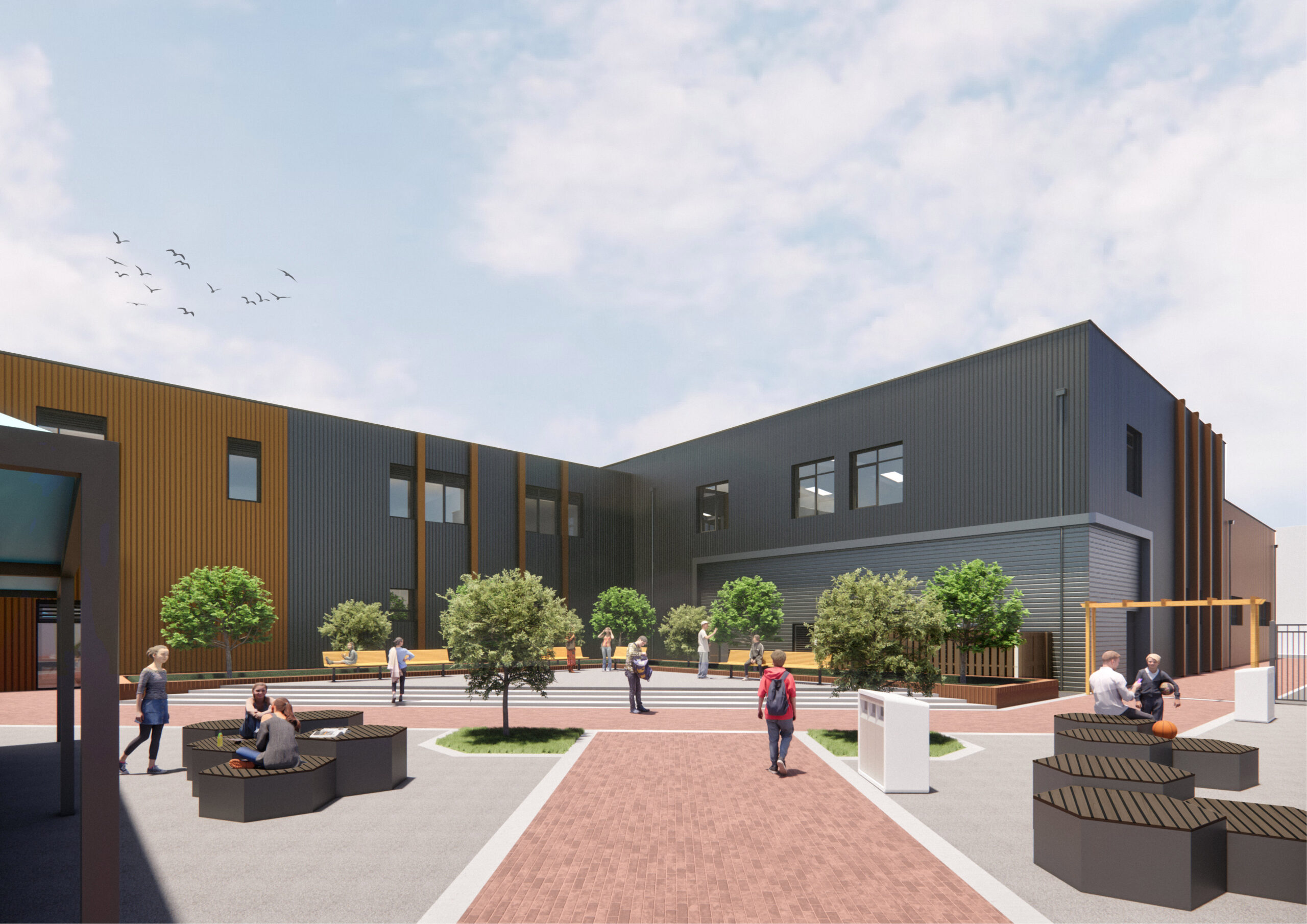
IN Brief:
- Wynne is delivering the facility under a design and build contract for Grŵp Llandrillo Menai.
- Construction workshops will occupy the upper floor, above specialist automotive facilities.
- Substructure works are targeted for completion before the end of 2026, with overall completion scheduled for November 2027.
Wynne Construction has commenced work on a £10m vocational training centre at Coleg Llandrillo’s Rhyl campus, expanding the facilities available for construction, engineering, and automotive maintenance education across North Wales.
Grŵp Llandrillo Menai appointed the Denbighshire contractor as principal contractor under a design and build agreement for the Albert Gubay Centre of Excellence in Construction and Motor Vehicle Engineering.
The two-storey development, supported by the Albert Gubay Charitable Foundation, will replace the existing Rhuddlan Automotive Centre. Construction follows the granting of planning permission in June 2026.
Automotive workshops will occupy the ground floor, with dedicated construction training facilities accommodated above. The building’s structural elements will remain visible in selected areas, allowing students to examine aspects of the engineering and construction methods used to deliver the facility.
Coleg Llandrillo intends to expand its provision across carpentry, masonry, and plumbing, alongside specialist training in timber frame construction, renewable energy installation, and other low carbon building techniques.
The automotive facilities will also accommodate training in hybrid and electric vehicle maintenance, extending provision beyond conventional vehicle engineering.
Combining these disciplines within a single structure requires the design to respond to the different operating conditions of individual teaching environments. Automotive workshops require vehicle access, equipment installation, and suitable ventilation arrangements, while construction workshops must accommodate practical exercises involving materials preparation, assembly, and inspection.
Locating the construction facilities above the automotive workshops introduces additional coordination requirements concerning floor loading, vertical circulation, materials handling, and the distribution of building services.
The spaces required for practical construction education must also accommodate changes to teaching layouts. Students undertaking carpentry or timber frame assembly may need different working areas from those completing masonry exercises or learning to install building services.
Flexibility within the building allows those activities to be reorganised without extensive alterations to the underlying accommodation. Workshop services, storage provision, and access arrangements must nevertheless support the safe management of equipment and materials across the different disciplines.
The college’s expanding provision in low carbon construction reflects changes in the technical knowledge required across established trades.
Timber frame construction, for example, requires coordination between structural components, insulation, membranes, external finishes, and building services. Discontinuities within those systems can affect thermal performance, airtightness, and moisture management even where the individual components have been correctly specified.
Practical training allows students to examine these interfaces during physical assembly, developing familiarity with installation sequences and inspection requirements before encountering comparable details on operational construction sites.
The proposed provision for renewable energy installation will also extend the relationship between traditional building trades and specialist electrical infrastructure. Roof-mounted photovoltaic systems and associated electrical installations require coordination with structural supports, weatherproofing, service routes, and safe access arrangements.
These interfaces increase demand for personnel who understand how their own work affects the performance and installation requirements of adjoining construction systems.
The new centre builds on Wynne’s earlier delivery of the Engineering and Renewable Technologies Centre at the Rhyl campus, a three-storey development completed in 2024. That building expanded the college’s provision across computer-aided design, manufacturing technologies, and specialist engineering education.
Wynne’s project manager for the new centre, Mark Wilson, previously studied at Coleg Llandrillo’s Rhos-on-Sea campus during his apprenticeship with the contractor.
The construction programme itself will provide further training opportunities. Wynne intends to recruit a trainee assistant site manager and offer work experience placements and visits as the development progresses.
These activities will allow students to observe the relationship between design information, construction sequencing, subcontractor coordination, and the completed building. Exposure to ongoing construction also provides opportunities to examine work that subsequently becomes concealed behind permanent finishes.
The contractor has recently expanded its site management and design workforce as it delivers projects across Wales and north-west England.
Construction within an existing college campus will require work areas, deliveries, vehicle movements, and temporary access arrangements to be managed alongside continuing teaching activities.
The project also incorporates green spaces, social areas, and a student plaza, connecting the new facilities with the wider campus rather than creating a standalone workshop development.
Wynne expects to complete the substructure before the end of December, allowing the building to progress through its principal structural and services installation phases during 2027. Overall completion is scheduled for November 2027, after which the new workshops will expand the college’s capacity to deliver specialist vocational training.