IN Brief:
- SFHA, Homes for Scotland and GWSF dispute the cost and impact assessment for proposed new energy standards.
- The Scottish Government is considering revised performance targets and stronger design and construction compliance evidence.
- The Stage 2 consultation closed on 16 October, with implementation now proposed for autumn 2029.
Scottish Federation of Housing Associations, Homes for Scotland and the Glasgow and West of Scotland Forum of Housing Associations have challenged proposals for a Scottish equivalent to the Passivhaus standard. In a joint position issued on 26 October, the groups argued that higher costs could reduce the number of affordable and private homes delivered. They criticised the partial business and regulatory impact assessment and the information available to developers for cost modelling. The standards remain proposals rather than requirements already imposed on new projects.
The dispute follows the closure of the Scottish Government’s second-stage consultation on 16 October. Ministers began developing the proposed equivalent after a commitment made in 2022, with industry engagement beginning in 2023. The current review examines energy performance targets for new buildings and the evidence needed to show that completed construction achieves the specified results. The Government has indicated that implementation will move to autumn 2029, rather than the earlier March 2028 date, to allow time for final guidance, methodologies and industry preparation.
The housing organisations say the partial business and regulatory impact assessment does not adequately account for the effect of extra capital costs on housing supply. Their concern is that schemes already facing land, finance and infrastructure costs may become harder to deliver if building specifications increase without corresponding funding. Homes for Scotland also says the consultation was launched without complete costing material and sufficiently developed software for evaluating individual schemes. These are objections raised by industry bodies; the consultation has not established that its proposed requirements will cause a particular reduction in completions.
The Scottish Government’s consultation presents a wider technical objective. It proposes improving fabric performance and ventilation, reducing operational energy demand, and strengthening assurance that the built result meets the design intent. Possible requirements include limits on air infiltration, space heating targets, assessment of thermal bridging and improved compliance evidence from design through completion. The exercise also considers calculation tools, including a modified version of the Passivhaus Planning Package, and how projects should document the performance of their building fabric and services.
Airtightness and ventilation are closely linked in building design. Reducing uncontrolled air leakage helps limit heat loss, but occupied rooms must still receive appropriate fresh air and remove moisture and pollutants. Mechanical ventilation with heat recovery is one possible means of providing controlled ventilation while recovering some heat from outgoing air. Its effectiveness depends on design, commissioning, maintenance and occupant operation, rather than on airtightness alone. The consultation considers ventilation and indoor air quality explicitly, so a building’s thermal specification cannot sensibly be assessed without examining the associated ventilation strategy.
The Glasgow and West of Scotland Forum has warned about the cost and operation of mechanical ventilation, including the possibility that occupants may switch systems off because of noise or electricity use. Continuous fresh-air supply depends on correct commissioning, maintenance, accessible controls and user understanding. A dwelling that is made more airtight without a suitable ventilation design can have moisture and air-quality problems; conversely, controlled mechanical ventilation is not itself evidence of such a problem. The consultation expressly asks about ventilation options, mechanical ventilation with heat recovery and the relationship between air infiltration and ventilation systems.
Homes for Scotland cites member evidence suggesting that regulatory changes since 2021 have added approximately £37,000 to the cost of an individual home. That estimate spans several regulatory measures and cannot be assigned to the proposed Passivhaus-equivalent standard alone. The industry bodies also dispute the scale of expected emissions benefits, describing them as small relative to the added cost. The Scottish Government’s stated aims are to reduce operational energy demand, improve indoor air quality and improve assurance that completed buildings meet design-stage performance requirements. Neither position resolves the final per-home cost of the proposals.
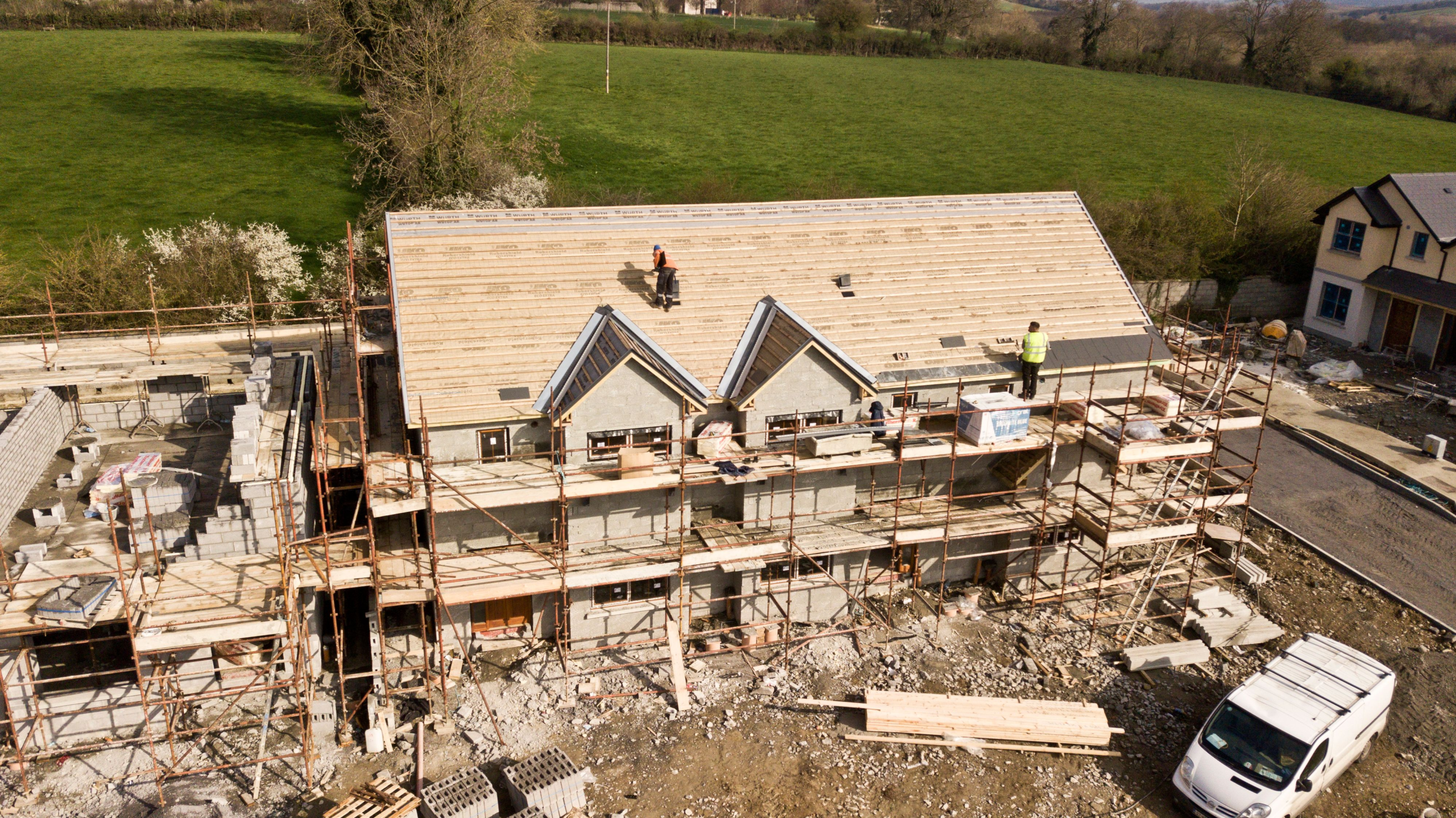
Technical compliance is especially important on developments with repeated house types, where a small gap between modelled and actual performance can recur across many dwellings. Insulation continuity at junctions, penetrations through the air barrier and the installation of windows are all construction details capable of affecting thermal performance. Contractors may need documented inspections and coordination between designers, trades and verifiers to demonstrate compliance. The proposals include energy and environmental design statements at building warrant stage and construction statements at completion, although final detailed rules and supporting calculation methods remain in development.
Housebuilders and housing associations must account for capital spending alongside tenants’ future heating and maintenance costs. Improved insulation and airtightness may reduce space-heating demand, but detailed junction design, tests, ventilation equipment and maintenance also carry costs. The whole-life result depends on the building type, heating system, actual workmanship and occupancy. A single national estimate cannot substitute for modelling the effects on an individual housing scheme. The Government’s consultation includes questions on costing evidence and whether a mandatory standard should be phased or introduced voluntarily before full adoption.
The Government intends to publish revised guidance and approved calculation methods in autumn 2027, and to move the regulations’ implementation date to autumn 2029. Consultation responses will inform whether the standard is introduced in full, in phases or through initial voluntary adoption. The housing organisations want the current performance requirements retained, citing the risk to development viability, while ministers are pursuing stronger fabric standards and compliance evidence. Final targets and the regulatory impact assessment will determine the specification and procurement obligations that Scottish contractors ultimately face.