IN Brief:
- Graham has opened a new Cumbria office at the Phoenix Enterprise Centre in Cleator Moor.
- The base will support the contractor’s civil engineering and building divisions.
- The move follows regional project wins, including infrastructure works at the Low Level Waste Repository site in Drigg.
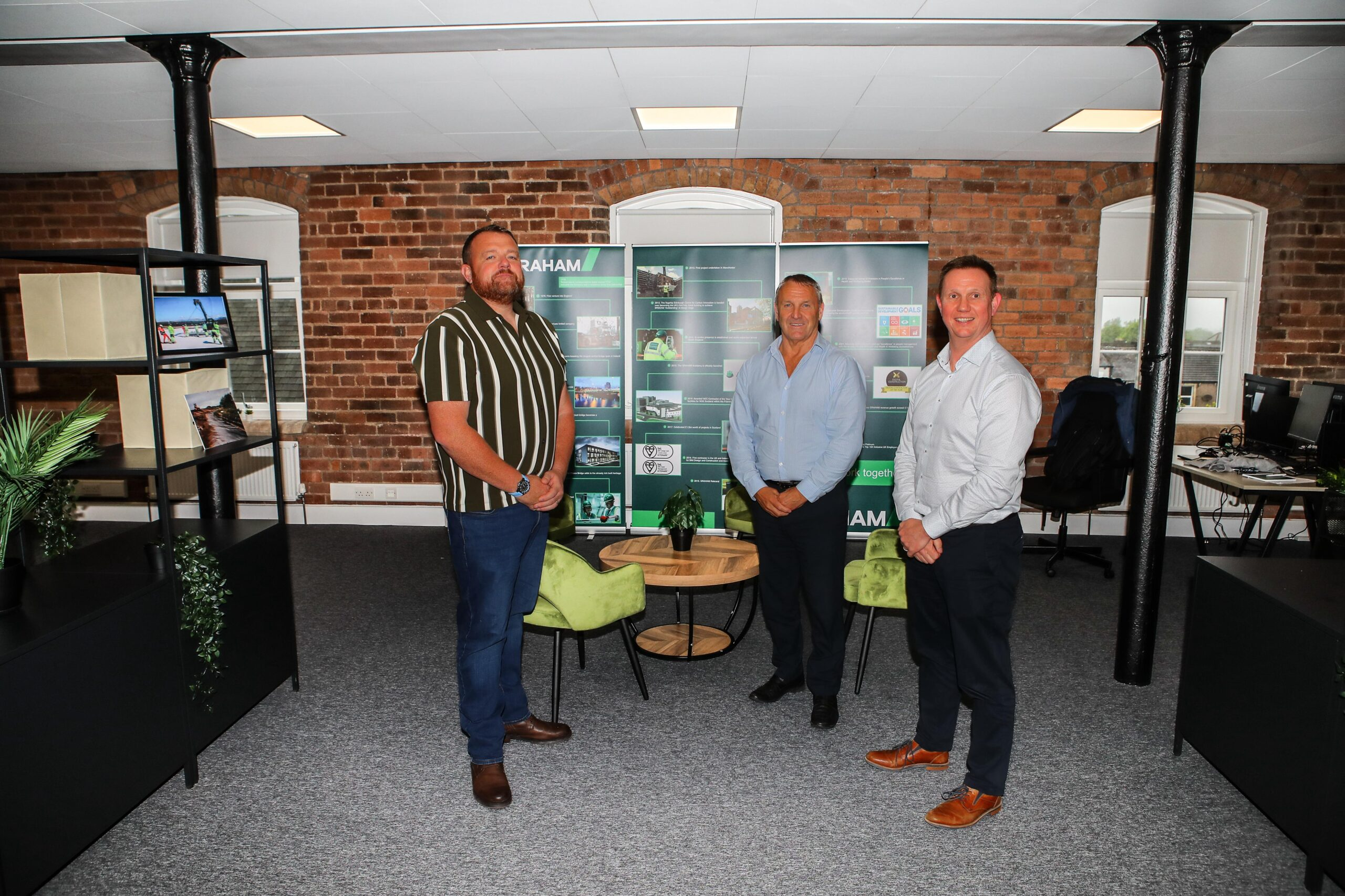
Graham has opened a new office in Cleator Moor, Cumbria, strengthening its regional base for nuclear infrastructure, defence, civil engineering, and building projects.
The new premises at the Phoenix Enterprise Centre will be used by the contractor’s civil engineering division and national building division. Graham said the office will increase operational capacity across North and Central England while supporting work in the North West’s nuclear infrastructure market.
The Cumbria-based team will be led by Alastair Lewis, contracts director at Graham. The contractor has pointed to 15 years of experience delivering nuclear and defence projects in the region, with the office providing additional working and meeting space for current projects and future work-winning activity.
The move follows several regional project wins, including Graham’s appointment to deliver infrastructure works at the Low Level Waste Repository site in Drigg. That package is expected to keep the team on site until summer 2029.
A permanent regional presence carries particular weight in nuclear and defence construction. Work in these sectors requires more than mobile site capacity, with contractors needing local relationships, specialist workforce planning, security-aware processes, long-term client engagement, and a strong grasp of regional delivery constraints.
Cumbria remains one of the UK’s core nuclear regions, with an established industrial base, specialist workforce, and active pipeline of decommissioning, waste, infrastructure, and support projects. Contractors working there must combine civil engineering capability with safety assurance, document control, quality systems, and stakeholder management.
The wider nuclear construction market is also becoming more active. AtkinsRéalis has been appointed to an EDF and Sizewell C professional services framework, while Hinkley Point C has moved deeper into reactor fit-out. Graham’s Cumbria office sits at a different point in the supply chain, but it forms part of the same broader mobilisation of nuclear delivery capability.
Regional bases help contractors maintain continuity between projects. Nuclear and defence programmes often run over long periods, with work packages spread across enabling works, utilities, roads, drainage, specialist buildings, maintenance facilities, civils, and asset support. A local office can strengthen recruitment, training, supplier engagement, and client contact across that sequence.
Social value expectations have also made regional commitment more concrete. Clients increasingly look for evidence of local employment, training routes, and supply chain development. A fixed office gives contractors a stronger platform to demonstrate that commitment, particularly in areas where major infrastructure programmes are closely linked to local economic plans.
For Graham’s building division, the Cleator Moor base also opens up adjacent opportunities. Nuclear infrastructure programmes rarely involve civil engineering alone. They create demand for offices, workshops, welfare facilities, support buildings, storage, utilities, and specialist accommodation. A regional team that can draw on both civil and building capability is better placed to respond to that spread of work.
The office opening also shows how infrastructure contractors are positioning ahead of demand. Major projects often take years to reach site, but supply chain capacity has to be developed earlier. Recruiting local staff, building relationships, and establishing operational systems cannot be left until a contract is awarded.
Graham’s decision to expand in Cumbria suggests confidence in the regional pipeline and in its own role within nuclear and defence-related delivery. The measure of that investment will come through repeat work, workforce development, and the contractor’s ability to support specialist infrastructure projects where safety, assurance, and programme control carry as much weight as construction output.