IN Brief:
- The final roof segment has been installed on the 700m Burton Green tunnel.
- Balfour Beatty Vinci delivered the twin-box structure with Galldris supporting civil works.
- A 500m green roof and reinstated public route will follow structural completion.
HS2 Ltd has completed the main structure of the 700m Burton Green tunnel near Kenilworth following installation of the final precast roof segment.
The 16m-wide twin-box structure will carry high-speed trains beneath the Warwickshire village, reducing the railway’s visual and acoustic impact while allowing land, planting, and community routes to be reinstated above it.
Balfour Beatty Vinci is delivering the tunnel as HS2’s main works contractor for the West Midlands, with design undertaken by the Mott MacDonald and SYSTRA joint venture. Galldris has led the principal civil-engineering package, supported by a workforce of more than 100 people during the most intensive phase.
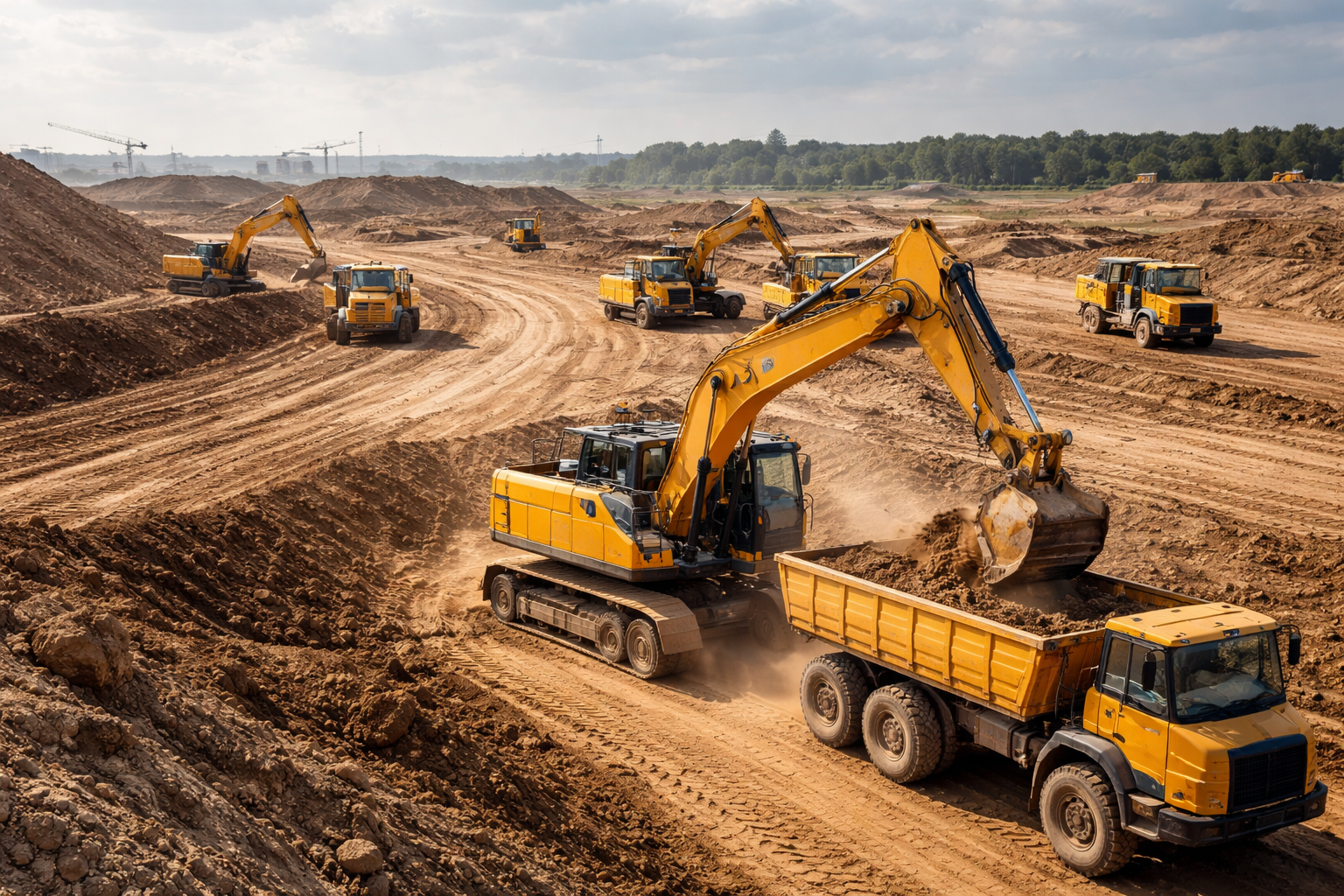
Constructed through a cut-and-cover method, the tunnel was formed within an open excavation before the walls and roof were installed. Once internal and external works are complete, excavated material will be placed over the structure to create the final landscape profile.
Approximately 500m of the roof will become a landscaped green corridor. Native trees, shrubs, and other planting are intended to reconnect habitats around Black Waste Wood and Little Poors Wood while reducing the permanent visual presence of the railway.
The Kenilworth Greenway will return close to its original alignment, providing a route for walkers, cyclists, and horse riders above the tunnel. Cromwell Lane is also scheduled to reopen in October as road, drainage, landscaping, and public-realm works progress.
Although the final roof segment completes the principal concrete structure, a substantial fit-out programme remains. Internal fire protection, escape walkways, drainage, cable routes, lighting, monitoring, access, and railway systems must all be coordinated before the tunnel can support track installation and later testing.
The milestone follows completion of major segment installation at the Chipping Warden green tunnel, another cut-and-cover structure designed to reduce the railway’s long-term effect on nearby communities and landscape.
Green tunnels occupy a distinct position between conventional railway cuttings and bored tunnels. They can reduce visual and acoustic effects without requiring a tunnel-boring machine, although their construction demands extensive temporary excavation, material handling, groundwater control, haul routes, and reinstatement.
Sequencing becomes particularly sensitive because excavation, structural work, waterproofing, backfilling, services, highways interfaces, and landscaping all compete for access along a narrow corridor. Progress in one area can be constrained by unfinished work elsewhere, making sectional handovers and temporary logistics essential.
Using excavated material in the final landform reduces off-site disposal and the import of replacement fill. That benefit depends on classification, storage, moisture control, and placement, because material suitable for landscape reinstatement may not be acceptable as engineered backfill immediately adjacent to the structure.
Waterproofing remains one of the most consequential interfaces. Once the tunnel is buried, repairs to external membranes become exceptionally disruptive, so inspection and documentation before backfilling must confirm continuity around joints, penetrations, drainage features, and transitions between structural sections.
The landscaping above is also part of the engineering design rather than a separate finishing package. Soil depth, drainage, root systems, maintenance access, loading, and habitat requirements must remain compatible with the tunnel roof and waterproofing system throughout the structure’s operating life.
Cut-and-cover construction creates a long transition from heavy civil engineering to railway installation. The shell must be dry, accessible, dimensionally verified, and sufficiently complete before track, power, communications, signalling, security, and safety systems can advance efficiently.
HS2’s wider programme is being reset under chief executive Mark Wild, with greater emphasis on realistic sequencing, design maturity, productivity, and the control of interfaces. Physical milestones such as Burton Green provide measurable progress, while programme recovery depends on turning completed structures into continuous, systems-ready railway sections.
The tunnel’s village location adds a further measure of performance beyond structural completion. Reopened roads, restored paths, planting establishment, drainage behaviour, and the long-term condition of land above the tunnel will shape how effectively the infrastructure is absorbed into Burton Green.
As backfilling advances, monitoring will be required to confirm that loading develops as expected across the roof and walls. Settlement, drainage, membrane condition, and the interaction between soil and structure must remain within design limits while the final landscape profile is formed.
Internal teams can then progress the fixed systems needed for railway operation. Access for installation, inspection, and later maintenance must be preserved through a structure whose civil works were designed years before every final systems interface was resolved.
Installation of the last roof segment closes the most visible phase of the tunnel’s structural construction. The next programme is less dramatic but equally substantial, covering sealing, fitting out, burying, landscaping, and connecting the tunnel to the railway works advancing on either side.