IN Brief:
- EDF has shown fit-out work accelerating inside Hinkley Point C’s first reactor building.
- The phase includes 370km of pipework, 10,400km of cables, 35,700 valves, and 35,000 lights.
- Lessons from Unit 1 are being used to build Unit 2 faster and support future Sizewell C delivery.
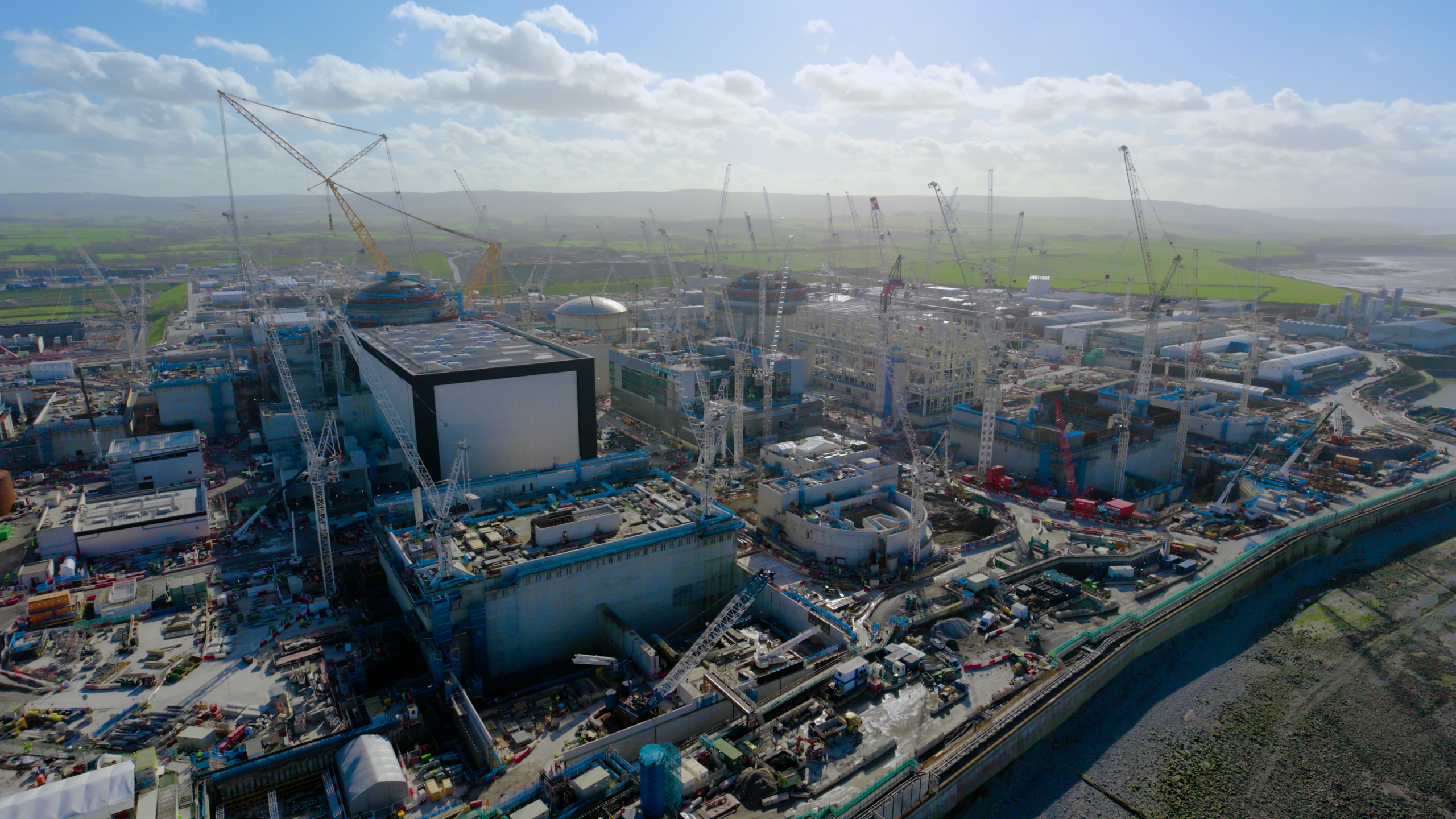
EDF has released a new update from inside Hinkley Point C’s first reactor building, showing the Somerset nuclear project moving further from heavy civil construction into systems fit-out.
The video tour, led by Hinkley Point C delivery director Simon Parsons, shows teams progressing inside Unit 1 while preparing for installation of the identical second reactor in Unit 2. It also covers assembly work on the Arabelle steam turbine and continued work on a fish return tunnel, one of the project’s three fish protection systems.
The scale of the fit-out phase is substantial. EDF says Unit 1 requires 370km of pipework, 10,400km of cables, 35,700 valves, and 35,000 lights, alongside pumps, supports, controls, and associated equipment. Civil construction teams are nearing completion of Unit 1’s main buildings, while work on Unit 2 is increasingly benefiting from lessons captured during the first build.
EDF says experience from Unit 1 is helping the project build the second unit 20–30% faster. That repeat-build effect is central to the wider case for future nuclear delivery, including Sizewell C, where design repetition, established supply chains, and improved sequencing are expected to reduce risk from the outset.
Hinkley Point C remains one of the UK’s largest tests of industrialised infrastructure delivery. Its construction phase has brought together heavy civils, tunnelling, marine engineering, prefabrication, specialist concrete works, digital coordination, and complex building services installation. Moving into deep fit-out does not reduce the complexity of the project; it shifts it from large visible structures into dense systems integration.
At this stage, programme control depends on thousands of interfaces between civil structure, mechanical systems, electrical containment, equipment access, quality assurance, commissioning requirements, and nuclear-grade documentation. The physical envelope allows the project to advance, but the fit-out phase determines whether it can move towards commissioning without bottlenecks building up across trades and systems.
Specialist temporary works have already shown the level of engineering required to support that sequence. PERI’s bespoke formwork for the Hinkley dome used modelling, prefabrication, and dedicated platform design to manage complex concrete operations on the scheme. The fit-out phase now demands the same level of control across services, equipment, and testing.
The update also lands as energy infrastructure becomes an increasingly important source of construction workload. Nuclear, grid reinforcement, hydrogen, storage, and offshore wind all require contractors and suppliers that can operate across construction, manufacturing, logistics, systems engineering, and safety assurance. The boundaries between building, infrastructure, and industrial delivery are narrowing on projects of this scale.
Hinkley’s next phase will be watched closely because it offers a rare live test of repeat construction in the UK. If Unit 2 captures the expected gains from Unit 1, the evidence will strengthen the case for standardised delivery on future megaprojects. If fit-out interfaces slow that learning curve, the lesson will be equally useful: repeat design only works when supply chains, site methods, and commissioning plans are capable of repeating with it.