IN Brief:
- Biscay Eco Aggregates has completed a carbonation facility at the Port of Bilbao.
- The process combines captured CO₂ with residues from waste-to-energy plants.
- Full production could reach 125,000 tonnes of aggregate each year.
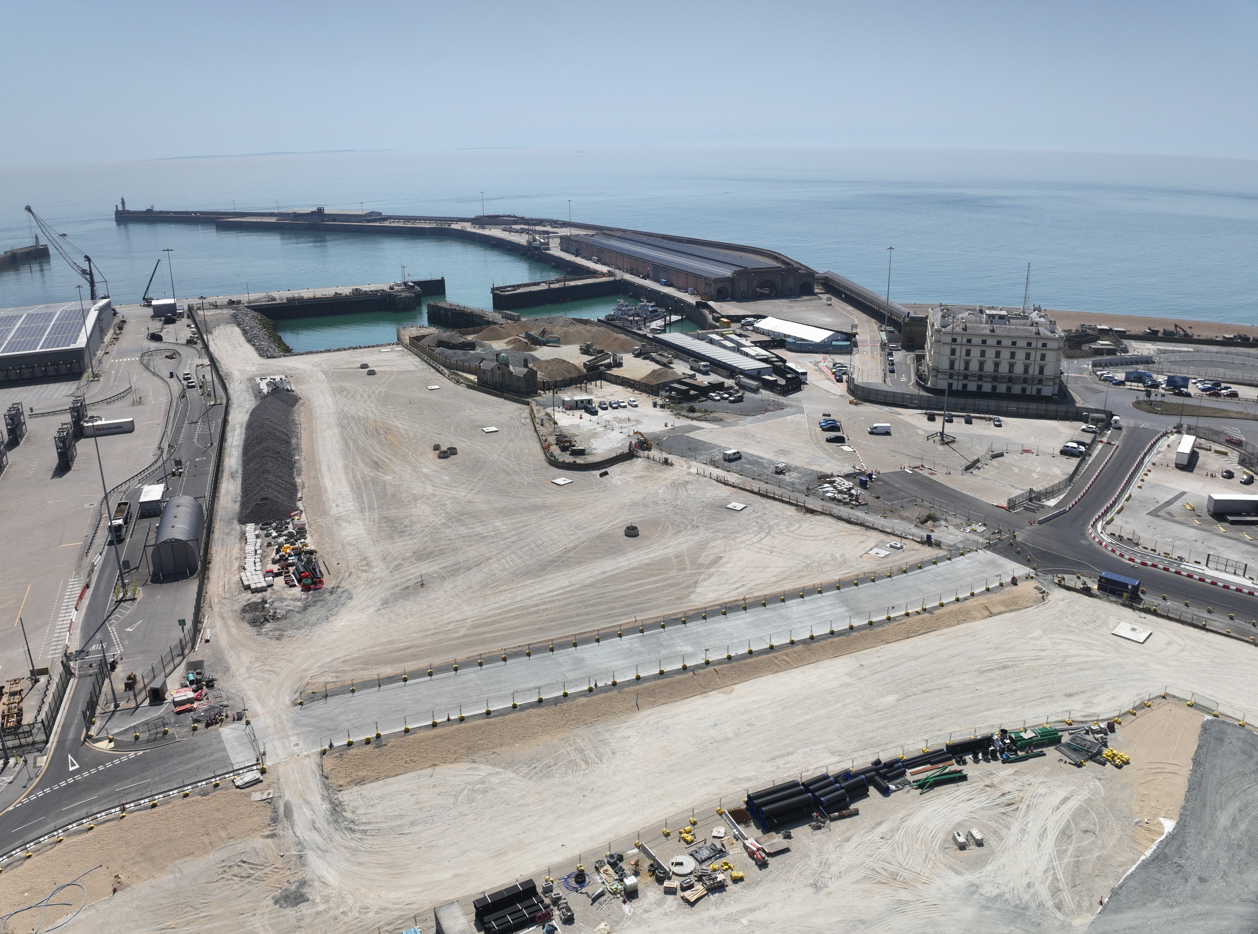
O.C.O Technology and Petronor have completed a facility at the Port of Bilbao that uses accelerated carbonation to convert captured carbon dioxide and waste-to-energy residues into construction aggregate.
The partners are delivering the project through their Biscay Eco Aggregates joint venture. At full operation, the plant is expected to process approximately 50,000 tonnes of thermal residue, permanently mineralise up to 7,500 tonnes of CO₂, and manufacture as much as 125,000 tonnes of aggregate each year.
Applications for the finished material include precast products, blocks, tiles, non-structural concrete, and infrastructure work. The programme has received approximately €3.17m from the European Union’s Innovation Fund.
O.C.O Technology’s process introduces captured CO₂ into alkaline mineral residues under controlled conditions. The gas reacts with the material and forms stable carbonates within minutes, permanently binding the carbon while changing the physical properties of the residue.
After carbonation, the treated material is matured and processed into a manufactured aggregate. The route combines carbon utilisation with the diversion of residues that would otherwise require disposal or move into a lower-value application.
Technology already used commercially in the UK has been adapted to local waste streams, regulation, permitting, and market conditions in northern Spain. Since residues vary according to incoming waste composition and the operation of individual energy plants, testing and process control are required before the output can be treated as a consistent construction product.
The Bilbao facility arrives as the construction sector places greater emphasis on retaining materials within productive loops. The UK concrete industry’s circular-economy plan has similarly widened attention from factory waste towards recovery, reuse, packaging, surplus material, and higher-value recycling.
Manufactured aggregate must compete on engineering performance as well as carbon. Producers and users need evidence covering grading, density, strength, absorption, dimensional stability, chemical composition, leaching, durability, fire behaviour, and compatibility with cementitious or precast manufacturing processes.
Consistency will determine whether commercial users adopt the material at scale. A precast plant cannot continually alter mix designs because incoming aggregate characteristics fluctuate, while contractors require products supported by recognised specifications, declarations, quality-control procedures, and traceable test data.
The Port of Bilbao location provides access to industrial residue, captured carbon, marine logistics, and regional construction markets. Proximity between inputs and users will influence the final carbon balance because moving low-value bulk materials over long distances can erode both environmental and commercial benefits.
Planned output of 125,000 tonnes is sufficient to take the technology beyond demonstration scale, although it remains modest beside overall regional demand for primary and recycled aggregate. Early production is therefore likely to concentrate on dependable outlets where the material’s properties match a defined specification.
Non-structural concrete, blocks, and precast elements offer a practical entry route because their manufacturing environments allow tighter control than direct placement on a variable construction site. Successful use can build the performance history required before wider or more demanding applications are considered.
Carbon accounting will require consistent boundaries. Any claimed benefit should include the collection and preparation of residues, capture and transport of CO₂, plant energy, processing, curing, and delivery of the finished aggregate, while recognising avoided disposal and any reduction in virgin extraction.
The process does not replace the need to reduce emissions from cement production, improve structural efficiency, or reuse complete building components. Its contribution lies in mineralising a captured carbon stream while converting a difficult residue into a usable product.
Permitting and public confidence will remain important because the feedstock originates from waste-to-energy operations. Transparent evidence on material safety, long-term stability, and quality assurance will be required if the aggregate is to be treated as an ordinary construction input rather than a specialist waste-derived product.
The Bilbao project also represents the transfer of established UK environmental technology into a different regulatory and industrial setting. Replication will depend on access to suitable residues, concentrated CO₂, land, permits, capital, and nearby markets capable of absorbing the output.
Commissioning now moves the facility from construction into sustained production. Process stability, aggregate consistency, plant availability, and the number of manufacturers prepared to specify the material will determine how closely commercial output matches the design capacity.
Long-term performance data will be especially important where products are exposed to water, freeze-thaw cycles, salts, or repeated loading. Buyers will expect evidence that mineralised carbon remains stable and that the aggregate does not introduce durability or compliance risks elsewhere in the product.
At full scale, the plant could create a regular regional outlet for 50,000 tonnes of thermal residue each year. Its success will ultimately rest on the quality of the aggregate leaving Bilbao, the confidence of manufacturers using it, and the ability to preserve the projected carbon and waste benefits through the entire supply chain.