IN Brief:
- Winvic will deliver 578 build-to-rent flats on the former Leeds International Swimming Pool site.
- The scheme has cleared Building Safety Regulator Gateway 2, with construction expected to start later this year.
- The project adds another high-rise residential scheme moving from regulatory approval into delivery.
Winvic has secured a £130m contract to deliver two build-to-rent towers in Leeds after the scheme cleared Building Safety Regulator Gateway 2.
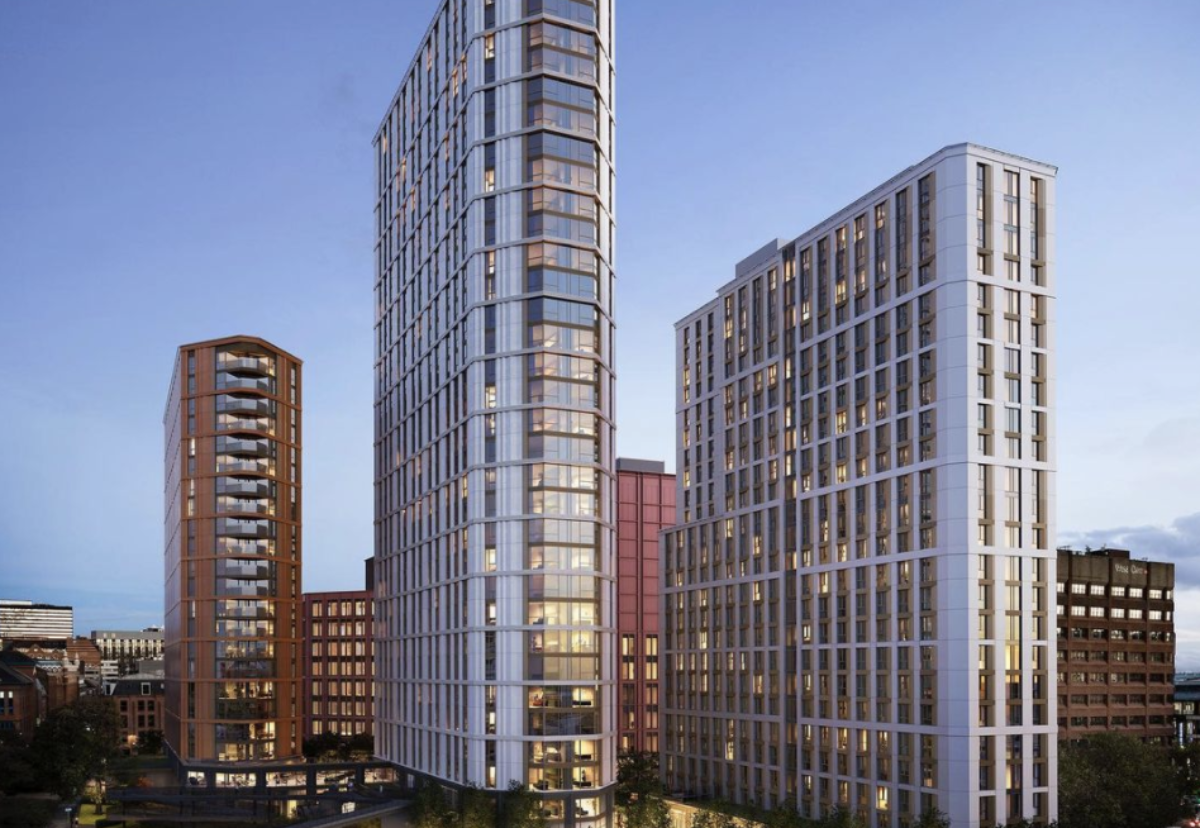
The contractor has been appointed by Lisbon Street Developments, a joint venture between Marrico Asset Management and Helios Real Estate, to build 578 flats on the former Leeds International Swimming Pool site close to the city centre.
Construction is expected to begin in the fourth quarter of 2026. The project will comprise two towers rising 33 and 22 storeys above a shared podium and basement, with resident amenity space, commercial units, roof terraces, and balconies included in the scheme.
Winvic has already worked on the Lisbon Street site, having previously completed a 548-bed student accommodation building there. The build-to-rent towers form the next major phase of a wider regeneration site planned around residential, student, hotel, commercial, and leisure uses.
The project has been designed to target a Home Quality Mark 3.5-star rating. Photovoltaic panels, decentralised air-source heat pumps, and enhanced fabric performance are included to reduce operational energy demand.
Gateway 2 approval is now one of the defining preconstruction stages for higher-risk residential buildings. Schemes within the regime cannot move into construction until the Building Safety Regulator has approved the building control application, placing greater weight on design coordination before site mobilisation.
The approval process has changed the way developers and contractors sequence high-rise residential work. Fire strategy, structural information, MEP coordination, competence evidence, and dutyholder responsibilities now need to be resolved earlier, with less tolerance for incomplete design packages being carried into construction.
Regulatory movement is beginning to unlock parts of the residential pipeline. Recent Building Safety Regulator data showed more than 12,000 homes approved through Gateway 2, after months of concern over delays affecting higher-risk building starts.
Leeds continues to attract residential investment around city-centre brownfield sites, supported by student demand, build-to-rent growth, and wider commercial regeneration. The Lisbon Street site is particularly prominent because it reuses a former public leisure site and sits close to the central business district, transport connections, and established amenities.
For Winvic, the award strengthens its position in the multi-room residential market, where contractors are increasingly expected to combine dense urban delivery with building safety compliance, energy performance, logistics planning, and resident-focused amenity construction.
The shared podium and basement will create demanding interfaces between structure, envelope, MEP, fire safety systems, access, public realm, and commercial units. City-centre logistics will add further pressure around deliveries, craneage, traffic management, and coordination with neighbouring uses.
The scheme also shows how the build-to-rent market continues to move through larger, institutionally backed projects, even while parts of the private housing market remain subdued. Rental demand in major cities, constrained housing supply, and investor appetite for professionally managed assets continue to support development where planning, funding, and building safety approval can be aligned.
Gateway 2 approval gives the project a clearer route into construction, but the delivery test now moves to mobilisation, supply-chain engagement, and programme control. High-rise residential work is entering a more demanding regulatory phase, and projects that have cleared the approval stage will still need strong coordination to reach handover without design drift, cost escalation, or avoidable delay.