IN Brief:
- Tarmac has responded to Leicestershire County Council's second Regulation 25 information request.
- Updated assessments cover seven areas, including ecology, dust, blast vibration, noise monitoring, and climate impacts.
- Further consultation is expected before the council's Development Control and Regulatory Board considers the extension in 2027.
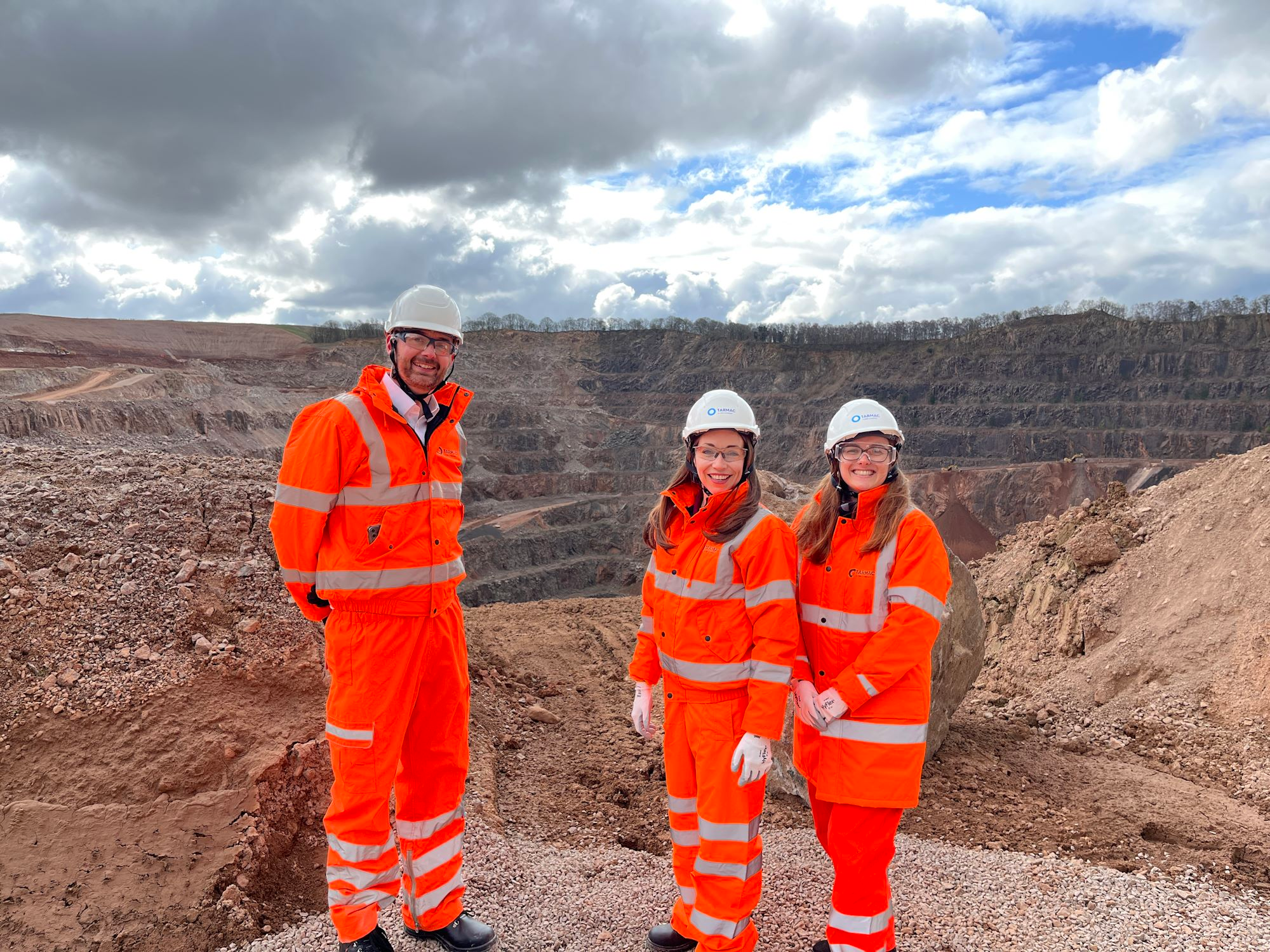
Tarmac has provided additional environmental and technical information for its proposed extension of Mountsorrel Quarry in Leicestershire, responding to a second formal request from the county council as the application moves towards a planning decision.
The Tarmac submission, dated 17 November, addresses seven areas of assessment, including ecology, noise, air quality, blasting, archaeology, health, and climate change. Leicestershire County Council requested the information in July 2026 under Regulation 25 of the Town and Country Planning (Environmental Impact Assessment) Regulations 2017.
The application concerns proposed extensions to the north and south-east of the existing quarry. A further public consultation is expected before the council’s Development Control and Regulatory Board considers the proposals, with Tarmac anticipating a decision during 2027.
The latest submission is part of an extended environmental assessment process rather than an approval to begin additional extraction. Tarmac originally submitted the planning application in October 2023 and supplied further information in October 2025 following an earlier request from the council.
Regulation 25 enables a planning authority to require additional environmental information where the material available is insufficient to complete its assessment. The process allows consultees and the authority to examine specific effects in greater detail before a decision is made.
The second request followed consideration of the October 2025 information and responses received during the subsequent consultation. It reflects the range of environmental and operational questions associated with extending a hard-rock quarry rather than a change to the application’s formal status.
Ecology is one of the principal areas covered by the new documents. Tarmac has provided further information concerning ancient woodland, wood pasture and parkland, and protected species.
Quarry expansion can affect habitats both through direct land disturbance and through changes to adjoining conditions. The assessment must therefore consider the relationship between proposed working areas, surrounding ecological features, and the measures intended to avoid or manage adverse effects.
The updated evidence will be considered as part of the planning process. Its submission does not establish that the council or statutory consultees have accepted the proposed mitigation, or that remaining ecological concerns have been resolved.
Noise monitoring is another element of the additional information. Tarmac has provided details of real-time monitors and the locations where noise will be measured, enabling the authority to examine how the effects of quarry operations would be recorded.
The position of a monitoring instrument influences the results it produces. Measurements taken near equipment may be useful for assessing operational sources, while monitoring at other locations may be required to establish the conditions experienced by neighbouring properties or sensitive sites.
Interpreting the results also requires consideration of background sound, operating periods, and the applicable assessment criteria. Continuous monitoring can provide a more detailed record, but the measurements must be evaluated against the circumstances in which they were collected.
Dust and air quality have received further attention following comments from Charnwood Borough Council’s Environmental Protection Manager. The information includes an updated assessment of potential impacts associated with the proposed extension.
Dust may be generated by activities including excavation, crushing, screening, material transfer, and vehicle movements. Its behaviour depends on particle characteristics, weather, the position of emissions sources, and the effectiveness of controls used during operations.
Assessment of these effects requires a distinction between predicted emissions and actual monitored concentrations. The updated documents will inform the council’s consideration of whether the proposed activities can operate within appropriate environmental limits.
Blasting has prompted revised modelling and an updated Blasting Impact Assessment. Tarmac has reviewed limits, proposed planning conditions, and prepared a new Blast Monitoring and Management Plan.
Blasting vibration depends on factors including the explosive charge, blast sequence, geological conditions, and distance from the activity. Predicted effects can inform the design and control of operations, while monitoring provides evidence of the vibration recorded during individual blasts.
The proposed management arrangements will be examined during determination. Planning conditions, if permission is eventually granted, would establish the enforceable requirements applicable to the authorised development.
Tarmac has also prepared a health impact assessment using the county council’s template. This provides an additional framework for considering potential consequences for surrounding communities alongside the technical environmental assessments.
Archaeology and cultural heritage form a separate part of the submission. The updated documents address the setting of nearby heritage assets, archaeological earthworks, and the relationship between the proposed quarry extension and Quorn House with its surrounding historic landscape.
Results from archaeological excavation and recording of a structure in Rowhele Wood have also been supplied. Such evidence contributes to the understanding of features that may be affected by extraction or changes to the surrounding landscape.
The climate assessment has been updated to consider additional emissions sources, including effects associated with soil disturbance and the removal of trees. These impacts must be distinguished from emissions generated by quarry machinery, transport, and other operational activities.
Changes to soil and vegetation can affect stored carbon, while the construction and operation of a quarry extension introduce further emissions sources. The planning assessment must consider the scope and assumptions used to quantify those effects rather than relying on a single undifferentiated carbon figure.
The application remains at the evidence-gathering stage. Leicestershire County Council is expected to consult again on the new material, allowing interested parties to examine the revised assessments before the authority determines the proposals.
The planning reference is 2023/EIA/0096/LCC. No extension permission has been granted through the November submission, and the final operating conditions remain undetermined.
With the second Regulation 25 response submitted, the next formal steps are consultation, consideration of the updated environmental evidence, and a decision by the county council’s Development Control and Regulatory Board, currently anticipated during 2027.