IN Brief:
- The nine-day possession will replace Saxmundham’s manually operated junction with a powered crossover and integrated signalling.
- The junction connects the East Suffolk line with the Leiston branch used to access the Sizewell C construction route.
- Sizewell C aims to move up to 60% of construction materials by rail or sea.
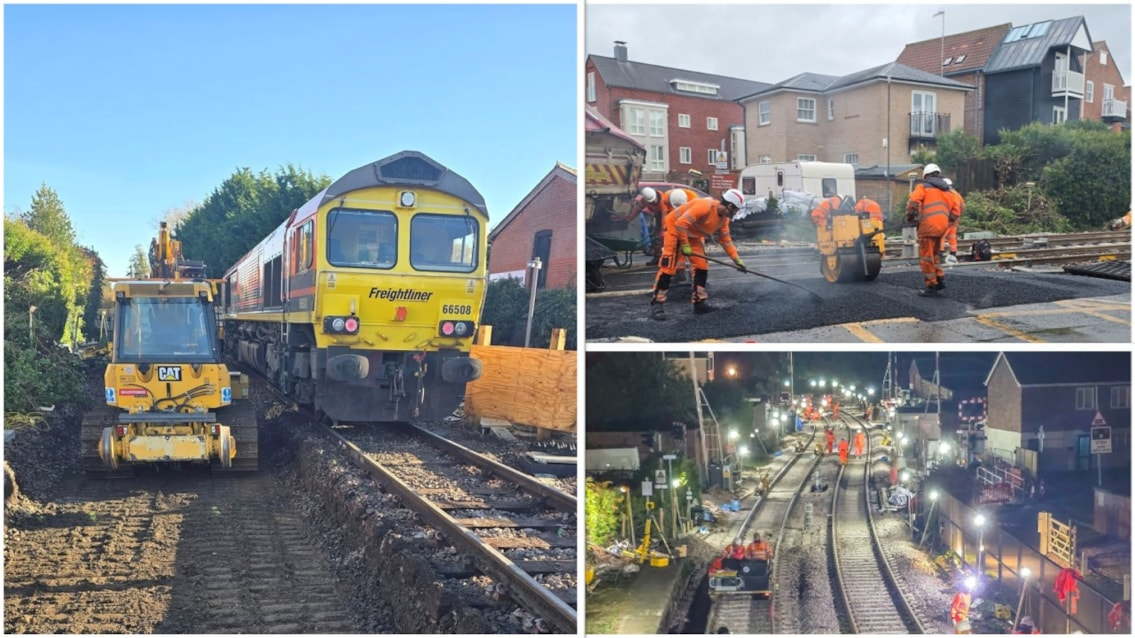
Network Rail is preparing a nine-day renewal of Saxmundham junction on the East Suffolk line as part of the rail programme supporting construction of Sizewell C. The work will replace the manually operated junction with a powered crossover and integrated signalling, creating a more reliable connection between the Leiston branch and the main route used by construction freight.
The possession is planned from Saturday 24 October to Sunday 1 November 2026. During the first weekend, buses will replace trains between Lowestoft and Ipswich, while from Monday 26 October trains will run between Lowestoft and Halesworth with replacement buses between Halesworth and Ipswich. Network Rail is using the closure to combine the junction renewal with signalling work between Westerfield and Halesworth and safety equipment installation at Bealings crossing.
Saxmundham is a relatively modest piece of railway infrastructure, but it sits at a critical interface in the Sizewell C logistics plan. The junction connects the East Suffolk line with the Leiston branch, which provides the rail route towards the nuclear construction site, and its modernisation removes a manually controlled constraint before freight volumes rise. Reliability at that point will affect the ability to run repeatable construction trains without transferring avoidable pressure back onto road haulage.
Sizewell C intends to move up to 60% of construction materials by rail or sea. The project brought its first engineering train onto the site in February, delivering 960 tonnes of railway ballast to support development of the railhead, and has said that a full construction train can remove the equivalent of around 50 HGV movements from local roads. Rail will not replace every road movement, but it is expected to carry a substantial share of aggregates, cement, steel, reinforcement, and other bulk material over the life of the build.
Bringing the Leiston branch back into regular use has required more than reopening an existing formation. Balfour Beatty Rail has been upgrading the branch on behalf of Sizewell C, while the site is being equipped with a new railhead and three sidings to receive construction traffic. Saxmundham sits upstream of those works, making the junction part of the end-to-end supply route rather than a stand-alone maintenance scheme.
Separate permanent road schemes serving Sizewell C have encountered programme delays, increasing the importance of keeping the rail and marine elements aligned with the main construction sequence. The Sizewell Link Road and Two Village Bypass still have to carry workers, services, smaller loads, and freight that cannot sensibly be transferred to train or vessel. Every reliable rail path therefore protects capacity elsewhere in a logistics system that depends on several modes operating together.
The October possession also illustrates the practical constraints of upgrading infrastructure that remains in passenger use. A powered crossover, signalling integration, and associated line-side systems have to be installed, tested, and commissioned within a defined blockade before services resume. Combining several packages inside the same closure reduces repeat disruption, but it concentrates interfaces between track, signalling, level-crossing equipment, testing, and train operations into a short handback window.
Construction logistics will become less forgiving as the project moves towards peak material demand. Missed train paths or unreliable access can push loads onto roads, increase temporary storage requirements, and disrupt the sequence in which major civil works consume material. A small railway junction can therefore become a programme constraint if it cannot deliver the frequency and reliability assumed by the wider logistics model.
Sizewell C’s freight strategy is deliberately mixed-mode. Rail is expected to carry large volumes of bulk construction material, sea freight provides additional capacity, and road transport remains necessary for loads and movements that cannot be transferred. The value of the Saxmundham renewal will lie in keeping that balance workable when volumes increase, rather than in the scale of the junction works themselves.
The possession also gives Network Rail a narrow commissioning window because several systems have to be handed back together. Track geometry, point operation, signalling logic, level-crossing interfaces, and passenger-service readiness must all be verified before the route returns to normal use. Any unresolved defect at handback would affect both passenger operations and the timetable available for future freight.
Passenger services are due to return after the blockade on 1 November. The longer test begins as construction trains become more frequent and the upgraded junction is asked to support one of the UK’s largest infrastructure programmes without turning a local rail bottleneck into a wider site logistics problem.