IN Brief:
- Of 1,000 frontline survey respondents, 83% reported verbal abuse and 46% reported threats or intimidation.
- A third had experienced objects being thrown and 23% reported physical aggression while working on the road network.
- Industry employers are seeking clearer prosecution guidance and more consistent incident recording, not announcing new criminal offences.
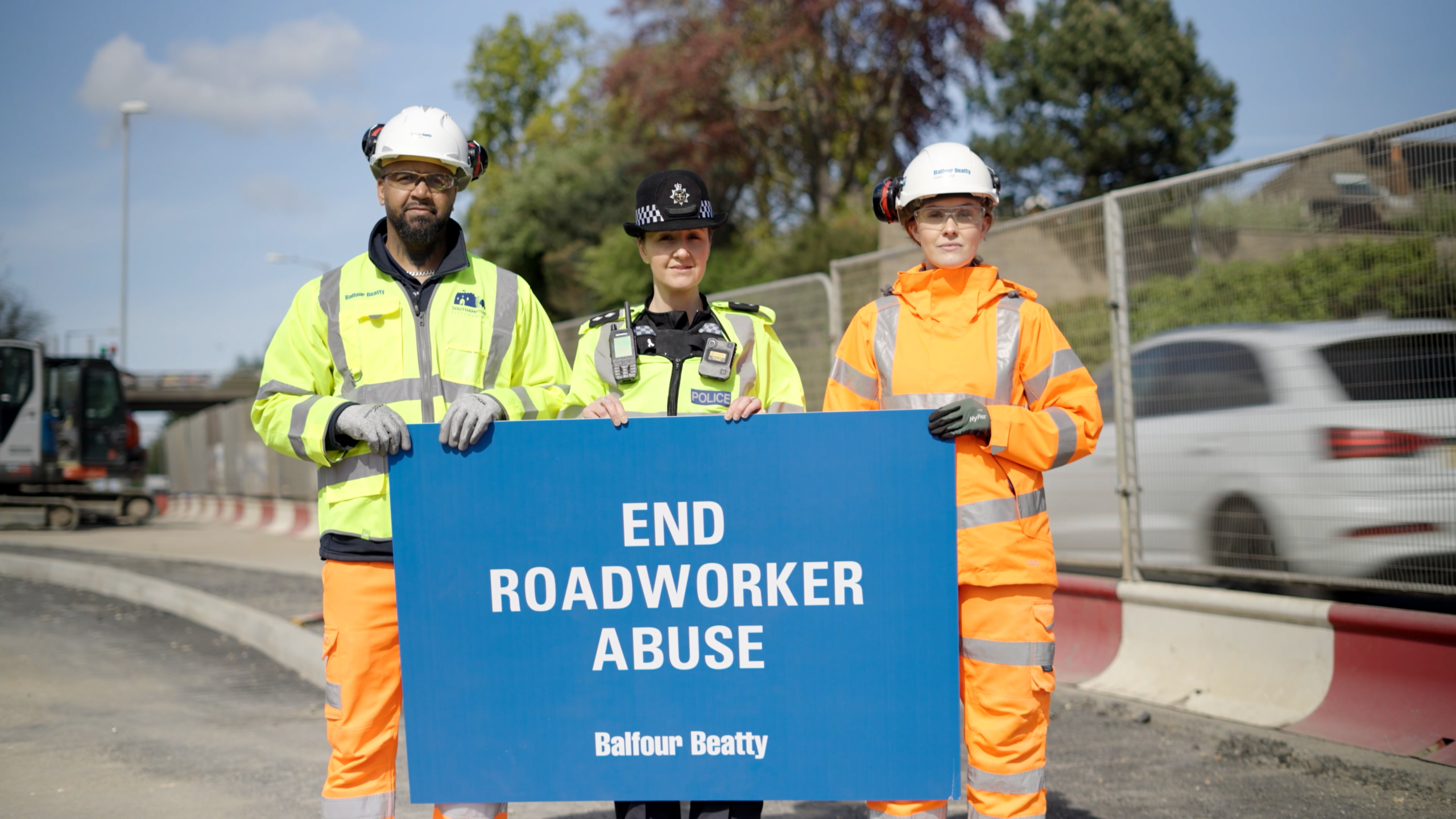
Balfour Beatty has reported that 83% of roadworkers surveyed across the UK have experienced verbal abuse while working on the road network, with threats, thrown objects, and physical aggression also appearing in the results. The findings were released on 16 November during Roadworker Safety Week and form part of an industry campaign to strengthen protection for people maintaining and improving highways.
A survey of 1,000 frontline roadworkers found that 46% had encountered threats or intimidation, 33% had objects thrown at them, and 23% had experienced physical aggression. Another 15% reported abuse at least weekly. These measures overlap: a respondent could have faced several forms of behaviour, so adding the percentages would give a misleading impression of the scale of the problem. The 83% figure specifically relates to respondents reporting verbal abuse.
Witnesses are also affected. Some 82% of respondents said they had seen colleagues being abused, and 13% had considered leaving the industry because of how they were treated. The latter is a measure of intention, not the number of people who subsequently resigned. Without a published breakdown of sampling and recruitment methods, the findings are best read as the experiences reported by this group of workers rather than a measured prevalence rate for every roadworker in Britain.
Roadworkers operate near live traffic, often in locations where carriageway restrictions, temporary signals, or lane closures are essential to keep vehicles away from the workforce. Safe delivery depends on a managed boundary between moving road users and personnel carrying out resurfacing, inspection, drainage, barrier installation, repairs, and other activities. Aggression towards workers adds a separate occupational hazard to an environment that already requires rigorous traffic management and site controls.
Confrontations can begin when a driver or pedestrian encounters a closure and challenges the person implementing it. Traffic-management crews often set out cones, signs and barriers while other teams undertake resurfacing, drainage, inspection, or repairs beyond the protected boundary. Workers implementing a restriction may have no authority over the scheme design or its duration. Distraction while managing a live traffic interface introduces an immediate hazard; a thrown object, threatened assault or deliberate entry into a work zone can add physical danger to an already exposed task. The survey did not measure accident rates attributable to abusive behaviour.
Roadworker Safety Week is being led by Balfour Beatty, Kier, Costain, Skanska, Galliford Try, and WSP, with involvement from National Highways, Chevron, FM Conway, and AtkinsRéalis. The campaign brings together organisations responsible for designing, procuring, supervising, and executing works, reflecting the fact that the risks are not contained within a single contractor’s workforce or a single section of the road network.
The participants are asking the Crown Prosecution Service to review and publish guidance concerning roadworker abuse incidents. Their objective is more consistent recording and treatment of incidents, with a stronger evidence base for enforcement. This is a request for action, not confirmation that new CPS guidance has been introduced. The campaign also supports the Institute of Customer Service’s Service with Respect initiative, which seeks greater legal protection for people performing public-facing work.
Balfour Beatty reported having seen only one conviction secured against an offender. That account relates to the company’s experience and cannot be treated as a national prosecution total. Contractors seeking more consistent enforcement would need to establish what incidents were reported, what evidence was retained, whether police were involved, and what outcomes followed. The headline survey does not supply those linked records, leaving an important gap between reported experience and criminal justice outcomes.
Steve Crofts, health, safety and wellbeing director at Balfour Beatty, said roadworkers should never have to expect to be “shouted at, threatened or physically assaulted” for doing their jobs. His remarks accompanied the survey, alongside support from the No Excuse For Roadworker Abuse campaign and the government.
Recording incidents consistently is one practical issue for employers. A report describing hostile language, a direct threat, a physical assault or a driver entering a closed work area may require different evidence and responses. Time, location, witness accounts, any relevant vehicle information, and available site or traffic camera footage can assist later examination. The campaign has not established a single mandatory national reporting platform, and participating organisations will continue to operate their own reporting arrangements unless a shared approach is introduced.
Survey findings can bring behaviour into view where people have stopped reporting routine hostility. They do not, on their own, show whether abuse is becoming more frequent, which roads carry the greatest risk, or which types of work are most exposed. The published figures do not provide detailed regional or occupational breakdowns, and comparisons between motorway contracts, local street works and urban maintenance would require that information. A consistent incident dataset could make such comparisons more robust than anecdotal accounts alone.
Roadworker Safety Week runs from 16 to 20 November 2026. Contractors and public bodies have called for clearer guidance and more reliable reporting alongside their existing traffic-management and workforce protection duties. Subsequent prosecution guidance, reporting practices and incident outcomes will determine whether this campaign results in changes that can be demonstrated beyond the survey itself.