IN Brief:
- The Court of Appeal dismissed Almacantar’s challenge concerning planned façade works at Centre Point House.
- Paragraph 8 of Schedule 8 protects qualifying leases against charges for defined unsafe cladding remediation without requiring a separate relevant defect.
- Whether protection applies depends on the actual external wall system and proposed works, not every form of façade repair.
The Court of Appeal has dismissed an appeal by Almacantar freeholder companies seeking to recover the cost of planned façade remediation at Centre Point House in central London through residential service charges. The judgment, handed down on 17 November 2026, confirms that a specific protection for qualifying leaseholders in the Building Safety Act 2022 can apply to unsafe cladding even where the works do not concern a statutory relevant defect.
The case, Almacantar Centre Point Nominee No.1 Ltd and another v De Valk and others, is reported as [2026] EWCA Civ 1466. Newey, Miles, and Fancourt LJJ dismissed the landlords’ appeal, leaving in place the Upper Tribunal’s interpretation of paragraph 8 of Schedule 8 to the Act. The dispute arose from proposed works to the external façade of Centre Point House, part of the Grade II listed development built in the 1960s.
Water penetration had damaged the façade’s timber framing system, causing deterioration that affected its ability to retain glazing and associated external panels. One window panel had already fallen from the building. The remedial scheme involves replacing substantial parts of that system, with the cost now expected to exceed £12m. Those facts distinguish the dispute from the more familiar cases involving combustible façade materials installed on newer residential towers.
The freeholders asked the tribunal to determine, under section 27A of the Landlord and Tenant Act 1985, whether the proposed expenditure was recoverable through service charges. Their leases would ordinarily have made the repair costs chargeable, but statutory restrictions can displace that contractual position. The tribunals found that paragraph 8 barred recovery of qualifying leaseholders’ contributions for the relevant cladding remediation. Non-qualifying leaseholders were considered separately because the same protection does not automatically extend to every lease.
Paragraph 8 of Schedule 8 states that no service charge is payable under a qualifying lease for cladding remediation. The statutory definition addresses removing or replacing part of an unsafe cladding system that forms the outer wall of an external wall system. Both the condition of the system and the nature of the works therefore count. A building with deteriorating external fabric does not necessarily qualify in respect of every window repair, balcony alteration or item of structural maintenance.
The central disagreement concerned whether the cladding provision should also require a ‘relevant defect’ as defined elsewhere in the Act. That statutory term is linked to particular building safety risks and a defined period of construction or works, which presented a difficulty for the landlords’ case because Centre Point House dates from the 1960s. The Court of Appeal upheld the view that the wording of paragraph 8 operates independently of that relevant-defect regime. It therefore rejected the proposed additional threshold.
A second argument sought to restrict ‘unsafe’ to cladding presenting a fire hazard, reflecting the building safety reforms that followed the Grenfell Tower fire. The court did not accept such a narrow reading. A system can be unsafe because parts risk falling, and the evidence concerning deteriorated timber supports and attached panels was material to the decision. The judgment does not say every weatherproofing failure is necessarily an unsafe system: the danger and the nature of the proposed removal or replacement remain questions of fact and statutory construction.
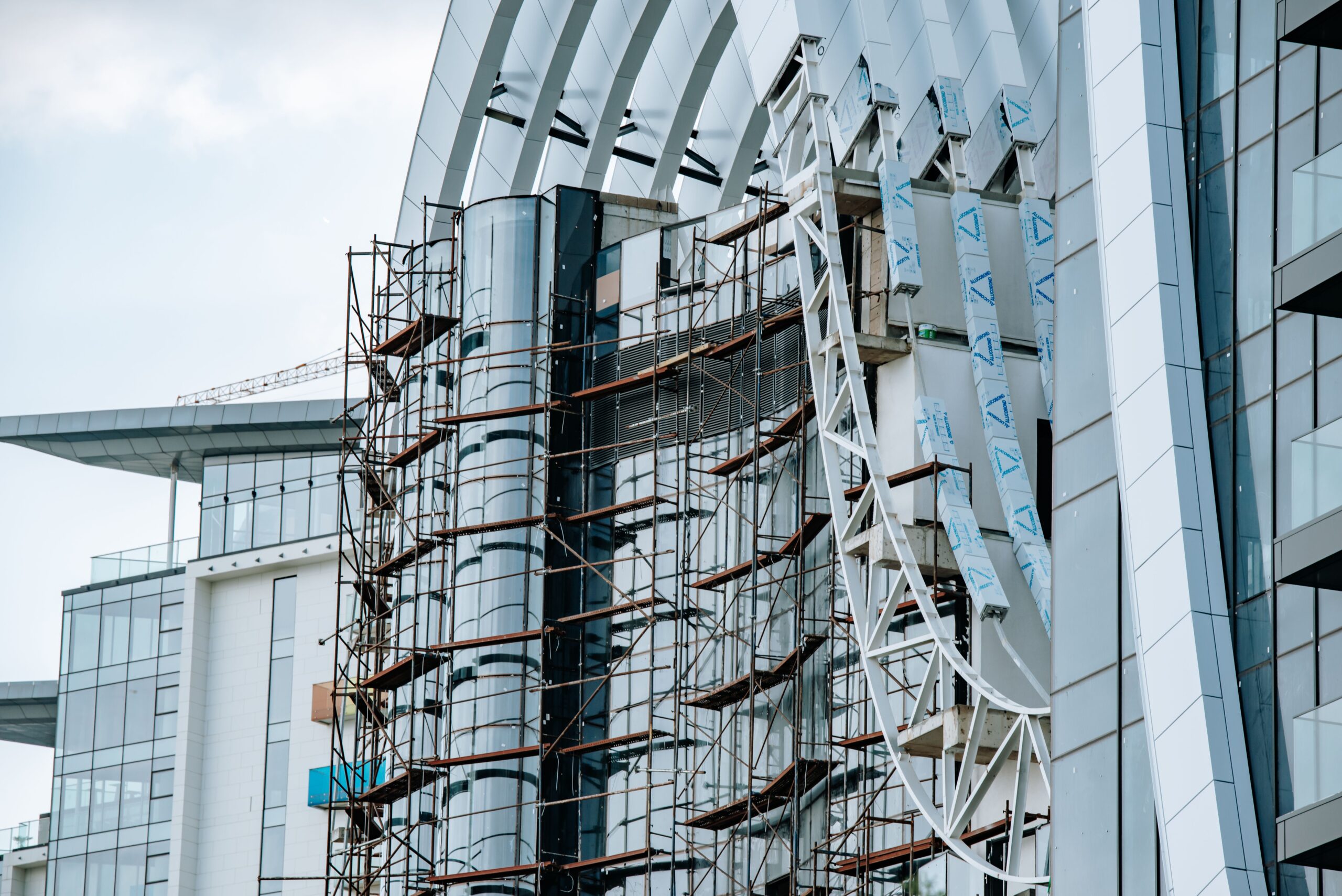
The construction of the façade was central to the dispute. External wall assemblies can combine glazing, timber or metal subframes, weather seals, insulation, fixings and protective panels, with individual components performing different structural or weathering functions. At Centre Point House, water penetration had affected the framing that retained glazed elements. The tribunal examined how those parts formed the outer wall, rather than relying simply on whether a contractor would describe the package as a window replacement, façade repair or cladding project.
The distinction affects how remediation work is scoped and costed. A survey may identify defective support members, damaged seals, corroded fixings or individual panels that need replacement, while other components remain serviceable. Designers must determine which elements can remain in place and how temporary support, access, and protection of occupied areas will be managed during removal. Those engineering decisions establish the proposed work; the statutory test then determines whether the resulting cost falls within the defined cladding protection. The Court of Appeal did not prescribe the remediation design.
Repair obligations and service-charge liability are separate questions. The owner may still be required to make an unsafe external wall safe even where qualifying leaseholders cannot be charged for the protected work. Other contractual, statutory or third-party recovery routes may need consideration, and costs associated with genuinely separate repairs may be treated differently. The decision settles the interpretation of paragraph 8 in this case, not every possible dispute about the allocation of façade costs.
Remediation continues across buildings with different construction histories and defects. Some schemes concern combustible insulation or panels, while others address inadequate support, fire stopping or deteriorated structural interfaces. Programme monitoring of remediation progress describes an industry-wide backlog but does not decide whether a particular cost is recoverable through service charges. The Centre Point House decision turns on the actual outer wall system, the danger it presented, the proposed replacement work and qualifying lease status.
Owners of older buildings cannot assume that cladding remediation protection is unavailable because the façade predates the statutory period used elsewhere in the Building Safety Act. Equally, the ruling does not make the repair of every ageing envelope component free of charge to every resident. Those preparing replacement designs and service-charge budgets must identify the unsafe system and the work within paragraph 8, while assessing the remaining obligations separately.