IN Brief:
- Fox Construction Eastern has become the first reported UK end-user purchaser of Montarent's M21-4WDS self-propelled tower crane.
- Manufacturer specifications list a 26m jib, up to 1,800kg lifting capacity, four-wheel drive and steering, and a 4m-by-4m working footprint.
- The crane's operational flexibility will still depend on lifting plans, ground conditions, configuration, and applicable UK rules.
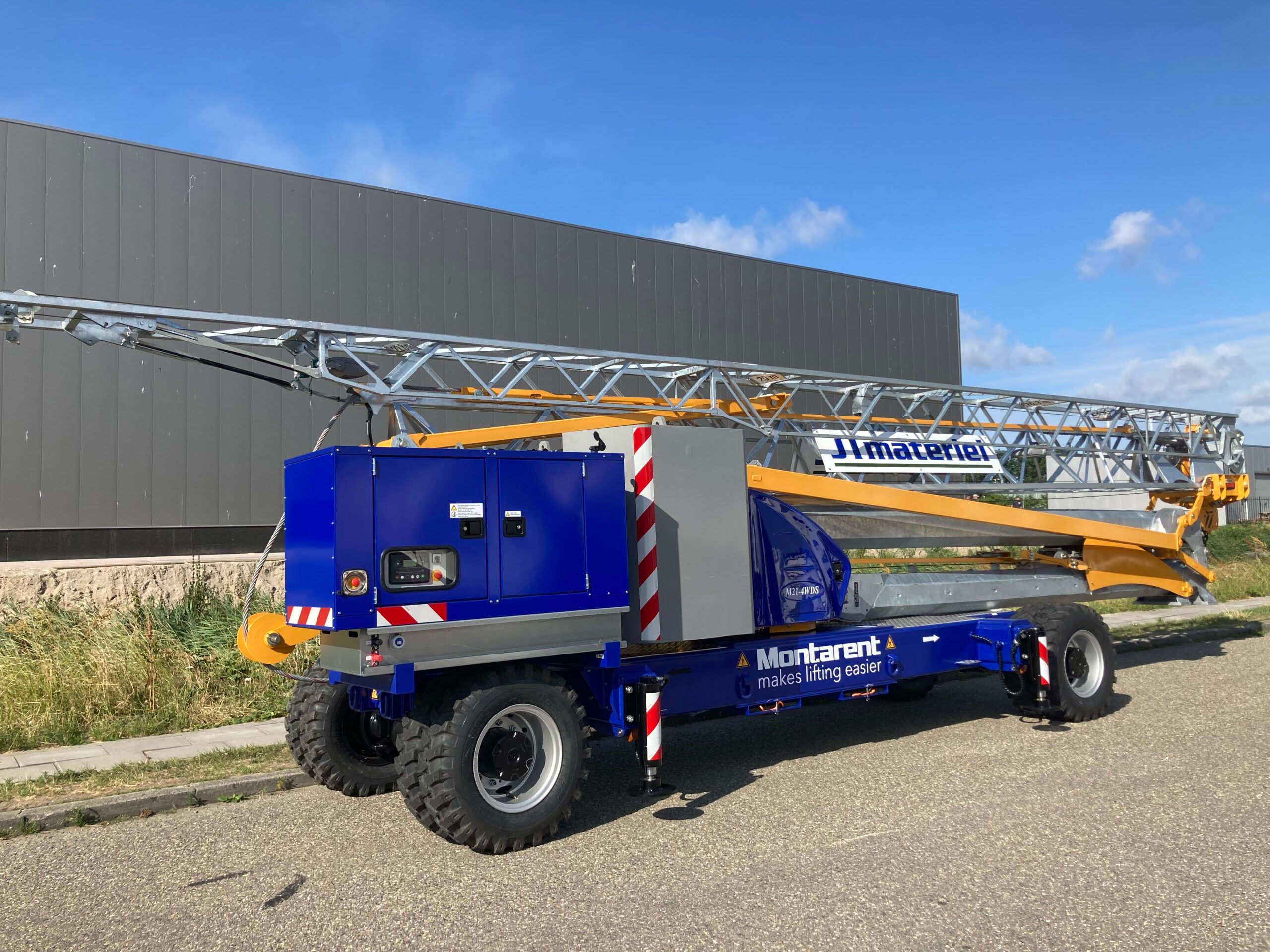
Fox Construction Eastern has become the first reported UK end-user buyer of a Montarent M21-4WDS self-propelled tower crane. The Lowestoft contractor acquired the model through a deal associated with Vertikal Days, reported on 17 November 2026. The machine combines a self-erecting tower crane with a powered, four-wheel-steer chassis, allowing it to move between suitable lifting positions within a construction site before set-up.
Dutch manufacturer Montarent’s M21-4WDS has been covered in the specialist equipment market since at least 2016. Fox Construction’s order represents the first reported UK end-user purchase of this established model. Earlier demonstration units or equipment held by a dealer would not necessarily establish that a UK contractor had added the model to its working fleet.
The crane has a 26m jib and published lifting heights of approximately 18.3m to 25.5m, depending on configuration. Montarent lists lifting capacities from 1,800kg to 700kg across its operating range. The upper figure is not available at every radius or boom position; an individual lift must be assessed against the approved load chart, configuration, and site conditions.
Four-wheel drive and four-wheel steering allow the undercarriage to manoeuvre over suitable site routes without a separate towing machine. The manufacturer also describes travel with the structure erected, within its specified operating limits. Movement still requires a planned route, suitable ground, controlled pedestrian interfaces, and adherence to the operating instructions; the travel feature is not a general authorisation to move under suspended load.
Its stated working footprint is 4m by 4m, with a 2.13m ballast radius. Transport dimensions are approximately 12.4m long, 2.9m wide, and 3.1m high, while the machine weighs about 21.4 tonnes with counterweight. A contractor selecting a working position must consider outrigger or bearing arrangements, available clearances, adjacent structures, buried services, ground capacity, and vehicle access rather than relying on the nominal footprint alone.
Montarent markets an erection sequence that can make the crane ready for work in about ten minutes under appropriate conditions. Remote controls display information including height, load, and distance, while LED lighting is integrated into the jib. Those features do not eliminate the time required for positioning, stability checks, segregation, inspections, and the agreed lifting plan before work begins.
The published specification identifies a 400V, three-phase electrical supply requirement, while the manufacturer also promotes the option of operating with an onboard generator. Site planners therefore have to determine how the selected power configuration will be supported during work and how trailing cables, temporary supplies, or generator access will be managed. Differences between mains and generator operation are operational details to confirm against the ordered machine rather than reasons to assume either mode will be available in every lifting configuration.
A 10-tonne-metre operating configuration is described by Montarent as exempt from a particular hoisting licence in the Netherlands. That is a Dutch regulatory statement, not an exemption under UK lifting law. British projects remain subject to competent planning, supervision, examination, and safe operation under the applicable requirements, including LOLER where relevant. The crane’s configurable lifting capacity must always be matched to the task.
The combination of mobility and tower-crane reach may suit contractors carrying out repeated lifting work in confined areas or across several positions on the same site. Practical performance depends on how often the machine is moved, the dimensions and bearing strength of the route, permitted lifting radii, and the availability of supervision. No measured productivity saving or reduction in hired-crane costs has been reported for Fox Construction’s fleet.
Fox Construction Eastern was established in 2015 by Paul and Jordan Fox, according to the specialist equipment report. The new purchase adds a lifting asset to a regional contractor rather than creating a documented national distribution agreement for the manufacturer. The reporting does not identify the first UK project on which the machine will work or give a contract value, and no confirmed delivery-to-site date should be inferred from the account of the sale.
Fox Construction has not identified the machine’s first UK job or published a lifting utilisation figure. Its operational value will be established by the sequence of lifts, the space needed for set-up, and whether relocation can be accommodated within site controls. The confirmed development is an addition to the contractor’s lifting fleet, using a model with a defined transport envelope and load chart.