IN Brief:
- Structural steel is nearing completion at Powerday’s redeveloped Croydon materials recovery facility.
- Turmec equipment will include electromagnetic separation and two optical sorters for complex waste streams.
- Building, processing, electrical, and external works must converge before the scheduled April 2027 opening.
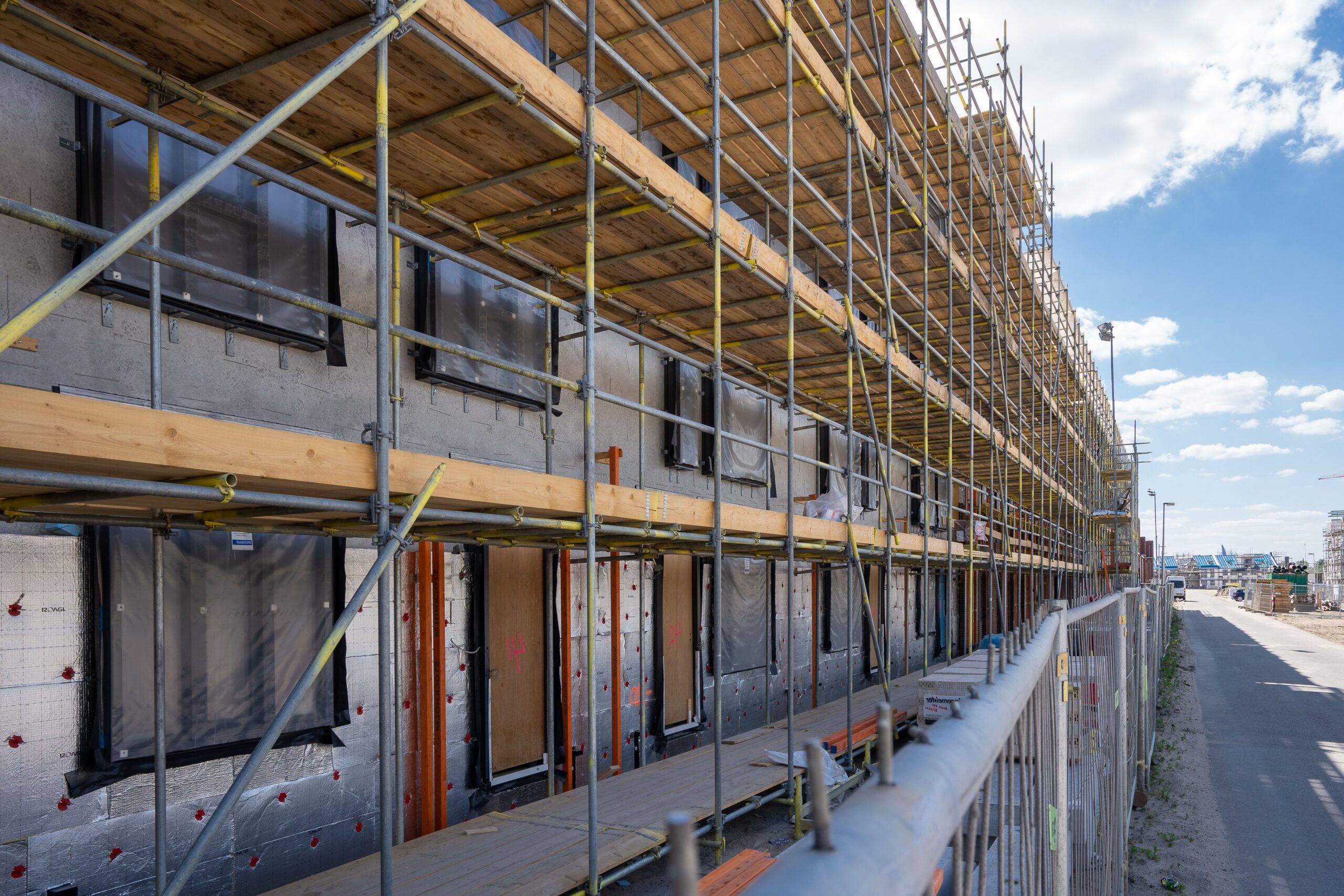
Powerday has reached another construction milestone at its redeveloped Croydon materials recovery facility, where the structural steel frame for the main processing building is nearing completion. Reinforced-concrete wall installation is under way and drainage works are approaching completion as the company works towards bringing the new plant into operation in April 2027.
The facility is designed to process up to 100,000 tonnes of material each year and will become Powerday’s third high-capacity materials recovery facility, joining its established Willesden and Enfield operations. The investment is intended to extend the company’s processing capacity across South London and the wider M25 area while supporting expansion into southern counties.
Recent site progress extends beyond the main frame. Temporary power has been connected, external storage bays have been concreted, and those areas are being prepared for their own steel and cladding installation. The programme is therefore beginning to spread from the main processing building into the supporting infrastructure needed for a functioning waste operation.
The completed MRF will use processing equipment supplied by Turmec, including electromagnetic separation and two optical sorters. Powerday plans to handle construction and demolition waste, commercial and industrial material, metals, plasterboard, timber, hardcore, fines, and black-bag waste through the site.
That variety determines much of the plant’s engineering challenge. A materials recovery facility does not simply need enough floor area to receive waste; it needs material to move through successive processing stages at the required rate while maintaining separation between incoming loads, recovered fractions, residue, vehicles, people, and maintenance activity.
The structural building therefore provides only one part of the operating system. Conveyors, sorting equipment, electrical infrastructure, controls, storage bays, vehicle routes, and discharge points have to be coordinated with the structure and envelope, while access must remain available for installation and later maintenance of equipment that is considerably less convenient to move once the building is complete.
Powerday’s programme also includes solar panels for on-site renewable generation. Alongside the core processing operation, the Croydon site is intended to function as a wider service hub handling skips, roll-on roll-off containers, dustcarts, road sweepers, and larger vehicles, adding another layer of traffic and space planning around the processing building.
The current structural milestone matters principally because it changes the balance of the programme. Early construction is dominated by groundworks, foundations, drainage, and frame erection; once the envelope and major structural elements advance, process equipment, building services, external works, and commissioning increasingly have to occupy the site at the same time.
That convergence is where industrial construction programmes can become crowded. The processing contractor needs access for plant installation while building trades are still completing the shell, electrical teams need final equipment information before distribution can be finished, and external works have to support deliveries without closing the routes still needed by construction traffic.
Materials recovery facilities also have less tolerance for a handover that considers the building separately from the process. The asset is commercially useful only when material can be accepted, sorted, stored, and dispatched reliably, so mechanical and electrical commissioning has to be followed by testing of the processing line as an integrated operation rather than a collection of individually completed packages.
The 100,000-tonne annual capacity provides a useful benchmark, but achieving it depends on more than the rated output of individual machines. Feed consistency, conveyor availability, sorting accuracy, storage capacity, vehicle movements, maintenance access, and operating practices determine whether the line can sustain commercial throughput once mixed material starts arriving every day.
Powerday announced the redevelopment earlier in 2026 and remains publicly committed to the April 2027 operational date. Structural steel now approaching completion keeps the visible building programme moving, while reinforced-concrete walls, drainage, external storage, temporary power, and later process installation show how many parallel packages still sit between a frame and an operating recycling plant.
The next few months will bring the building and processing programmes increasingly close together. Turmec’s equipment, electrical distribution, controls, solar generation, storage areas, and vehicle infrastructure all have to be installed around a structure whose own construction is still advancing. By April, the useful question will not be whether the building looks finished, but whether 100,000 tonnes a year can actually move through it as intended.