IN Brief:
- Marston Lane reopened on 19 October after Network Rail replaced an edge beam damaged in an 11 June vehicle strike.
- The replacement beam was installed using railway possessions already planned for 10–11 and 17–18 October.
- The road is due to close again from 22:00 on 24 October to 06:00 on 25 October for handrail and steel-plate works.
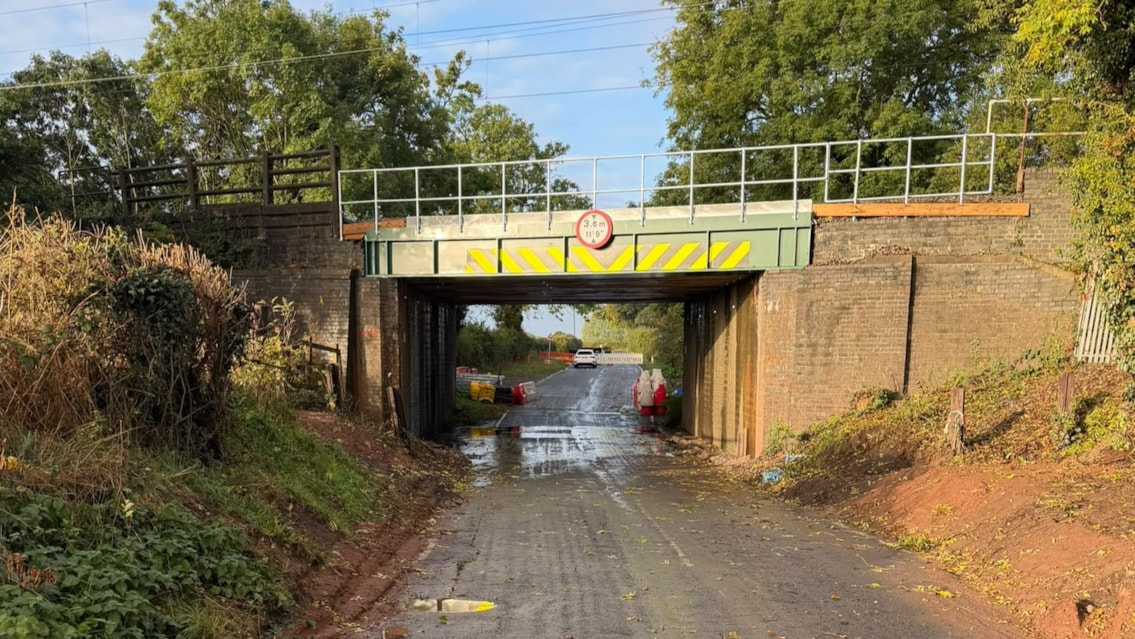
Network Rail has reconstructed the damaged edge beam of a railway bridge near Nuneaton, allowing Marston Lane to reopen on 19 October. A heavy goods vehicle collision in June caused the beam to collapse beneath the West Coast Main Line, and the replacement has been redesigned to provide greater resistance to future bridge strikes.
The collision happened on 11 June, initially disrupting the railway between Rugby and Nuneaton. Engineers subsequently stabilised the bridge sufficiently to restore passenger and freight services, but kept the road beneath closed while the damaged structural element was assessed and a permanent replacement developed. The differing access restrictions allowed rail services to continue without exposing road traffic to the damaged edge of the bridge.
As recently as August, Network Rail expected Marston Lane to stay closed until November. Reopening on 19 October therefore brings forward access for local traffic, although the reconstruction programme retains one final overnight road closure. That distinction is important for road users: the main structural repair is complete, while smaller protective and finishing components still have to be installed.
The damaged element was an edge beam rather than the whole bridge deck. A vehicle strike against a bridge’s exposed edge can transfer force into its connections and adjacent structure, requiring checks beyond the visibly broken material. Network Rail’s engineers designed a bespoke replacement rather than relying on a like-for-like reinstatement, aiming to reduce the severity of damage if another vehicle hits the crossing.
The new beam was manufactured away from the crossing, transported to site and lifted into position with a crane. Network Rail has described the structure as more robust against collisions but has not published its steel specification, dimensions or quantified impact resistance. The claim of improved resilience therefore comes from the asset owner, rather than a published comparison of design loading for the old and replacement elements.
The installation was coordinated with scheduled railway engineering closures on 10–11 and 17–18 October between Rugby and Stafford. Those possessions already included track renewal, allowing the bridge lift to be arranged during periods when trains were not using the affected section. That avoided the need to plan a wholly separate main line blockade solely around installation of the replacement element.
A bridge lift beside an operational railway needs an agreed working area, lifting sequence and access arrangements for the crane and fabricated component. The rail possession provides the defined interval when the lift can take place without trains passing over the worksite; workers also need to hand the track and associated infrastructure back in a condition suitable for service. Network Rail has not published the lifting capacity or exact crane configuration used at Marston Lane.
The emergency response in June had a different purpose. Engineers first assessed and stabilised the struck bridge so the rail route could reopen, while the prolonged road closure protected the remaining structure from further vehicle impacts. Permanent reconstruction followed detailed design and specialist material procurement, identified by Network Rail in August as reasons why the highway could not immediately be released to traffic.
Coordination across the two October possessions also meant the beam work took place alongside upgrades on the wider Trent Valley route. During those weekends, passengers were directed to altered services and rail replacement transport between the affected stations. The bridge operation formed one element of that planned access programme, rather than the sole reason trains were not running on the route.
For nearby road users, the extended closure had removed a local crossing under the main line for more than four months. Restoring Marston Lane reduces the need to divert ordinary vehicle movements around the bridge. It does not change the clearance restrictions on a route or remove the need for drivers of large vehicles to check the dimensions of their loads before selecting a crossing.
A further closure is scheduled from 22:00 on Saturday 24 October until 06:00 on Sunday 25 October. Engineers will repair handrails and attach steel plates at the ends of the new beam, completing details that follow the principal structural installation. The dates and times relate specifically to road access beneath the crossing; Network Rail has not announced an additional comparable rail possession for those finishing tasks.
Vehicle strikes remain a recurrent risk where road height restrictions and the dimensions of heavy vehicles are not reconciled before a journey. An impact against the bridge can force a precautionary railway closure even if the struck road vehicle remains on the highway. Network Rail’s road safety advice therefore calls for drivers to check vehicle height, including any load, and plan routes around restricted bridges.
The railway bridge has now returned to a configuration that permits the road to operate beneath it, with handrail and steel plate work scheduled for the coming weekend. Network Rail’s reported milestone is the 19 October reopening after June’s strike. The remaining closure notice gives road users a specific final access restriction before the repair programme can be concluded.