IN Brief:
- NIB signed financing of up to €10m with Vilnius energy group Gijos for street-lighting infrastructure renewal.
- The proposed 2025–2027 programme replaces ageing poles with modular metal structures designed for a 30-year service life.
- Individual components can be replaced without removing foundations, and recovered poles are earmarked for scrap-metal recycling.
The Nordic Investment Bank has signed a 12-year financing agreement of up to €10 million with Gijos, the Vilnius city energy group, for the renewal of street-lighting infrastructure across the Lithuanian capital. The signed loan supports work being carried out by Gijos subsidiary Vilniaus Apšvietimas and forms part of a wider €20 million infrastructure modernisation programme. The renewal programme is scheduled across 2025–2027, so the new October development is a financing agreement rather than the start of all work or completion of the citywide replacement.
Many of the lighting columns targeted for renewal were installed in the mid-1970s. Roadside structures must withstand wind loads, vibration, temperature changes and contamination from winter road treatments. Their condition can vary with location, earlier repairs and the state of underground connections. Gijos plans to replace ageing poles with modular metal structures that will support street lighting and other urban equipment, but it has not announced a pole-by-pole delivery programme or the total number to be installed.
The replacement assemblies are designed for an approximate 30-year service life. Their modular connections are intended to allow a damaged above-ground component to be exchanged without excavating and replacing the entire foundation. Foundation retention is therefore a design advantage rather than an unconditional engineering instruction: installers must still establish whether the existing base, fixings and ground conditions are suitable for the replacement loading. Reusing foundations where technically justified can also avoid some excavation, waste handling and pavement reinstatement.
The design includes corrosion protection for exposure to Vilnius winters and road salt. Protective treatments can reduce deterioration of exposed metal, but performance depends on preparation, coating specification, drainage and inspection of vulnerable joints. The public announcement does not identify a precise coating class, steel grade or maintenance interval. Its 30-year design-life figure is not a separately verified warranty for surface treatments or every pole component.
The new poles are also expected to combine functions that previously required separate street assets, potentially reducing the number of columns. Any consolidation has to respect illumination levels, safe clearances and the loading imposed by attached equipment. A luminaire, sign or charging assembly may add wind area, mass and maintenance demands that the supports and foundations must accommodate. The bank describes multifunctionality as an intended benefit but gives neither the final equipment schedule nor a verified count of poles eliminated by the design. A reduced footprint is therefore a programme objective rather than an achieved construction quantity. A designer also has to check electrical isolation, cable entry and access for inspection where several functions share a column. A future replacement component cannot be treated as interchangeable merely because it fits mechanically: its loads, electrical protection and maintenance access must remain compatible with the installed support. The loan agreement is not a substitute for those project-level design checks.
Lighting poles can accommodate other street services, and Vilniaus Apšvietimas reports 478 existing electric-vehicle charging stations integrated with poles. That is a figure for installations already in service, not 478 chargers ordered through the new loan. The city’s street-lighting system is also reported to use renewable electricity, an operating arrangement separate from replacement of the physical columns. No measured electricity reduction attributable to the renewal is supplied with the financing announcement.
Removal of the old columns creates a separate site operation around roads and footways. Crews must isolate electrical circuits, maintain a safe working area and avoid damage to other buried services when breaking out foundations that cannot be reused. The project description identifies recovery of old metal poles as part of its handling arrangements, but gives no material tonnage, scrap yield or contractor-by-contractor waste record. Claims about reduced raw-material consumption should therefore remain linked to the designed reuse and recycling routes, rather than an asserted measured saving.
The twelve-year loan of up to €10 million contributes to the broader €20 million project budget rather than adding a separate €10 million construction scheme. Financing can support purchases and works over time, but agreement of a loan does not establish that every replacement has been installed, inspected or accepted. Individual works orders, capital drawdowns and commissioning dates may fall at different points within the stated 2025–2027 programme.
At street level, replacement work must coordinate safe removal of old columns, access to live underground electrical services, foundation inspection and reinstatement around footways and roads. Reliable asset records will be needed if the modular fittings are to simplify future component replacement. The signed financing sets out the capital provision for those works, while installed quantities, inspected foundation reuse and maintenance results will have to be established as the programme proceeds.
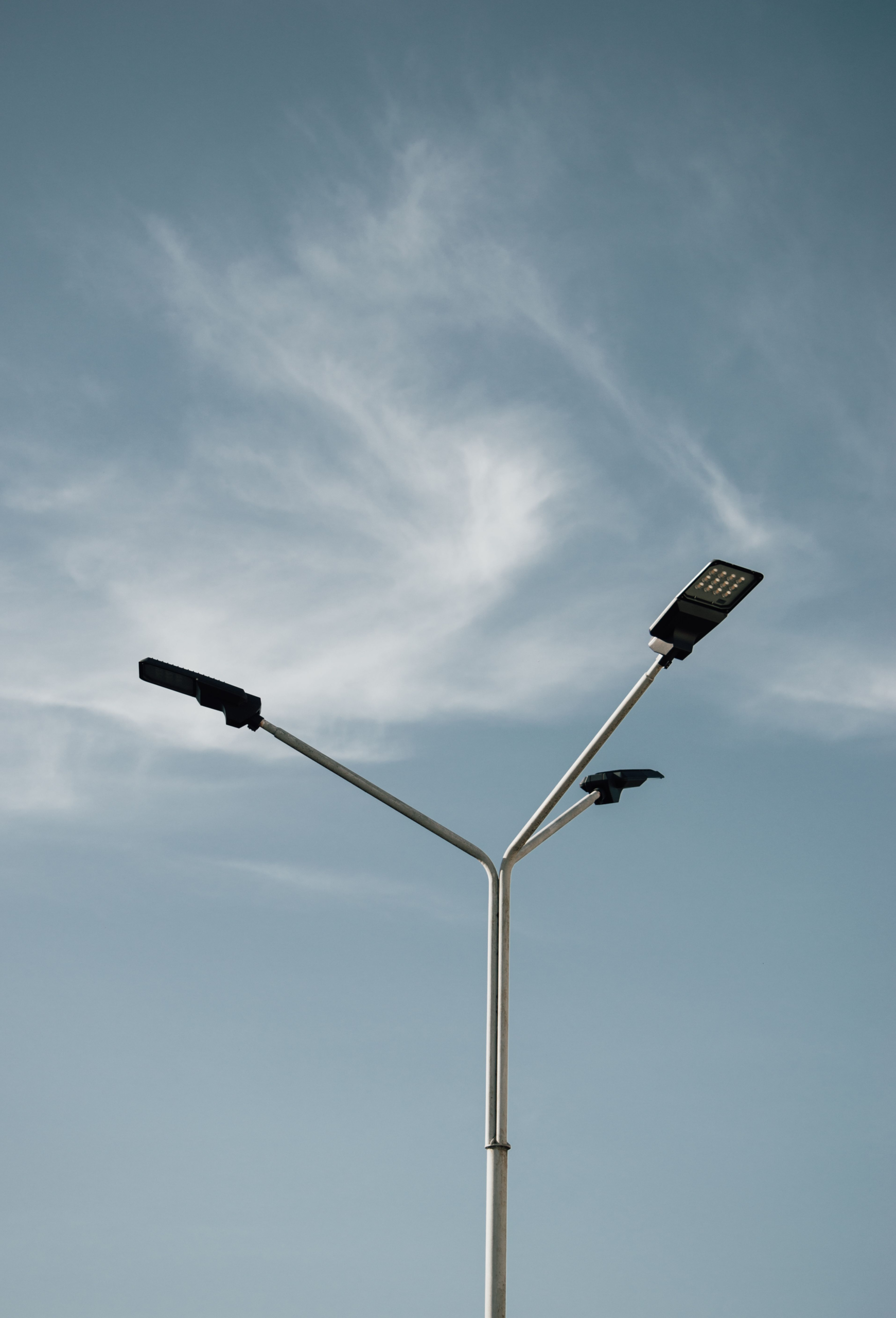
Illustrative photograph of a modern street lamp in Lithuania: Dovydas Pranka / Pexels. Not a completed Vilnius replacement installation.