IN Brief:
- Plymouth City Council is recommending a £6.49m Morgan Sindall phase-one contract and reprofiling £7.2m of previously approved borrowing.
- The enabling package covers scaffolding, cladding removal, structural investigation, asbestos removal, and internal and external demolition.
- The wider regeneration will create 144 build-to-rent homes and a City College Plymouth skills hub serving up to 2,000 students annually.
Plymouth City Council is preparing to move the Civic Centre into its main enabling phase, with Morgan Sindall recommended for a £6.49m package covering scaffolding, cladding removal, structural investigation, asbestos work, and demolition.
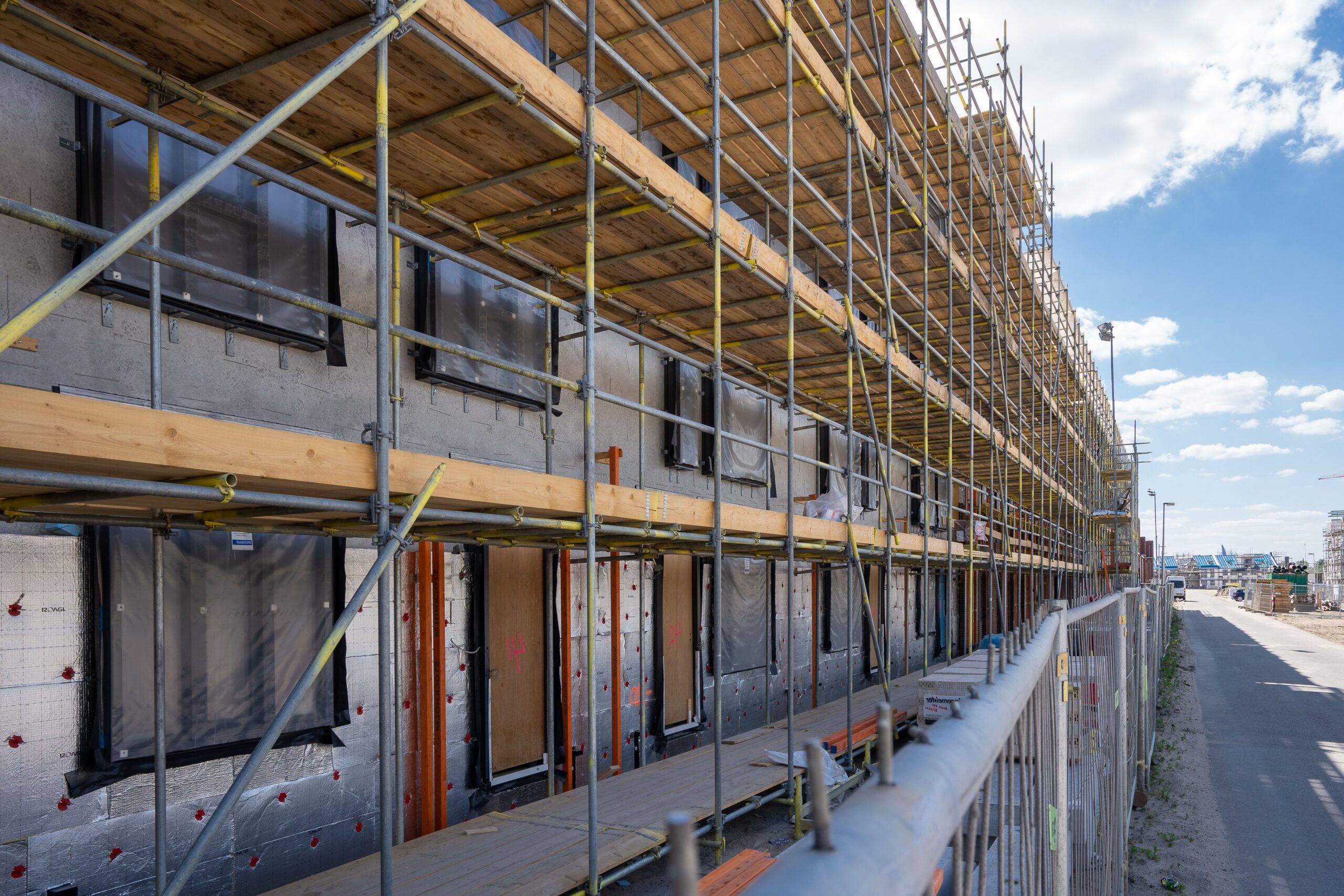
A report due before Cabinet on 24 August recommends awarding the £6,488,753 phase one contract and reprofiling £7.2m of previously approved corporate borrowing. Subject to approval, large-scale scaffolding and protective netting are due to begin enveloping the tower from the end of September.
The access system is expected to take several months to install. Once in place, contractors will remove external cladding to expose the structure for further surveys, strip remaining asbestos, and undertake internal and external demolition, including removal of the 1970s extension.
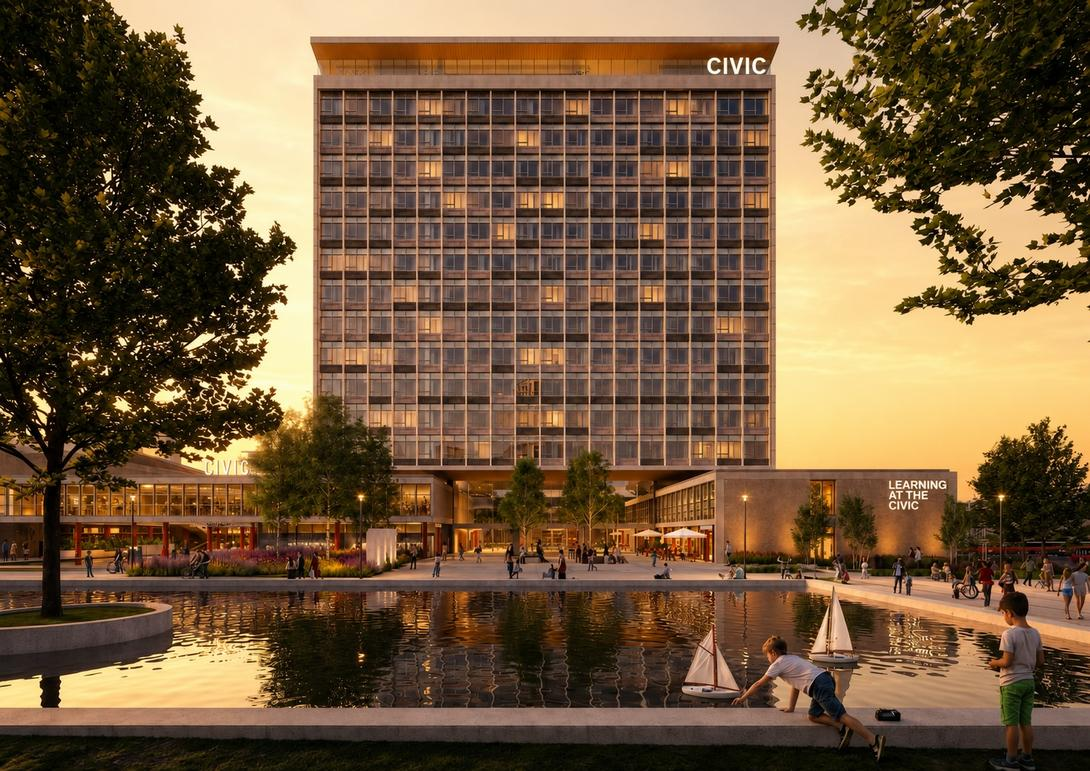
The works form the next delivery step in the wider Civic Centre redevelopment, which will repurpose the Grade II-listed tower rather than clear the site. Capital&Centric plans to create 144 build-to-rent homes in the high-rise, while City College Plymouth is expected to occupy the lower floors and basement.
The council and development team have split construction into two packages because the retrofit has to progress within the Building Safety Act regime while investigation and detailed design continue. Phase one allows invasive work to begin before the larger shell-and-core package is fully tendered.
That sequencing gives the project team more information before the main construction scope is fixed. Removing cladding and completing further structural surveys should expose conditions that cannot be established reliably from drawings and limited investigations alone, particularly in a high-rise building that has been vacant for an extended period.
The retained frame creates the central technical constraint. Concrete repairs, fire protection, façade replacement, floor strengthening, new services, acoustic separation, lifts, escape routes, and residential layouts all have to be coordinated within a structure designed for civic offices rather than housing.
Planning and listed building consent were secured in July, allowing the project to move beyond design and consent into physical delivery. Homes England has provided £18.4m from its Brownfield Infrastructure Land fund to support the redevelopment, reflecting the cost and risk attached to bringing the existing landmark back into productive use.
The project is one of a relatively small number of high-rise regeneration schemes being progressed under the post-Grenfell building safety regime. That increases the importance of design gateways, evidence, sequencing, and contractor coordination because the residential conversion has to satisfy modern safety requirements within an existing listed structure.
Morgan Sindall has already been providing pre-construction input and is now recommended for the first main package. The council’s earlier scrutiny material put the design at RIBA Stage 4 and identified September 2026 as the intended start for phase one, with phase two programmed to follow in 2027.
The two-stage approach also addresses commercial risk. Committing every element of the redevelopment before intrusive surveys are complete would force contractors either to price unknown conditions or leave a larger volume of change to be resolved later. Splitting the work allows the enabling package to generate better information for the subsequent procurement.
That does not eliminate cost exposure. The Cabinet report notes continued pressure from fuel and other construction costs, while retained building projects can still uncover defects or interfaces that were not visible during pre-construction investigation.
The education element adds another layer to the programme. Cabinet is also being asked to support a 125-year lease with City College Plymouth for a Blue Green Skills Hub expected to train up to 2,000 students each year across more than 60 courses.
Housing and education uses will therefore have to share the retained building while meeting different access, servicing, fire, acoustic, security, and operational requirements. The lower floors and basement will function differently from the residential tower above, making vertical circulation and building services particularly important to the final design.
The surrounding Civic Square is part of the broader regeneration picture. AECOM has completed feasibility work on restoration of the listed Civic Pond, with further works expected once a contractor and relevant listed building approvals are in place.
The immediate programme is focused on the tower itself. By the end of the year, scaffolding, strip-out, demolition, and investigation should have exposed considerably more of the retained structure, giving the design and commercial teams a clearer basis for the stage two package.
That information will determine how confidently the project can move from enabling works into full retrofit. For a listed high-rise conversion, the decisive risks are often hidden behind the existing façade and finishes rather than visible in the planning drawings.
If the Cabinet recommendation is approved, the September start will shift the Civic Centre from preparatory activity into sustained construction. The next milestone will be whether the investigations generated by phase one can be converted into a controlled phase two scope without another long pause in the programme.