IN Brief:
- McLaughlin & Harvey has completed the main construction phase of Braintree Community Diagnostic Centre.
- The project combines refurbishment of St Michael’s Health Centre with a new extension providing MRI, CT, ultrasound, X-ray, blood, heart, and lung diagnostics.
- The NHS expects the centre to add around 75,000 diagnostic appointments during its first year and operate seven days a week.
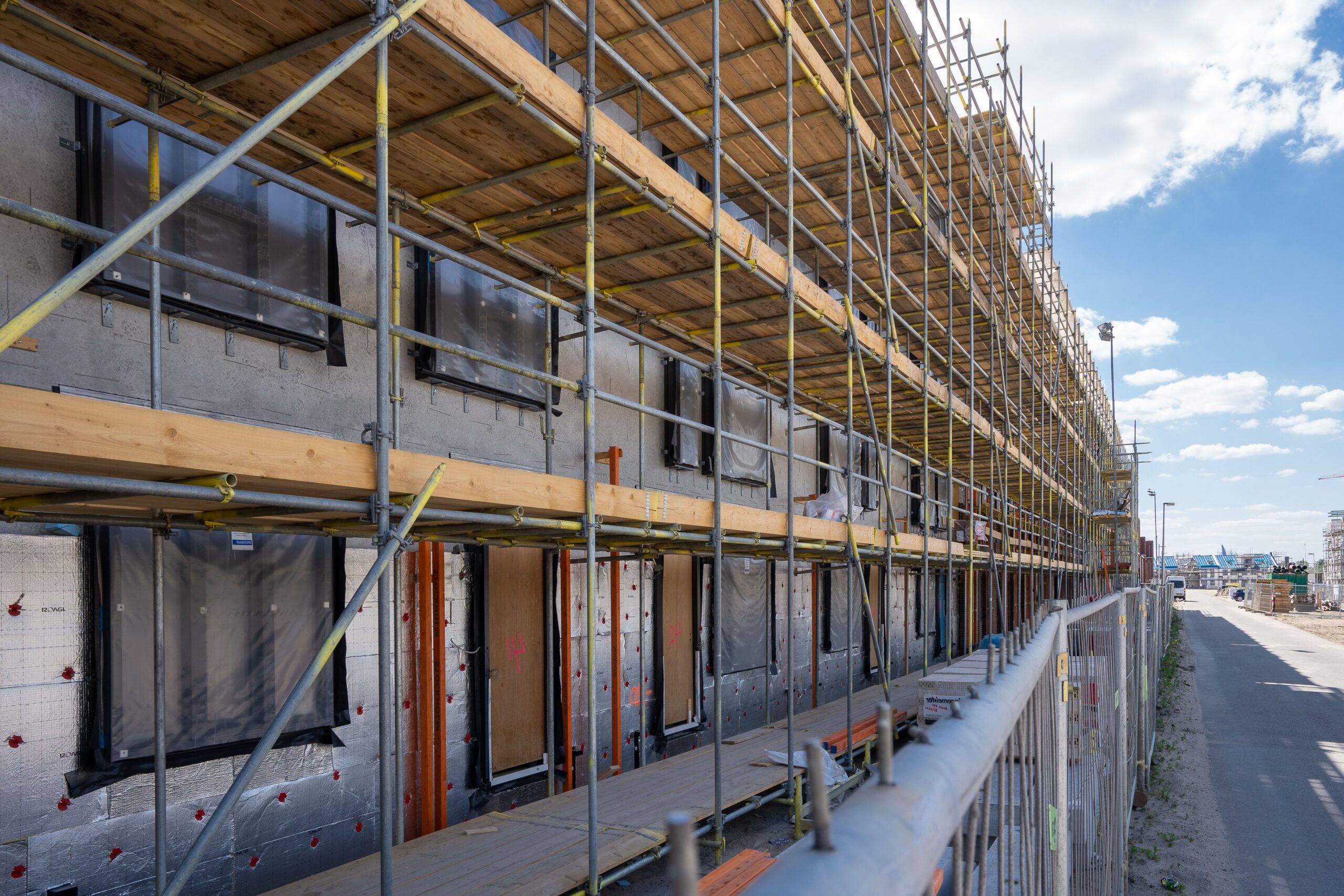
McLaughlin & Harvey has completed the main construction phase of Braintree Community Diagnostic Centre, allowing the NHS team to move into final equipment, operational, and clinical commissioning before the facility begins treating patients.
The development for Mid and South Essex NHS Foundation Trust combines reconfiguration and refurbishment of the existing single-storey St Michael’s Health Centre with a new extension at Braintree Community Hospital. It will bring several diagnostic services into one community facility rather than requiring every patient to travel to a larger acute hospital.
Once operational, the centre will provide CT and MRI scans, ultrasound, X-ray, blood testing, and heart and lung assessments. The trust expects it to support around 75,000 additional diagnostic appointments during its first year and operate seven days a week.
The construction handover does not mean every part of the facility is ready for clinical operation. Specialist equipment still has to pass through installation, testing, calibration, systems integration, and operational checks, while the building itself must move from construction completion into the controlled environment required for patient services.
The distinction is particularly important for imaging facilities. MRI and CT equipment depend on coordinated electrical infrastructure, cooling, ventilation, structural provision, data systems, access, shielding, and specialist commissioning, leaving considerably more to complete after ordinary finishes and building services appear visually finished.
The MRI scanner was craned into position in July, marking one of the final major equipment interfaces. Mid and South Essex NHS Foundation Trust said at the time that the centre was entering its final stages of construction, with the additional diagnostic capacity intended to improve local access to testing.
Much of that integration had to be planned well before the scanner arrived. Large diagnostic machines cannot simply be moved through a finished healthcare building after handover without consideration of delivery routes, floor capacity, plant connections, service access, and later maintenance or replacement.
McLaughlin & Harvey’s project scope has also required new clinical infrastructure to be fitted around retained accommodation. The contractor describes the development as both a refurbishment and new-build extension, with the existing St Michael’s Health Centre being reconfigured as part of the completed diagnostic facility.
That gives the scheme a different construction profile from a standalone greenfield health building. Existing utilities, surrounding hospital activity, temporary access, service continuity, and retained building fabric all constrain the sequence in which demolition, structural work, MEP installation, and fit-out can progress.
The centre is being delivered through the Crown Commercial Service framework and forms part of the wider national programme to expand community diagnostic capacity. Mid and south Essex is developing a network of centres rather than a single replacement building, with facilities also serving Thurrock, Southend, and Pitsea.
For the health estate, that distributed model changes where diagnostic infrastructure is constructed. High-value imaging and testing equipment that would traditionally have been concentrated within acute hospitals increasingly requires suitable accommodation, servicing, and engineering support in smaller community locations.
The building still has to perform to hospital standards despite sitting outside a conventional large hospital diagnostic department. Electrical resilience, environmental control, infection-management measures, plant access, patient circulation, staff areas, security, and digital systems remain operational requirements even where the building itself is comparatively modest in scale.
Seven-day operation will put those systems under sustained use. Reliability is therefore as important as the visible quality of the completed spaces, particularly where an interruption to cooling, electrical supply, controls, or specialist services could take expensive diagnostic equipment out of operation.
The expected first-year workload also leaves little value in constructing capacity that cannot be commissioned quickly. Around 75,000 additional appointments means the building, equipment, and staffing model are intended to move rapidly into high utilisation once patients are admitted.
The project has experienced programme movement during its development, with earlier public material carrying previous opening expectations. The latest milestone should therefore be described narrowly: the contractor-led main construction phase has reached completion, while NHS commissioning and readiness activity continues before opening.
That wording reflects the way specialist healthcare projects actually reach operation. Practical completion of the construction package is only one handover in a chain that continues through equipment verification, staff training, regulatory checks, clinical preparation, and occupation.
For McLaughlin & Harvey, Braintree adds another healthcare project combining retained fabric with new construction. For the trust, the more important measure will follow after opening, when the building has to convert the promised additional physical capacity into diagnostic throughput without simply moving existing bottlenecks from hospital departments into a new location.
The coming commissioning period will determine whether that transition can be achieved cleanly. Once the specialist systems have been accepted and the centre is receiving patients, the construction project will disappear into day-to-day NHS operation — exactly the point at which the performance of its engineering, equipment interfaces, and retained-building work will begin to matter most.