IN Brief:
- Trafford Gardens has reached completion after a two-phase programme.
- The development delivers 149 homes, including 33 affordable units in phase one.
- The project adds new housing within the wider Trafford Civic Quarter regeneration area.
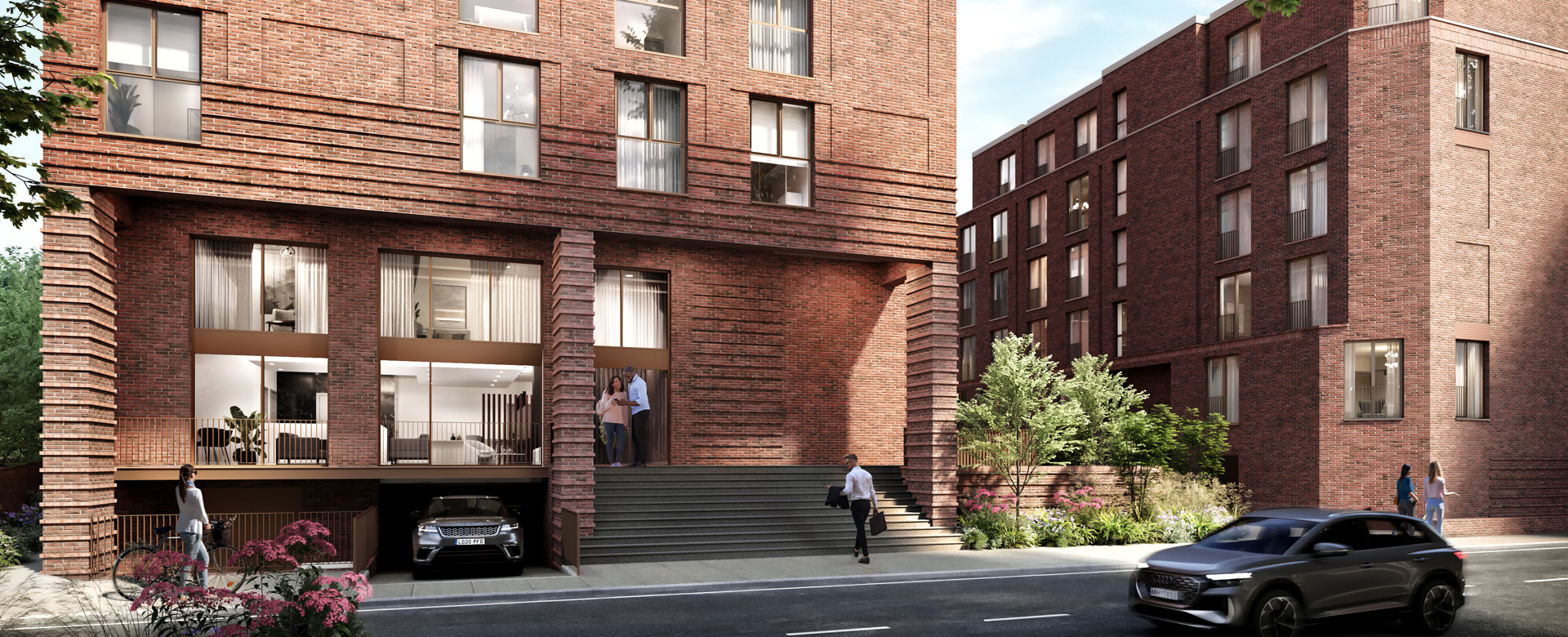
Linear Living has completed Trafford Gardens, bringing a £34m residential scheme in Old Trafford to its final handover after a two-phase construction programme. The development on Talbot Road delivers 149 homes in total, with the second phase contributing 116 apartments and drawing a close to roughly two years of site activity.
The completed phase comprises a 13-storey block containing 65 one-bedroom, 48 two-bedroom, and three three-bedroom apartments, alongside communal amenities including a rooftop garden and private courtyard. Those homes have been sold off-plan to a mix of investors and owner-occupiers. Phase one, completed in September 2025, delivered 33 affordable homes acquired by Irwell Valley Homes and now being let on a rent-to-buy basis.
Built by Linear Design & Construct, the scheme adds a further completed residential package to the wider Trafford Civic Quarter area, where housing delivery is increasingly tied to transport access, urban regeneration, and the reuse of established development land. Trafford Gardens sits within walking distance of the Old Trafford and Trafford Bar Metrolink stops, giving the scheme strong public transport links in a market where location efficiency is carrying greater weight for both occupiers and investors.
The project also reflects the continuing use of phased delivery in medium-density urban housing. Breaking a scheme into stages can help developers manage funding exposure, construction sequencing, and sales risk while still allowing affordable housing to come forward within the same wider package. In Trafford Gardens, the first phase brought forward 33 affordable homes ahead of the larger second phase, creating a tenure mix that has become increasingly important across regeneration-led housing projects.
Completion is no small milestone in the current residential market. Developers have had to navigate elevated build costs, slower planning timetables, variable sales conditions, and continuing pressure on viability. Against that backdrop, schemes that reach the finish line cleanly carry more weight than they once did. They show where project teams have been able to align programme control, contractor performance, and funding discipline closely enough to deliver in full rather than in outline.
That remains significant in Greater Manchester, where housing demand continues to support development but where delivery still depends on more than headline market appetite. Well-connected sites with strong urban fundamentals remain attractive, but viability, tenure mix, and development pacing all play a larger role in determining which schemes move and which stay in planning or pre-construction for longer than expected.
Trafford Gardens also fits a broader pattern in urban residential development, where schemes are expected to do more than provide unit numbers alone. Public transport access, affordable provision, density, and amenity quality now sit alongside construction and commercial performance as measures of whether a project has genuinely strengthened a location. In older urban districts undergoing steady regeneration, those factors matter in shaping how new housing is absorbed and how well it supports the surrounding area.
The completion of Trafford Gardens will not transform regional housing supply on its own, but schemes of this type are central to how that wider supply gap is addressed. Transport-linked, medium-density residential development on urban regeneration sites is one of the few routes available that can add homes at pace without waiting on far larger strategic settlements. Repeating that model consistently, and getting schemes through construction in difficult conditions, remains one of the sector’s more immediate tests.
In that context, Trafford Gardens stands as a completed example of a delivery model the market is likely to keep returning to: phased, urban, tenure-mixed, and closely tied to established transport and regeneration infrastructure.