IN Brief:
- Hyundai is rolling out eight new models for the European market.
- The programme builds on the Next Generation excavator platform launched in 2025.
- New machines are being paired with stronger safety, service, and operator support features.
Hyundai Construction Equipment Europe is widening its machinery offer with a package of eight new models, building on the company’s Next Generation excavator programme and extending further into adjacent machine categories. The latest expansion continues a strategy that goes beyond replacing legacy excavators model by model and instead broadens Hyundai’s reach across heavier earthmoving, compact loading, demolition, and quarry-oriented applications.
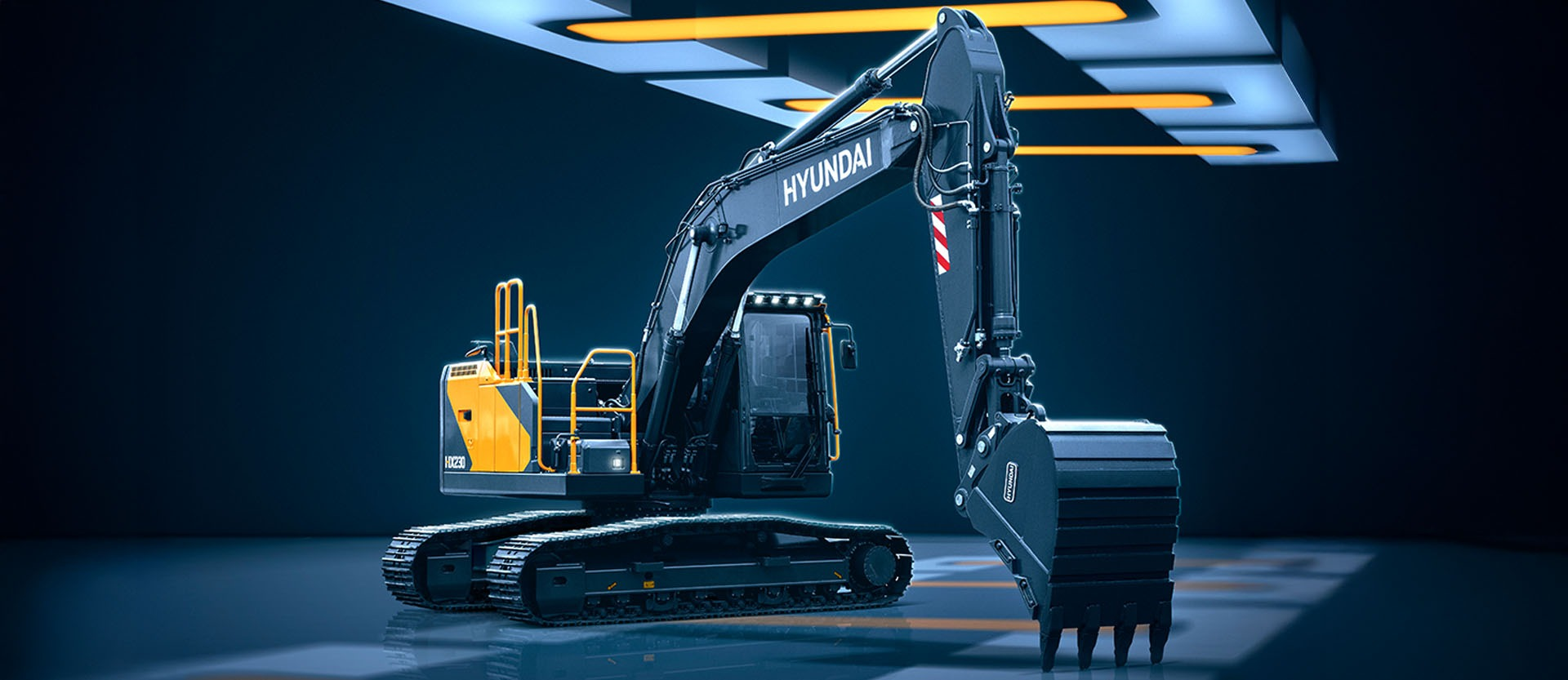
The new-model programme follows the introduction of Hyundai’s Next Generation crawler excavators at Bauma 2025 and is being carried through 2026 with additional launches in the 23- to 30-tonne classes. The HX230 and HX300 indicate the direction of travel. Both adopt Stage V diesel engines, full electro-hydraulic control systems, upgraded in-cab digital environments, and a stronger emphasis on automated assistance, safety monitoring, and lower operating costs. Hyundai has also signalled broader additions around compact loaders, articulated dump trucks, and other specialist equipment as it expands its European line-up.
European equipment buying has become a more complex exercise than a straight comparison of horsepower and breakout force. Buyers are increasingly examining service intervals, telematics, diagnostics, fuel efficiency, operator assistance systems, and how easily a fleet can standardise across multiple applications. Hyundai’s recent launches reflect that broader purchasing calculation, with greater weight being placed on controllability, camera systems, radar detection, service access, and digital support alongside core machine performance.
That approach is being shaped by mixed market conditions. Demand remains uneven across Europe, with infrastructure, quarrying, utilities, and selected industrial projects providing stronger support than some conventional building segments. In that environment, manufacturers with a broader range, stronger aftersales offers, and clearer fleet-wide support packages have an advantage over those relying on isolated headline launches.
Hyundai appears to be using its current product cycle to strengthen that wider position. Larger crawler excavators have carried the new control and operating platform into the core of the range, while adjacent categories give the company more access to customers operating mixed fleets across civils, demolition, and material production. Service packages aimed at supporting both new and older equipment also help extend the relationship beyond first sale, which is increasingly important in a market where machine life is being stretched and replacement decisions are more closely scrutinised.
The competitive picture in Europe is also shifting toward systems and ownership experience rather than mechanical specification alone. Operator environment, remote monitoring, uptime support, and predictable servicing all carry growing weight in procurement decisions, particularly where contractors are looking to standardise operations and manage labour constraints. That puts pressure on manufacturers to show that product development and support structures are moving together.
Hyundai’s eight-model expansion fits squarely within that shift. The company is trying to move the conversation beyond its position in individual excavator classes and toward a broader claim on fleet supply, digital support, and lifecycle service. In a crowded European market, that is a more durable route to growth than relying on one machine at a time.