IN Brief:
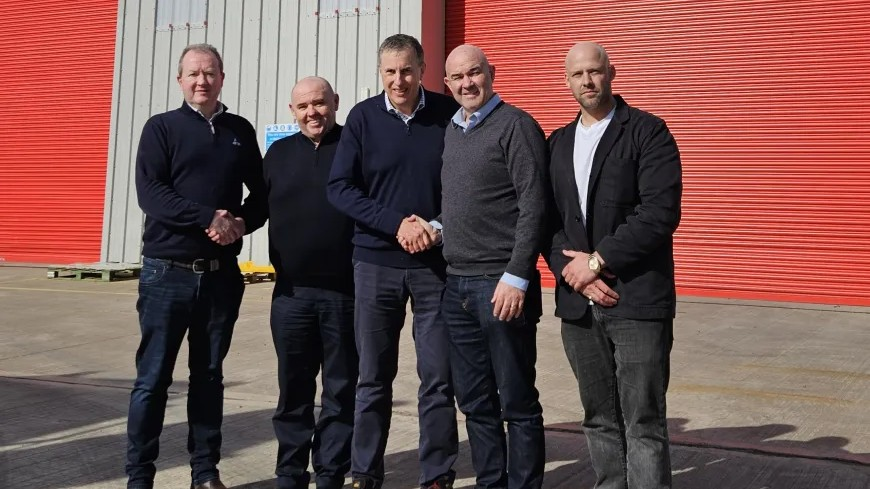
- Astec Europe has appointed Red Knight 6 and O’Kane Equipment Solutions as GB distributors.
- The appointments cover the Frontier tracked crushing and screening product line.
- The move is part of Astec’s wider European growth plan and support network expansion.
Astec is expanding its Great Britain route to market for tracked crushing and screening equipment, with Astec Europe appointing Red Knight 6 and O’Kane Equipment Solutions as official distributors for the Frontier range. The move strengthens the manufacturer’s local coverage across England and Scotland as it looks to build its position in quarrying, recycling, demolition, and contract crushing markets.
Under the new structure, Red Knight 6 will handle sales and support for Frontier tracked crushers and screeners across part of the GB territory, while O’Kane Equipment Solutions takes responsibility for Scotland and northern England. Both will provide commissioning, operator training, parts supply, and aftersales support, extending Astec’s dealer network around a product line the company has placed at the centre of its European growth plans. The appointments also draw attention to Astec Europe’s manufacturing and engineering base in Omagh, Northern Ireland, where the Frontier line is produced.
Dealer coverage has become a larger competitive factor in heavy plant markets where buyers are weighing support, uptime, and lifecycle cost as carefully as they assess machine specification. In crushing and screening, purchasing decisions often depend on the quality of service response, access to parts, and the ability of local technical teams to keep machines productive across demanding applications. Stronger territorial coverage can influence buying decisions as much as the product launch cycle itself.
That is particularly relevant in markets such as quarrying, recycling, and demolition, where operators are running hard-worked fleets and often need equipment that can switch between different feedstocks and site conditions. Dealers with strong regional knowledge, practical commissioning support, and a credible aftersales operation can carry significant weight where buyers are trying to minimise downtime and preserve utilisation in uncertain trading conditions.
For Astec, the expansion is also about translating manufacturing presence into market share. A factory footprint in the region offers a base for engineering and supply, but it does not automatically create sufficient sales and service reach across Britain. A stronger distributor network helps close that gap, particularly where customers want local accountability backed by a manufacturer with broader product and parts depth.
The wider market is moving in a similar direction. Contractors and materials businesses are holding equipment for longer, watching total cost of ownership more closely, and paying greater attention to the quality of support after the sale. That places more pressure on manufacturers to show that service capability is dense enough to match the footprint of the fleets they want to win.
Astec’s latest appointments are a practical response to that reality. The company is not relying on machine launches alone to build its presence; it is reinforcing the network that supports those machines on site. In a sector where uptime carries as much commercial weight as headline throughput, that remains one of the more decisive parts of the competitive equation.