IN Brief:
- The final two 1,000-tonne Water Orton spans have been moved into position across the M42.
- A separate team installed the final 44 beams on the 300-metre twin box structure near the NEC.
- Further parapet and concrete works will continue before track installation can follow.
HS2 Ltd has completed the final major bridge lifting operation over the M42 in the West Midlands, finishing the last Water Orton viaduct spans and the remaining roof beams on a separate twin box structure during a weekend motorway closure.
The works were led by Balfour Beatty VINCI, HS2’s West Midlands construction partner, and bring a four-weekend summer programme of major motorway crossings close to structural completion. The M42 reopened at around 4am on Monday 21 September, in line with the planned closure period.
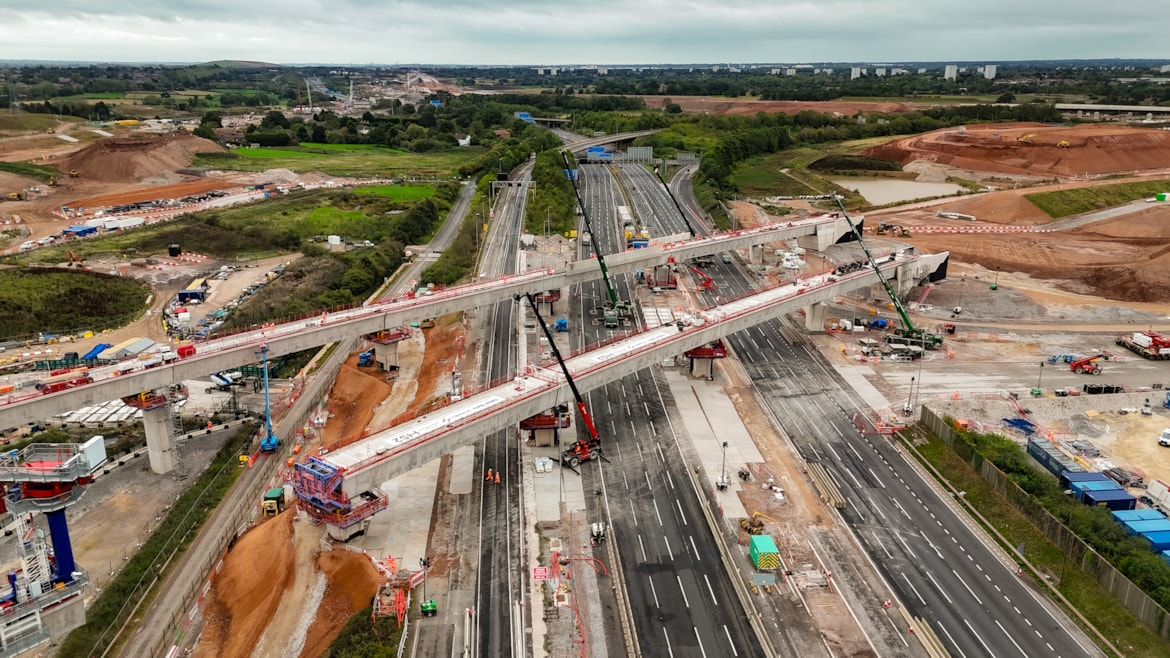
At Water Orton, engineers installed the final two spans of the second viaduct over the southbound carriageway. Each 45-metre span was assembled from 18 precast concrete segments manufactured at BBV’s batching plant in Kingsbury.
Once assembled, the approximately 1,000-tonne spans were moved into position using self-propelled modular transporters and locked into the viaduct with tensioning cables inside the hollow structure. The method allowed much of the assembly work to take place beside the motorway before the spans were moved across the carriageway during a controlled closure.
The two Water Orton viaducts form the upper part of HS2’s triangular Delta Junction, where the route divides between Birmingham and the main line heading north. They cross the M42, A446, Birmingham to Peterborough railway, and River Tame, concentrating road, rail, water, and environmental interfaces within the same civil engineering corridor.
Three miles further south, a separate 150-person team installed the final 44 beams over the southbound carriageway to complete the roof of the twin box structure near the NEC. The 300-metre structure uses 175 precast beams in total, each weighing between 56 and 92 tonnes.
A 300-tonne crawler crane placed the 23-metre beams between the supporting walls and columns. The completed structure stands around 10 metres high, with two 145-metre walls and 46 internal columns supporting a roof weighing approximately 9,800 tonnes.
The twin box arrangement is required because the railway crosses the motorway at an oblique angle, making a conventional short bridge span unsuitable. Road traffic will ultimately continue through the box while the railway passes above, so the geometry of the existing motorway has directly shaped both the permanent structure and its construction sequence.
Running the Water Orton and twin box operations during the same closures reduced the number of separate shutdowns imposed on the M42. National Highways also used the September possession for its own programme, including demolition of Bickenhill Bridge near junction 6, concentrating several disruptive operations into the same traffic management window.
The Water Orton method transferred much of the bridge assembly away from the live carriageway, but it also placed more emphasis on advance alignment, temporary support, stressing, transporter planning, and final positioning. Once the closure began, the programme had little room for unresolved work that should have been completed beforehand.
The twin box used a different form of repeatable construction. Its long roof was divided into precast beams installed in batches while the supporting walls and central columns were already in place, allowing the project team to build around an operating motorway rather than relying on a single large-span installation.
The structural design for the Water Orton viaducts has been carried out by BBV’s Design Joint Venture, formed by Mott MacDonald and SYSTRA, with WW+P Architects. The crossing therefore combines contractor-led delivery with a multi-disciplinary design team working around existing road, rail, and river constraints.
Across the four summer weekends, the programme closed the remaining gaps over both carriageways rather than treating each structure as a separate motorway intervention. That approach shifts risk into advance planning: crane positions, transport routes, temporary works, workforce, plant, and contingency arrangements all have to be coordinated across several workfaces before the road is handed over.
Further work remains before either crossing is railway-ready. Engineers still have parapets to install along the Water Orton viaducts and final concrete pours to complete on the twin box before track systems can follow. A further M42 closure is planned for 23 to 26 October for parapet installation over the motorway.
The milestone comes while HS2 continues to reset the commercial arrangements on its remaining main works civils packages. Individual structures nevertheless remain governed by fixed possession windows and engineering sequences, so site teams have to keep progressing while the wider programme changes around them.
With the largest M42 lifting operations complete, the work shifts towards finishing and integration. Parapets, concrete completion, track preparation, and final interfaces now have to close the remaining gaps without undoing the programme benefits gained from the summer closure sequence. The cranes provided the visible milestone; the next phase will determine whether the structures are ready for railway systems on schedule.