IN Brief:
- The approximately £65m South East Pier Expansion will add eight departure gates at Edinburgh Airport.
- Eight link bridges have now been installed within the live airport construction programme.
- The terminal expansion is scheduled to complete in summer 2027, with a peak workforce of more than 300.
Balfour Beatty has completed the installation of eight link bridges at Edinburgh Airport as work advances on the approximately £65 million South East Pier Expansion.
The two-storey terminal extension will add eight departure gates and increase capacity at Scotland’s busiest airport. It forms part of the first phase of a wider capital programme under which Edinburgh Airport plans to invest more than £500 million over five years.
The bridge installation is a significant physical milestone because the project is being delivered inside a live airport environment. Passenger routes, secure boundaries, airside operations, construction access, deliveries, and interfaces with existing terminal systems all have to remain controlled while new infrastructure is connected into an operating transport asset.
The completed links move the programme further towards enclosure, fit-out, building services installation, systems integration, and commissioning. Each new gate has to function as part of the existing terminal rather than as a standalone addition, bringing circulation routes, fire strategy, security systems, communications, and passenger handling into the same delivery sequence.
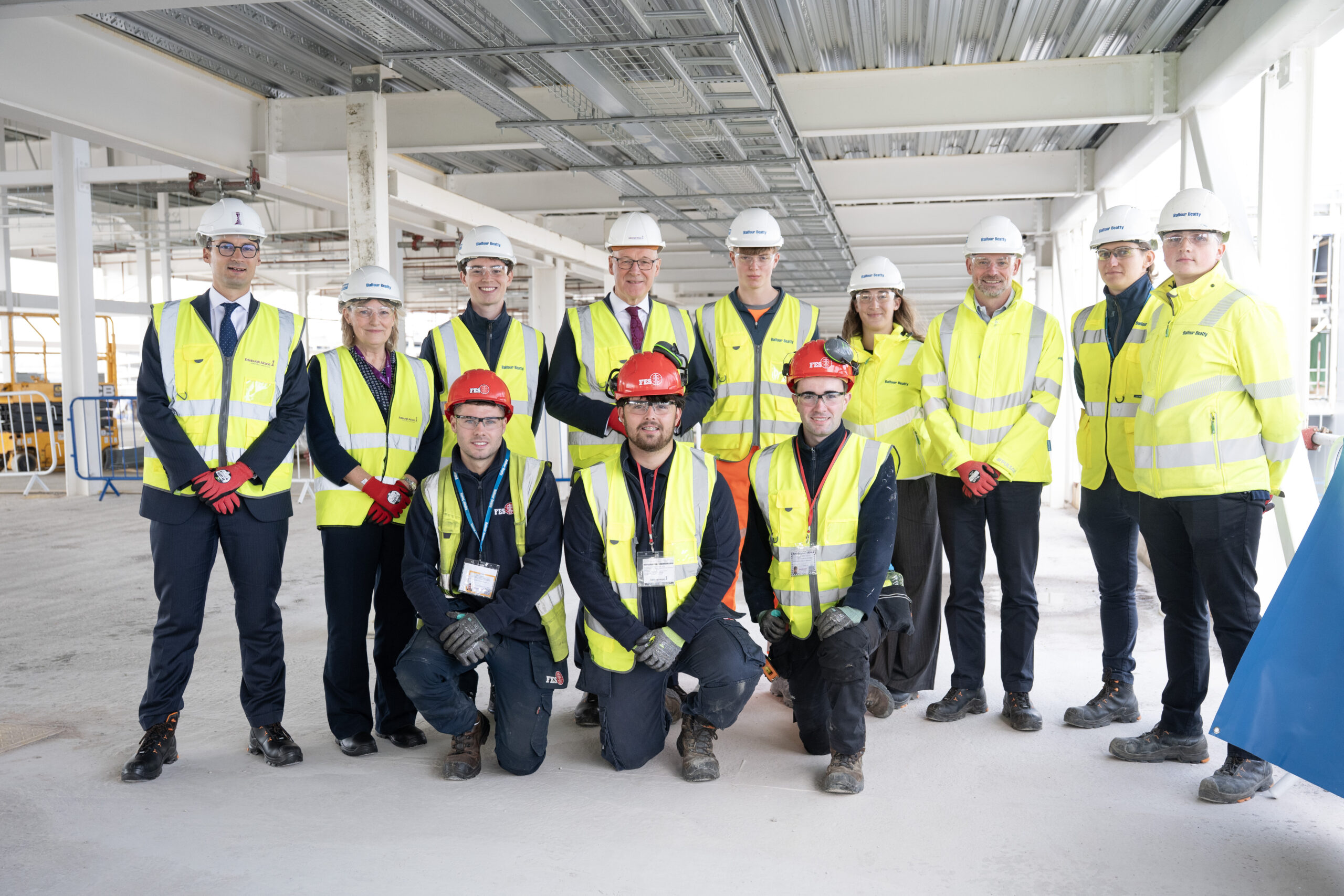
The South East Pier Expansion is scheduled to complete in summer 2027. Balfour Beatty expects the workforce to peak at more than 300 people, including more than 30 apprentices and graduates, giving the project a substantial training and early career component alongside its main construction workload.
Balfour Beatty has worked at Edinburgh Airport for more than 25 years and has delivered more than £80 million of infrastructure improvements there since 2010. Those projects have included terminal and airfield improvements, runway and taxiway rehabilitation, baggage hall expansion, fire station upgrades, and the £8 million Security Futures Project.
That accumulated site knowledge is useful on an airport scheme because the construction sequence is heavily shaped by operations. Workfaces can be constrained by passenger movements, airside security, aircraft activity, and access windows, while temporary arrangements have to protect the airport’s daily operation as rigorously as the permanent works protect future capacity.
Logistics become part of the engineering problem. Materials and site teams have to reach the work area without compromising secure zones or obstructing passenger routes, and temporary works must remain compatible with the airport’s operational systems. A minor interface failure can therefore affect much more than the immediate construction area.
The eight additional gates also create downstream requirements across the terminal. Baggage systems, passenger circulation, screening, servicing, fire safety, data networks, and building services all have to accommodate the extra capacity before the new pier can be brought into use. Construction completion and operational readiness are separate milestones, even when they sit close together on the programme.
Edinburgh Airport’s wider £500 million investment programme gives the scheme a longer context. Growth in passenger numbers places pressure on processing, baggage, airfield movements, servicing, and resilience as well as gate provision, so the extension is being delivered as one component of a broader sequence of airport improvements.
The current contract was awarded in May 2025, giving the programme a little over two years between award and the stated summer 2027 completion. That period includes construction inside the existing terminal, installation of the new links, fit-out, systems testing, and the operational transition needed before the additional gates can accept passengers.
The workforce profile adds another constraint to that sequence. A peak team of more than 300 people has to be accommodated inside an airport where construction access is already controlled, so welfare, inductions, security clearance, shift planning, and material movements need to scale without overwhelming the available work areas. Those requirements are less visible than the bridge installation but can dictate production rates on a live aviation site.
Balfour Beatty’s aviation portfolio also includes long-standing relationships with Heathrow and Gatwick. Live airport work remains a specialised part of the construction market because possession of a work area rarely means possession of the surrounding asset, and sequencing has to accommodate an operation that cannot simply stop while new capacity is built.
With the link bridges installed, much of the remaining work will be less visually dramatic but more dependent on coordination. Structure, fit-out, services, passenger systems, and airport operations now have to be brought together ahead of summer 2027. The programme will ultimately be judged by whether the new pier can enter service without creating avoidable disruption elsewhere in the terminal.