IN Brief:
- Six affordable homes have completed in the first 63-home phase at Foundry Lane.
- The wider regeneration aims to deliver around 360 homes across more than 20 acres of former industrial land.
- Liverpool City Region has committed £6.2 million of Brownfield Land Fund support.
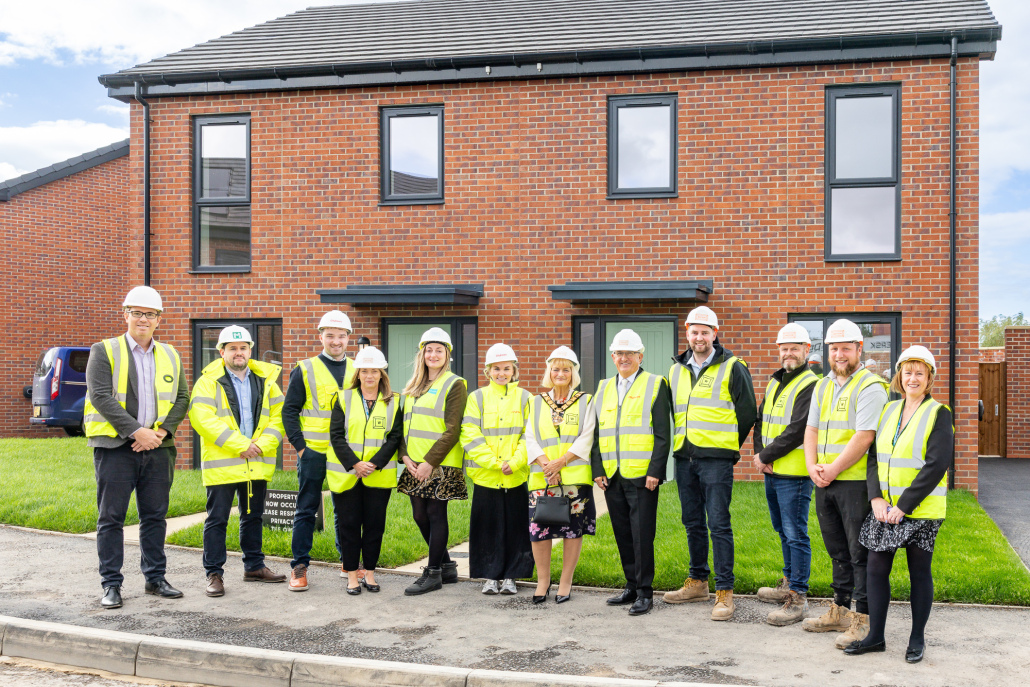
Cityheart has reached first occupation at its Foundry Lane regeneration project in Widnes, where six affordable homes have been completed on former industrial land as part of a wider programme intended to deliver around 360 properties.
The first homes form part of a 63-home opening phase comprising two and three-bedroom properties. Plus Dane Housing is taking the completed units for shared ownership and social rent, with residents now beginning to receive keys while construction continues across the rest of the phase.
Watson Construction is main contractor, MM Management is acting as employer’s agent and Corstorphine & Wright is the architect. The development forms part of Halton Borough Council’s plans to regenerate more than 20 acres of former industrial land at Foundry Lane in Halebank.
The site includes areas formerly associated with Stobart and Tarmac operations. The long-term plan is to replace the derelict industrial land with housing, green space, landscaping and improved connections towards Hale Road.
Liverpool City Region Combined Authority has committed £6.2 million from its Brownfield Land Fund to the scheme, with Homes England also involved in supporting delivery. That public investment reflects the additional costs and viability constraints often attached to bringing previously developed industrial sites back into residential use.
Brownfield housing carries construction risks that are not always visible once the completed homes appear. Demolition, remediation, ground treatment, legacy foundations, obsolete services and abnormal infrastructure can all consume capital before a conventional housebuilding programme begins.
Those costs can make otherwise well-located sites difficult to develop at market values, particularly where affordable housing and significant public realm are also required. Gap funding can therefore determine whether a project moves forward or remains vacant while land values and construction costs change around it.
Foundry Lane has now passed an important delivery threshold because residents are moving into part of the site while construction remains active elsewhere. That changes the contractor’s operating environment immediately.
Haul routes, material deliveries, dust, temporary fencing and incomplete roads have to be managed around occupied homes rather than across a fully controlled construction site. As additional plots complete, areas available for construction logistics become progressively smaller and more constrained.
Phased occupation also raises the importance of finished infrastructure. Residents need safe pedestrian and vehicle access, functioning drainage, street lighting and reliable utilities even where neighbouring plots remain under construction.
Plus Dane assumes housing-management responsibilities as each group of homes transfers. Shared-ownership and social-rent residents may occupy properties under different tenure arrangements, but both require completed homes, documentation, warranties and clear separation from the continuing works.
The first handovers also create an opportunity to test parts of the scheme under real use. Drainage, landscape areas, estate routes and defects procedures move from design assumptions into operation, allowing later phases to benefit from issues identified during early occupation.
At the same time, the first 63 homes represent only a fraction of the intended 360-home neighbourhood. Infrastructure and public-realm decisions made in the opening phase therefore need enough capacity and durability to support development across the larger masterplan.
That long programme will gradually change the nature of the site. Early work is dominated by remediation, heavy construction and infrastructure; later phases have to operate within an increasingly established residential community where tolerance for construction disruption is inevitably lower.
The public-private structure behind the development is typical of difficult regeneration schemes. The council and combined authority can support land remediation and infrastructure that would be hard for an individual development phase to absorb, while the private developer and contractor take responsibility for progressing the housing programme.
The benefit is visible now that occupation has begun. A site that previously carried the liabilities of redundant industrial land has moved through remediation and infrastructure into completed homes, giving later development a functioning first phase rather than an undeveloped brownfield platform.
The next challenge is maintaining production as that platform becomes a neighbourhood. Cityheart and Watson Construction must continue delivering housing while roads, services and public space progressively transfer into residential use, reducing the physical separation between building operations and daily life.
Six completed homes are a small numerical milestone against a 360-home ambition, but they mark a significant construction one. Foundry Lane has crossed from regeneration planning and enabling work into occupation, and every subsequent phase will now be delivered around residents already living on the site.