IN Brief:
- Glencar will deliver the 192,000 sq ft Link, Aylesbury industrial and logistics development.
- The scheme includes five Grade A speculative units, external works, ground improvement, and Section 278 upgrades.
- The project reflects sustained demand for sustainable mid-box logistics space in the South East.
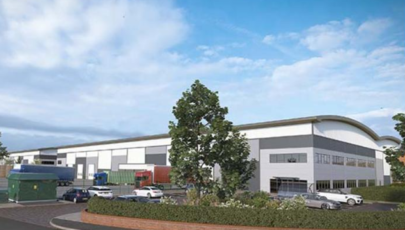
Glencar has been appointed by Newlands to deliver Link, Aylesbury, a five-unit industrial and logistics development at Gatehouse Close in Buckinghamshire.
The scheme will provide approximately 192,000 sq ft of Grade A speculative industrial and warehouse space in a South East location where modern, efficient mid-box accommodation remains in demand. The buildings are designed for a range of industrial and logistics occupiers and will target BREEAM Excellent and EPC A ratings.
Construction is scheduled to start in May 2026, with completion targeted for May 2027. Alongside the five units, the works include service yards, car parking, landscaping, ground improvement, and Section 278 highway upgrades.
The project team includes Rame Consulting as project manager, employer’s agent, and quantity surveyor, AJA Architects, and Burrows Graham as engineer. The appointment adds another industrial and logistics project to Glencar’s South of England portfolio.
Link, Aylesbury sits in the mid-box section of the logistics market, where flexibility is often more important than pure scale. Occupiers in this part of the market need modern units that can support warehousing, light industrial activity, regional distribution, last-mile operations, or a combination of uses without the size and lease profile of the largest national distribution centres.
Those buildings are no longer judged only on floor area and road access. Developers now have to account for energy performance, service yard efficiency, clear internal layouts, resilience of power supply, fleet movement, staff amenities, landscaping, and the ability to adapt to changing occupier requirements. Section 278 works, ground improvement, and external logistics are therefore central to the operational value of the scheme rather than secondary construction items.
Sustainability targets have also become embedded in mainstream industrial development. BREEAM Excellent and EPC A ratings support investor requirements, occupier ESG reporting, planning credibility, and future marketability. Industrial buildings that fall short on energy performance risk ageing commercially long before they reach the end of their physical life.
The pressure is visible across the wider logistics sector, where contractors and developers are being asked to deliver assets with lower embodied carbon, stronger operational efficiency, and better data around performance. Winvic’s planned net zero whitepaper for industrial, logistics, data centre, and infrastructure delivery reflects the same movement: environmental performance is now part of how the market defines a credible project.
Speculative development still carries risk, particularly where occupiers are watching costs, lease terms, and energy performance more closely. Yet well-located, modern mid-box schemes remain attractive because many businesses need operational flexibility without waiting for bespoke space. The strongest assets in this segment are those that combine build quality, fast availability, sustainability credentials, and transport access.
For Glencar, Link, Aylesbury reinforces a delivery position in industrial and logistics construction, a sector where clients often prioritise certainty of programme and repeatable technical quality. For Newlands, the scheme advances a mid-box development strategy in a region where high-specification space remains constrained.
As the programme moves to site, the key delivery pressures will sit around ground conditions, highways coordination, utilities, yard construction, and the quality of the finished building envelope. The project may not be the largest logistics development in the pipeline, but it reflects where much of the market is heading: efficient, sustainable, flexible space delivered against tighter operational and environmental expectations.