IN Brief:
- The Fehmarnbelt Tunnel is now being planned around a phased opening.
- Road traffic would begin first, with rail services following once German land facilities are complete.
- The revised approach follows delays on Danish tunnel works and German-side approval and permitting processes.
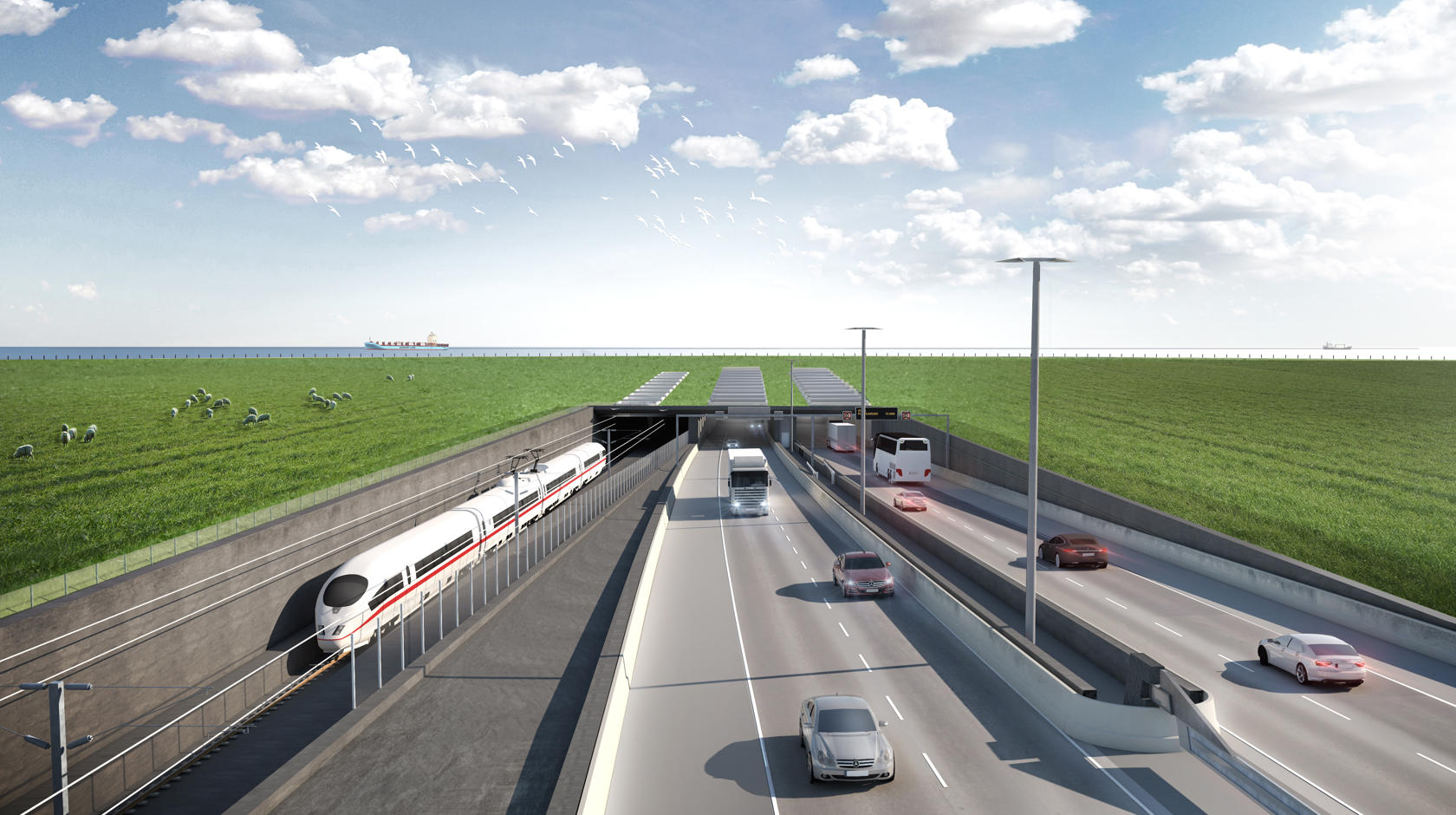
Femern project owner Sund & Bælt is working towards a two-stage opening of the Fehmarnbelt Tunnel, with the road connection expected to open before the railway element.
The adjusted plan would put road traffic into operation first, while rail services would begin later once the necessary facilities on the German side are complete. The Fehmarnbelt fixed link will connect Denmark and Germany through an immersed tunnel beneath the Fehmarn Belt.
The revised opening strategy follows delays affecting both the tunnel works and associated land infrastructure. On the German side, railway land facilities are no longer expected to be ready for operation in 2029 as originally planned, following lengthy approval and permitting procedures.
On the Danish side, tunnel construction is running around two years behind schedule. The delay has been linked to challenges with the specialist vessel used for immersing tunnel elements, alongside strict German approval conditions covering underwater noise and the locations and periods in which work can take place in German waters.
Sund & Bælt plans to present a new schedule after the first tunnel elements have been immersed. That programme will take account of experience gained from installing standard and special elements, as well as the handling of German authority conditions attached to the works.
A phased opening would allow part of the fixed link to enter use before the full cross-border rail system is ready. That approach reduces the risk of the entire asset being held back by one interface, but it also separates the road and rail benefits that were originally intended to come together.
The Fehmarnbelt programme has already appeared in IN Site’s February construction market analysis as an example of the schedule pressure facing major European infrastructure. The latest opening plan confirms how technical, environmental, and governance constraints can continue reshaping delivery even on highly planned megaprojects.
Cross-border infrastructure carries a different risk profile from domestic schemes. The construction team has to manage marine works, tunnel element production, specialist vessels, road and rail interfaces, environmental controls, national permitting systems, and two countries’ delivery programmes. A delay in one part of that chain can alter the whole route to opening.
The rail element is central to the fixed link’s long-term transport and climate case, because it is expected to strengthen freight and passenger movement between Scandinavia and mainland Europe. A road-first opening would still bring part of the asset into use, but the full modal-shift benefit would be delayed until the rail connection is operational.
For contractors and suppliers, the revised plan underlines the weight of interface management on major projects. Tunnel structures, land connections, rail systems, safety approvals, testing, commissioning, and environmental compliance all have to converge before an infrastructure asset can function as intended. Construction progress alone is not enough if adjoining systems are not ready.
The environmental controls around underwater noise also show how programme risk is increasingly shaped by permitting conditions. Marine infrastructure has to operate within ecological, legal, and stakeholder limits that can define when works proceed, how equipment is used, and whether lost time can be recovered. Engineering capacity remains essential, but approval conditions are now part of the construction critical path.
Phased opening can be a practical response to that complexity. It can release earlier value from part of the asset, ease final-stage coordination, and avoid delaying all users until every system is complete. It can also complicate commissioning, maintenance planning, communications, and public expectations, because the project is open before it is fully operational.
The next schedule update will be watched closely once immersion work has generated more practical evidence. The first tunnel elements will give the project team clearer data on vessel performance, environmental compliance, production assumptions, and the installation of standard and special elements.
The Fehmarnbelt Tunnel remains one of Europe’s landmark transport schemes, but the shift to a two-stage opening plan shows the delivery reality behind that status. Industrialised tunnel production can improve repeatability, yet cross-border governance, marine engineering, environmental controls, and systems integration still define the route to completion.