IN Brief:
- Four Volvo A40 Electric haulers are supporting construction near East Tilbury.
- Each machine combines a 39-tonne payload capacity with a 540kWh lithium-ion battery.
- On-site electricity generation and scheduled charging support the project's earthmoving operations.
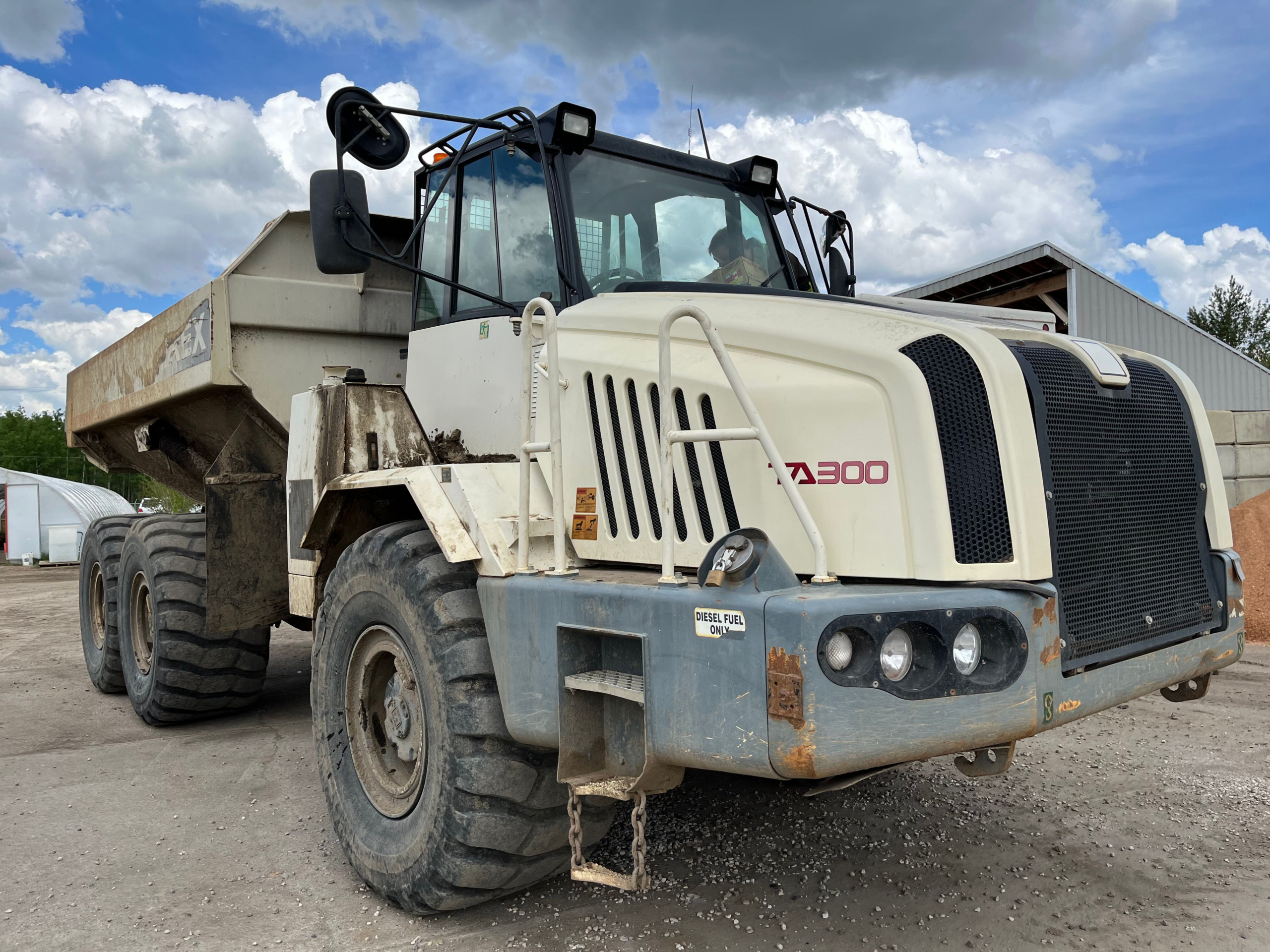
Volvo Construction Equipment has delivered its first production A40 Electric articulated haulers to the Lower Thames Crossing, introducing battery-powered machinery with a payload capacity of 39 tonnes to one of Britain’s largest infrastructure projects.
Four machines are operating near East Tilbury in Essex, transporting construction materials for foundations and structures associated with the northern section of the crossing. They have been supplied through Volvo’s British dealer, SMT GB, to BMJV, the joint venture between Bouygues Travaux Publics and Murphy responsible for delivering the tunnels and approaches.
The deployment follows Volvo’s introduction of battery-powered articulated haulers with payload capacities of 29 and 39 tonnes. National Highways has identified the Lower Thames Crossing as the first construction site to operate electric machines in the larger weight class.
Each A40 Electric incorporates a 540kWh lithium-ion battery, with Volvo estimating approximately six hours of operation between charges, depending on the application. The machines support rapid charging at up to 350kW, with the manufacturer’s technical specification indicating that charging from 20% to 80% takes around one hour.
Electricity for the haulers is being generated at the worksite using British-produced green hydrogen, with charging periods incorporated into existing shift patterns. Regenerative braking returns some energy to the battery during deceleration, reducing the amount that must subsequently be replenished through external charging.
Retaining a payload capacity comparable with conventional diesel haulers enables the electrically powered machines to operate within established earthmoving arrangements. Loading equipment, material movement schedules, and haul road design can continue to accommodate vehicles of broadly equivalent carrying capacity, although the introduction of charging creates a new operational dependency.
A fleet’s productivity depends on the relationship between the rate at which excavators or loading machinery can fill vehicles, the duration of each haulage journey, and the time required to discharge material and return. Reducing the number of available haulers during charging could affect that balance if the remaining machines cannot maintain sufficient material movement capacity.
Battery consumption also varies with payload, gradient, and ground conditions. Transporting loaded vehicles uphill requires considerable energy, while driving downhill can provide opportunities for regenerative braking. Rolling resistance on poorly maintained haul roads increases consumption without offering an equivalent opportunity for energy recovery.
Effective haul road maintenance therefore has consequences beyond vehicle durability and journey times. Surface condition and route geometry can influence the electrical demand of the fleet, affecting how frequently charging is required and the amount of electricity the contractor must generate.
The four Volvo haulers have a combined nominal battery capacity of 2.16MWh. Charging all four simultaneously at their maximum supported power would create an aggregate demand of 1.4MW, although National Highways has not disclosed the installed charging capacity or the extent to which the individual machines will be charged concurrently.
Staggering charging periods can reduce peak electrical demand while maintaining the availability of some vehicles. The effectiveness of that arrangement depends on whether charging can be coordinated with breaks, shift changes, and fluctuations in the contractor’s material movement requirements.
Hydrogen-powered electricity generation enables charging infrastructure to be established without relying exclusively on permanent grid connections. Construction sites can move through several operating configurations before permanent electrical infrastructure becomes available, making the location and capacity of temporary power systems particularly important.
The environmental performance of hydrogen-supported charging depends on the energy used to produce the fuel, its transportation and storage, and the efficiency of electricity generation. At the point of operation, however, the electric haulers eliminate vehicle exhaust emissions and reduce sources of noise and vibration associated with diesel propulsion.
The deployment follows other changes in Volvo’s approach to heavy plant, including the integration of digital machine guidance directly into excavator operating systems. Electrification and digitalisation are introducing different requirements for the infrastructure and information systems supporting fleets of construction machinery.
National Highways is pursuing an ambition to achieve carbon-neutral construction on the Lower Thames Crossing, incorporating alternative fuels, electric equipment, and changes to construction material procurement. Heavy earthmoving equipment represents a significant opportunity to reduce direct emissions because of the energy consumed while transporting large volumes of material over extended construction programmes.
Operating the four A40 Electric machines under production conditions will establish practical experience of battery consumption, charging arrangements, maintenance, and fleet availability. Their use alongside other construction machinery will also provide evidence of how electrically powered haulage can be incorporated into existing material movement operations without reducing the overall productivity of the worksite.