IN Brief:
- Uisce Éireann has begun preliminary construction at Clonshaugh for the Greater Dublin Drainage project.
- Planned infrastructure includes a treatment plant, a 14km orbital sewer, pumping facilities, and an 11km outfall route.
- The system is intended to provide treatment capacity for the equivalent of 500,000 people and support up to 185,000 homes.
Preliminary construction has begun on the Greater Dublin Drainage project, marking a new delivery stage for a wastewater infrastructure programme intended to provide treatment capacity for the equivalent of approximately 500,000 people.
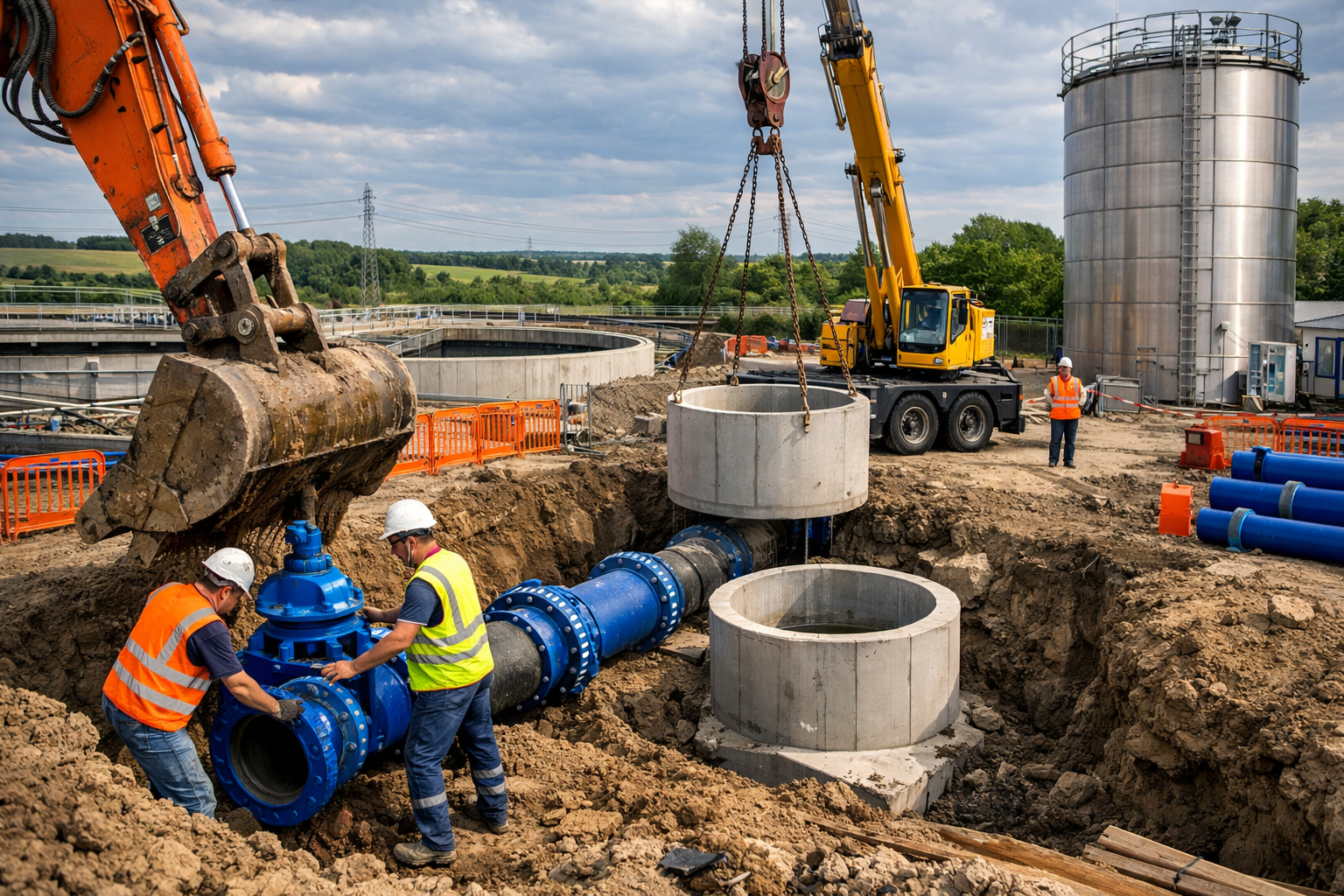
Uisce Éireann confirmed the commencement of works at Clonshaugh in north Dublin on 16 November, during a ceremony attended by Taoiseach Micheál Martin and Minister for Housing James Browne. The principal construction programme is planned for 2028, with completion targeted for 2031.
The project includes a regional wastewater treatment facility and sludge hub on a 30-hectare site at Clonshaugh, an underground orbital sewer from Blanchardstown, a pumping station at Abbotstown, and a marine outfall carrying treated wastewater to the Irish Sea.
Once operational, the system is expected to support development capacity for up to 185,000 additional homes across parts of the Greater Dublin Area. This figure describes the potential wastewater servicing capacity of the infrastructure, not the number of homes already approved or under construction.
The orbital sewer will extend for approximately 14km, transferring wastewater from areas of the existing network towards the proposed treatment facility. Its route forms a central part of the project because additional treatment capacity is only useful where wastewater can be conveyed to the plant reliably.
A substantial sewer of this kind must be designed around the expected range of wastewater flows, the available hydraulic gradients, and the locations where pumping or other infrastructure is needed to maintain movement through the system.
Gravity sewers rely on an appropriate change in level to convey wastewater, while pumping stations provide the additional hydraulic energy required where the natural profile or network arrangement cannot achieve the necessary transfer.
The planned Abbotstown pumping station will therefore form part of the wider collection and conveyance arrangement. Its design will need to be coordinated with the hydraulic characteristics of the orbital sewer and the conditions at the receiving treatment facility.
The detailed pumping equipment, operating capacity, and control strategy have not been confirmed in the present construction announcement. These requirements will be determined through the relevant design and procurement work.
At Clonshaugh, the regional treatment plant will process wastewater arriving from the connected network, while the sludge hub will form part of the arrangements for handling material produced during treatment.
Wastewater treatment involves processes intended to remove or reduce contaminants before treated effluent can be discharged in accordance with the applicable environmental licence. The precise treatment technologies proposed for individual process stages have not been established in the current project information.
The marine outfall will provide the discharge route to the Irish Sea. The project includes approximately 11km of outfall infrastructure from the treatment facility, with the authorised discharge location situated around one kilometre north-east of Ireland’s Eye.
The outfall presents a different engineering environment from the inland sewer and treatment works. Marine ground conditions, installation access, pipe protection, environmental requirements, and construction logistics will influence the eventual delivery method.
The presence of a marine discharge point also requires compliance with the wastewater discharge licence and relevant environmental standards. The Environmental Protection Agency granted the required licence in October 2026, following the planning and environmental assessment processes associated with the project.
The authorisation is separate from the physical construction milestone. Establishing the regulatory conditions for discharge does not mean that the plant or outfall has been built, tested, or brought into operation.
The project’s planning history has extended over several years. Planning permission was granted following a renewed determination in June 2025, with subsequent judicial review proceedings settled in December that year.
Access and investigation activities were already being prepared during 2026. These included archaeology, construction access arrangements, and other work required before larger engineering packages could begin.
The November ceremony marks preliminary construction rather than the start of the full treatment plant and sewer programme. Main construction is planned for 2028, leaving further enabling activity, procurement, design development, and mobilisation to be completed.
Large underground and marine infrastructure projects require the different construction packages to be coordinated against a common delivery programme. Tunnelling or trenching methods, working shafts, temporary compounds, and material handling arrangements can influence the sequence and duration of works along a sewer route.
The confirmed project information identifies the scale of the orbital sewer and associated infrastructure but does not disclose the final division between different underground installation methods. Any assumption about the proportion delivered by tunnel boring, pipe jacking, or open excavation would therefore be premature.
The programme is intended to address increasing pressure on wastewater capacity in the Greater Dublin Area. Uisce Éireann forecasts that regional wastewater generation will rise by more than 50% by 2050 as population and employment increase.
The company has already completed a €550m upgrade to the Ringsend wastewater treatment plant, but expects further capacity to be required as development continues. Greater Dublin Drainage will provide a separate treatment route, reducing pressure on parts of the existing system.
The overall project has a provisional cost range of approximately €1.9bn to €2.3bn. The figure remains an estimate, not a confirmed final outturn or the value of a single awarded construction contract.
Infrastructure capacity will influence development opportunities across north Dublin and surrounding areas of Meath and Kildare. Individual housing projects will nevertheless remain dependent on land availability, planning permission, utilities, funding, and construction delivery.
The new treatment system will also require commissioning before it can accept flows at its intended operating capacity. Pipelines, pumping equipment, treatment processes, and discharge arrangements must function together, with testing and regulatory compliance forming part of the transition to operation.
With preliminary works now under way at Clonshaugh, the programme is moving towards its principal construction phase. The next major delivery steps will be determined by completion of the remaining preparatory work and procurement for the infrastructure scheduled to enter construction in 2028.