IN Brief:
- Calcined clay concrete has been used in a permanent suspended slab at Brent Cross Town.
- The mix replaced 30% of cement with calcined clay, producing a reported 10% embodied carbon saving.
- The project gives the material a high-profile UK reference point on a major regeneration scheme.
Capital Concrete has supplied a lower-carbon calcined clay concrete for use at Brent Cross Town, where the material has been installed in a permanent suspended slab.
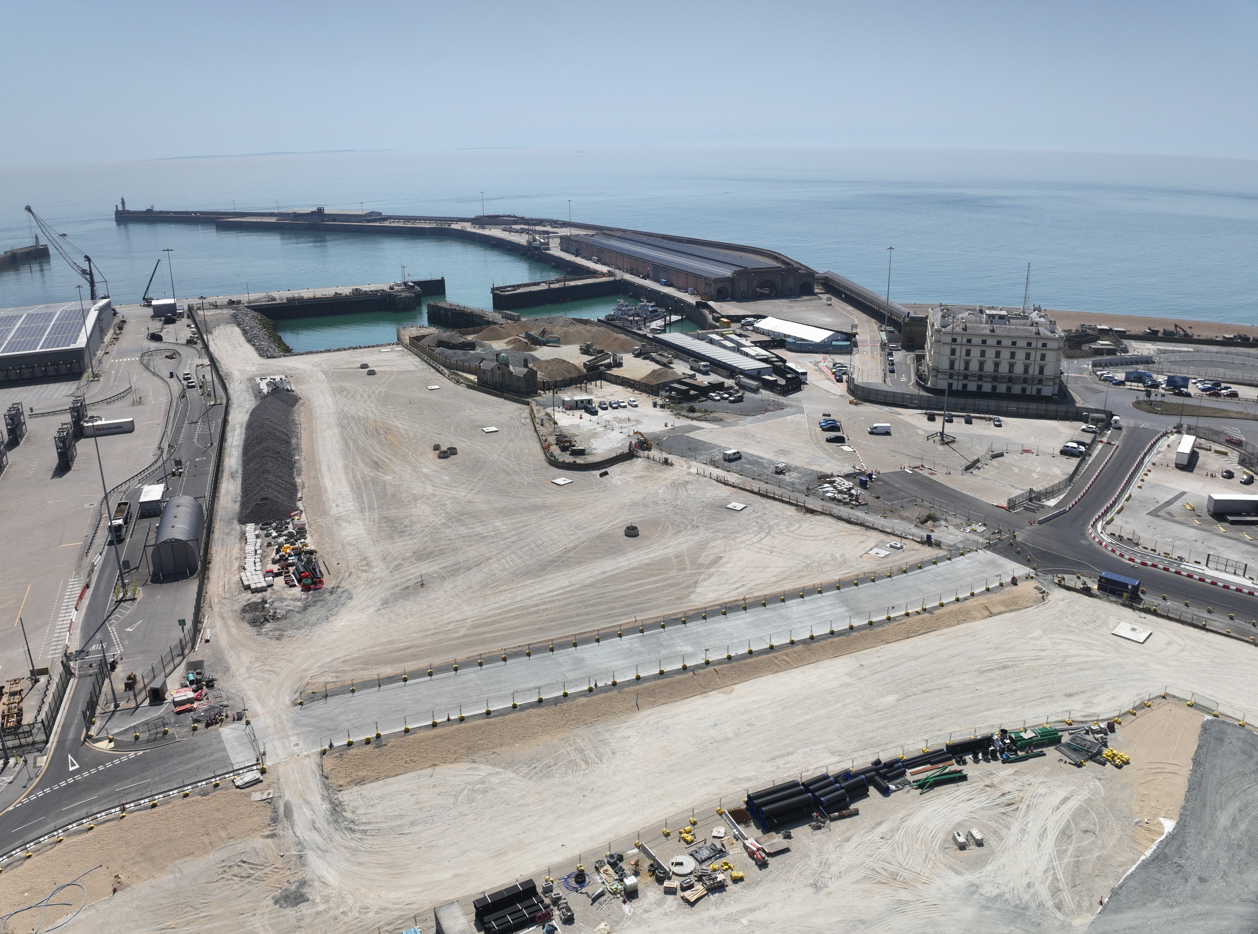
The concrete was used by contractor Midgard in a build-to-rent apartment building at Brent Cross Town, the 180-acre mixed-use development in north London being delivered by Related Argent in partnership with Barnet Council.
The building is a 200-unit residential scheme scheduled to open in 2028. In the concrete mix used for the slab, 30% of the cement was replaced with calcined clay, resulting in a reported 10% embodied carbon saving compared with equivalent concrete mixes previously used on the development.
The calcined clay material was supplied by LKAB Minerals, which produces it from damaged waste bricks. Capital Concrete has said the use of calcined clay could reduce carbon in construction because global clay deposits are abundant and far exceed demand for cement and conventional cement-replacement alternatives.
Calcined clay concrete has been approved under British Standards since 2019, but adoption in the UK has remained limited. Its use at Brent Cross Town gives the material a high-profile reference point on one of Europe’s largest regeneration projects, where residential, commercial, education, public realm, and green infrastructure are being delivered across a long-term development programme.
Brent Cross Town is planned to deliver up to 6,700 new homes, including affordable homes, build-to-rent, student accommodation, retirement living, and homes for sale. The neighbourhood is also planned to include a high street, squares, sports facilities, three new schools, 3 million sq ft of office space, and 50 acres of open green space.
Tim Hoyland, environment manager at Related Argent, said: “This material is a practical alternative to traditional cement replacement, enabling the industry to significantly reduce carbon emissions, support job creation and the circular economy.”
The use of calcined clay comes as contractors, developers, and material suppliers continue to search for ways to reduce embodied carbon without compromising constructability or adding unmanageable risk to live projects. Cement remains one of the most carbon-intensive components of the built environment, and the most widely used cement-replacement materials, including ground granulated blast-furnace slag and pulverised fuel ash, are constrained by supply, regional availability, and long-term market changes.
Alternative supplementary cementitious materials are now moving closer to mainstream specification. Calcined clay has attracted attention because it can be produced from abundant feedstock and, depending on supply chains and processing methods, may offer a more scalable route to cement reduction than some traditional by-products. The use of damaged waste bricks in this case also connects the material to circular-economy objectives.
The Brent Cross Town installation is notable because it has been used in a permanent structural application rather than a small demonstrator. Materials innovation often stalls between laboratory validation and routine specification, especially where warranty, insurance, programme certainty, and contractor familiarity are involved. A suspended slab on a live residential building gives the supply chain a more practical reference point.
Embodied carbon is increasingly shaping procurement and design decisions on large schemes. Planning requirements, investor scrutiny, tenant expectations, and net-zero commitments are pushing material choices into earlier project stages. Concrete suppliers able to offer lower-carbon mixes with robust evidence and predictable site performance are likely to become more strategically important as major regeneration schemes move through phased delivery.
Brent Cross Town’s use of calcined clay concrete adds another data point to the sector’s cement-reduction work. Wider adoption will depend on performance evidence, standards confidence, batching capability, supply availability, and the willingness of project teams to bring alternative materials into routine specification.