IN Brief:
- Bennett Architectural Aluminium Solutions filed its notice at Manchester court on 20 November.
- The company operates a 25,000 sq ft manufacturing and office facility in Newcastle-under-Lyme.
- Previous construction projects include Everton's new stadium and the Royal Birmingham Conservatoire.
Bennett Architectural Aluminium Solutions has filed a notice of intention to appoint administrators, placing the future of the Staffordshire architectural glazing contractor and approximately 50 jobs in doubt.
The company filed the notice at Manchester court on 20 November. Established in 1960, Bennett specialises in the design, manufacture, and installation of architectural aluminium systems, operating from a 25,000 sq ft facility at Rosevale Business Park in Newcastle-under-Lyme.
The court filing represents a preliminary stage of insolvency proceedings rather than a formal appointment of administrators. Where the relevant statutory conditions are satisfied, filing a notice of intention can provide temporary protection from certain creditor enforcement actions while a company considers its restructuring or insolvency options.
Bennett’s operations encompass aluminium windows, curtain walling, doors, and specialist glazing installations, alongside maintenance and refurbishment of existing façades. Its previous construction clients include Laing O’Rourke, Balfour Beatty, Kier, and Sir Robert McAlpine.
Among its recent projects is Everton Football Club’s new stadium, where Bennett worked with Laing O’Rourke on architectural glazing, curtain walling, and specialist door installations. Its portfolio also extends across education, healthcare, and commercial developments, including the Royal Birmingham Conservatoire.
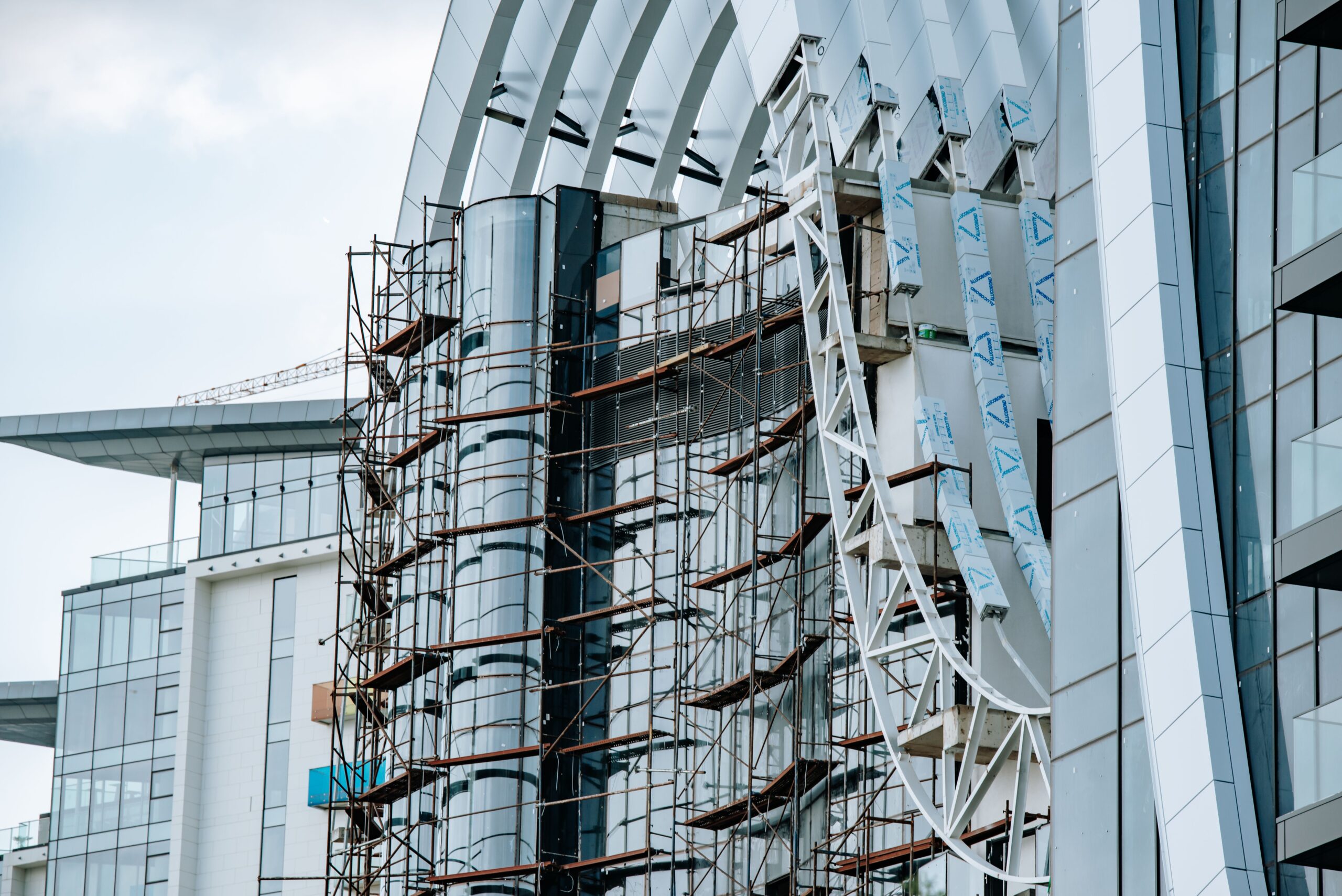
Manufacturing and installation of architectural glazing systems involve close coordination with several other construction disciplines. Although curtain walling is generally independent of a building’s primary loadbearing structure, its connections must transfer the weight of the façade and imposed wind loads into the supporting structural elements.
Those connections must also accommodate movements arising from structural deflection, thermal expansion, and variations in construction tolerances. The resulting requirements influence the design of aluminium profiles, glazing supports, brackets, seals, and the interfaces between the façade and adjacent building elements.
Specialist contractors frequently retain responsibility for developing these details after the main structural design has been established. Their design activities can consequently extend into procurement and construction periods, particularly where the final dimensions of supporting elements require confirmation through site surveys.
A financial interruption during that process can complicate the transfer of an outstanding façade package to another supplier. Substituting proprietary aluminium profiles or glazing systems may require revised connection details, additional engineering assessment, or renewed consideration of the assembly’s thermal and weather resistance performance.
The availability of completed design information can influence the extent of that work. Fabrication drawings, structural calculations, material specifications, and inspection records may be required before another contractor can establish whether existing manufactured components remain suitable for installation.
Glazing units also tend to be manufactured to dimensions and performance specifications established for individual buildings. Materials already procured or held at a contractor’s manufacturing facility cannot necessarily be replaced with equivalent stock products without affecting the design or construction programme.
Establishing ownership of those materials, their manufacturing status, and their compatibility with the remaining installation package becomes particularly important where components have been produced away from the construction site. Contractual provisions governing payment, title, and access to materials may influence how readily they can be incorporated into subsequent works.
Delays to façade installation can affect activities beyond the external envelope. Internal finishes, flooring, and selected building services installations may depend on achieving appropriate protection from the weather and maintaining environmental conditions within the structure.
No disruption to specific construction projects has been confirmed following Bennett’s filing. The consequences for individual clients would depend on the contractor’s outstanding commitments and the status of design, manufacturing, and installation activities across those projects.
The company’s maintenance and refurbishment operations introduce separate considerations for completed buildings. Replacing damaged façade components or resolving failures in weatherproofing assemblies can require access to technical documentation and products compatible with the original installation.
Even where alternative manufacturers can provide replacement materials, differences in profile geometry, sealing arrangements, or fixing details may restrict their application. The availability of compatible components can remain important throughout the operational life of a building.
Bennett’s court filing comes amid continuing financial pressures across the construction supply chain. Recent industry insolvency statistics identified construction as the largest contributing sector despite a reduction in the overall number of insolvencies recorded.
Specialist manufacturing contractors must finance factory operations alongside expenditure associated with individual construction projects. Procurement of aluminium profiles, glazing units, and other components can precede installation by several months, creating working capital requirements that depend on contractual payment arrangements and construction programme stability.
The reasons for Bennett’s filing and the company’s current financial position have not been established publicly. Nor has the court record identified a completed restructuring arrangement or formal appointment of administrators.
Any subsequent appointment will establish the next stage of the proceedings and provide greater clarity over the contractor’s operations, outstanding construction commitments, and employment position.