IN Brief:
- TSL reportedly intends to withdraw from the Bridgwater construction programme approximately six months after replacing Sir Robert McAlpine.
- Existing building services contractor NG Bailey has been identified as a possible successor, although no appointment has been confirmed.
- National Grid has separately begun construction of the permanent 400/132kV transmission substation serving the development.
Agratas faces a further change to its construction delivery team at its battery manufacturing facility near Bridgwater, Somerset, with contractor TSL reportedly preparing to withdraw from the multibillion-pound development following difficulties agreeing commercial terms.
The anticipated departure comes approximately six months after Agratas brought in TSL to replace Sir Robert McAlpine, which had delivered substantial elements of the initial construction programme. The earlier contractor change was accompanied by a revision to the anticipated completion of the development’s first phase, moving it from 2026 into 2027.
NG Bailey, already responsible for mechanical, electrical, and plumbing activities at the development, has been identified as a potential successor to TSL. Its appointment to lead the remaining construction programme has not been confirmed.
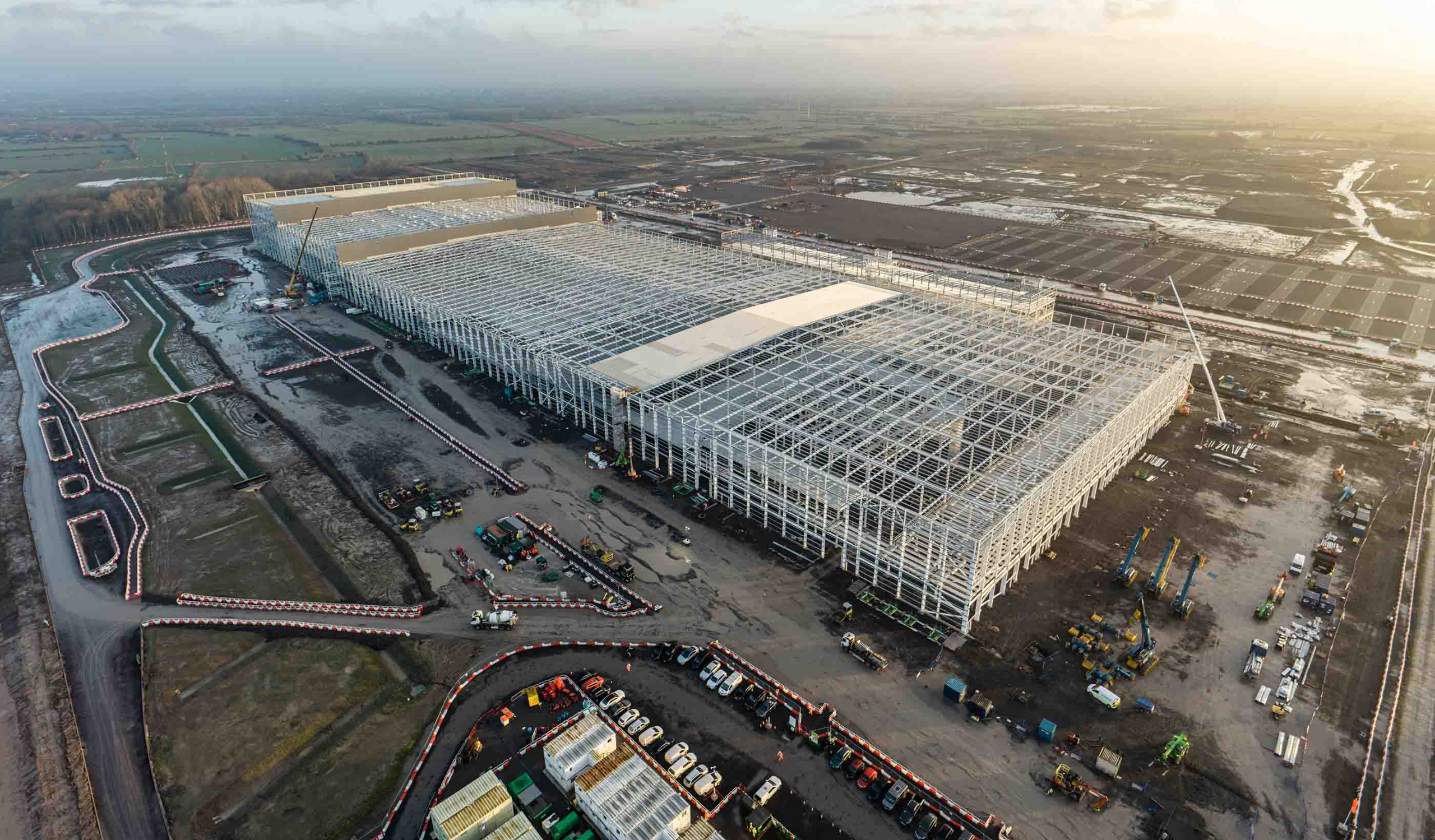
The uncertainty comes as construction progresses from the erection of the principal building structure towards enclosure, internal construction, and the installation of specialist manufacturing infrastructure. Agratas completed the steel frame for Building One earlier this year, using approximately 23,000 tonnes of steel across the main structure and associated ancillary buildings.
Building One forms the first phase of the company’s manufacturing development at the Gravity Smart Campus, established on the former Royal Ordnance Factory site. Agratas, part of the Tata Group, is developing battery cell production capacity to support automotive electrification, including the requirements of Jaguar Land Rover.
By July, construction had advanced across the building envelope and central utilities building, with cladding installation progressing on both structures. Agratas subsequently confirmed in October that the steel frame for its goods handling building had been erected and that an on-site concrete batching facility would support the installation of ground floor slabs.
Progressing from structural construction into specialist fit-out increases the number of technical interfaces that must be coordinated across the development. Battery manufacturing equipment imposes requirements on electrical distribution, environmental control, process utilities, structural support, and fire protection that influence the design and installation of building services.
Manufacturing processes involving materials sensitive to moisture require closely controlled environmental conditions, potentially including dry rooms and dedicated air treatment equipment. The performance of those systems depends on coordination between the building envelope, ventilation plant, internal partitions, and the manufacturing equipment installed within the controlled areas.
The construction programme must therefore accommodate more than the physical installation of machinery. Manufacturing areas need to be enclosed and brought to appropriate environmental conditions before equipment can be commissioned, while process utilities and electrical infrastructure must be available at the relevant stages of testing.
National Grid’s permanent electricity connection introduces a separate infrastructure programme. Main construction of the 400/132kV Woolavington substation began this month following earlier groundworks, foundation construction, and preparation of the development platform.
Two interim 33kV distribution connections have already been installed to support the Agratas site ahead of completion of the permanent transmission infrastructure. The wider substation programme includes the installation of structural steelwork and major electrical equipment, with National Grid currently anticipating construction completion in summer 2029.
The substation’s construction timetable is distinct from the delivery programme for Building One. The capacity available through interim connections, alongside the phased commissioning of manufacturing infrastructure, will influence how production equipment can enter service before the permanent transmission connection is complete.
Any transfer of responsibility for the building works will require coordination with these separately managed infrastructure and equipment programmes. An incoming contractor would need to establish which design responsibilities, supplier commitments, and construction packages remain outstanding, together with the status of completed works.
The handover of technical documentation is particularly important where subsequent construction depends on work undertaken by the previous delivery team. Inspection records, design revisions, installation tolerances, and the contractual status of existing specialist subcontractors can affect the sequence in which the remaining packages are completed.
The position of NG Bailey within the existing delivery arrangements may provide continuity across elements of the building services programme, although the scope and commercial terms of any expanded appointment remain unresolved. Responsibility for specialist manufacturing equipment may also sit outside the main construction contract.
Agratas has secured £380m in government support for construction of its Somerset facility and procurement of battery manufacturing equipment. The investment encompasses both building infrastructure and the equipment needed to establish manufacturing capacity, making continuity between the construction and industrial installation programmes an important component of delivery.
Agratas has maintained that it remains on course to meet customer requirements. It has not announced a revised production timetable in response to the reported departure of TSL.
The identity and scope of the contractor responsible for the remaining building works will determine how the development progresses through its next construction phase, while the separately procured electricity infrastructure continues towards completion.