IN Brief:
- Ramtech and French installation partner Prodomo have deployed WES3 temporary fire protection at Tour Triangle.
- The installation comprises approximately 180 manual call points and 30 smoke detectors.
- Integration with Ramtech's REACT platform enables connected alarm monitoring and emergency notifications.
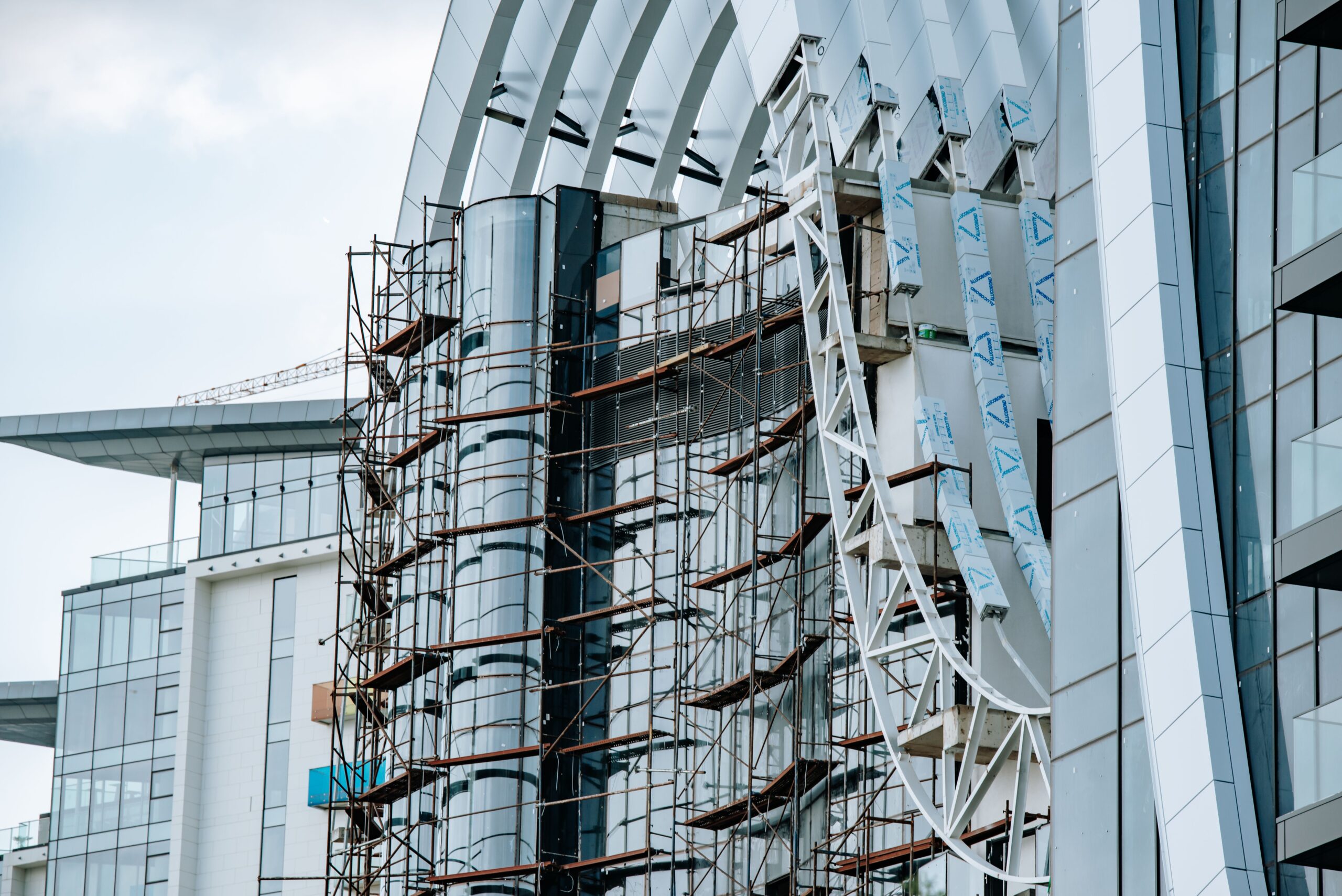
Ramtech and its French installation partner Prodomo have deployed approximately 210 wireless fire safety devices at Tour Triangle in Paris, providing temporary detection, alarm, and evacuation infrastructure across the 180-metre development during construction.
The installation combines approximately 180 manual call points and 30 smoke detectors through Ramtech’s WES3 temporary fire safety system. The equipment is connected to the company’s REACT emergency notification platform, enabling designated personnel to receive information about alarms and activated devices.
BESIX is constructing the 42-storey building for Unibail-Rodamco-Westfield. Designed by Herzog & de Meuron, the development incorporates commercial accommodation, hospitality facilities, and other services across approximately 91,000 square metres.
The scale and vertical configuration of Tour Triangle create a changing environment for temporary fire protection. Structural works, external envelope installation, and internal fit-out can progress concurrently across different floors, with the availability of permanent building services varying between working areas.
Construction materials, temporary electrical installations, and activities such as hot work can introduce fire risks before the building’s permanent detection systems and compartmentation measures have been commissioned.
Maintaining temporary protection throughout construction therefore requires equipment that can accommodate changes to working areas, site layouts, and emergency arrangements.
Ramtech’s WES3 system uses radio communications to connect its individual devices. Manual call points allow personnel to initiate an alarm, while automatic smoke detectors provide additional detection within monitored areas.
Wireless communications remove the requirement to install dedicated signal cabling between each temporary alarm device. This enables protection to be relocated or extended without the associated disruption of repeatedly modifying fixed alarm cable routes.
The approach is particularly applicable to construction environments where partitions, access arrangements, and working areas change as individual trades progress through the building.
WES3 uses a mesh network, enabling devices to communicate across interconnected nodes rather than relying exclusively on direct radio connections with a central receiver. Multiple communication paths can help maintain network connectivity across complex environments.
The configuration still requires appropriate commissioning and reassessment as construction progresses. Reinforced concrete, steelwork, and completed sections of the building envelope can influence radio propagation, while changes to the distribution of devices can alter the characteristics of the network.
Ramtech’s manual call points carry certifications relating to EN54-3, EN54-11, and EN54-25, covering alarm sounders, manual activation equipment, and components using radio communications. Its smoke detectors are certified under EN54-7 and EN54-25.
Those product certifications provide evidence concerning individual equipment characteristics. The adequacy of a temporary fire protection installation also depends on the site’s risk assessment, distribution of equipment, maintenance arrangements, and established emergency procedures.
Integration with REACT extends access to alarm information beyond the temporary devices themselves. Designated personnel can receive emergency notifications and identify the associated alarm device, providing additional information to support coordination of the site response.
Within a large multi-storey construction environment, the ability to identify an alarm’s location can assist the personnel responsible for coordinating evacuation and emergency arrangements. Connected notifications nevertheless complement rather than replace the local alarm system and established emergency procedures.
Construction safety management must also account for the changing environmental conditions in which detection equipment operates. Dust, temporary obstructions, and alterations to the internal layout can affect the performance or suitability of individual installations.
Inspection and maintenance requirements consequently extend beyond checking the physical condition of the devices. The installation must remain appropriate to the evolving construction environment and the activities being undertaken.
Ramtech and Prodomo have worked together for more than five years, deploying temporary fire protection equipment across construction and other temporary infrastructure environments in France.
The two companies also supported a temporary installation at the 2026 Le Mans 24-hour race, where more than 300 wireless devices were used across event infrastructure. The applications differ considerably, but both require fire safety equipment capable of accommodating temporary and changing physical layouts.
The Tour Triangle deployment also illustrates the increasing integration of connected systems into construction safety management, an area addressed more broadly through Britain’s recently published five-year construction safety action plan.
As Tour Triangle progresses through successive construction and internal fit-out stages, temporary protection will continue to operate alongside the contractor’s wider arrangements for controlling fire risks and managing emergencies. Its eventual removal will need to be coordinated with the commissioning and availability of the relevant permanent fire protection infrastructure.