IN Brief:
- RAF Brize Norton's replacement runway received its first returning aircraft on 13 November.
- VolkerFitzpatrick completed the 3km reconstruction using pavement quality concrete and grooved Marshall asphalt.
- Remaining airfield infrastructure improvements are expected to continue towards late 2027.
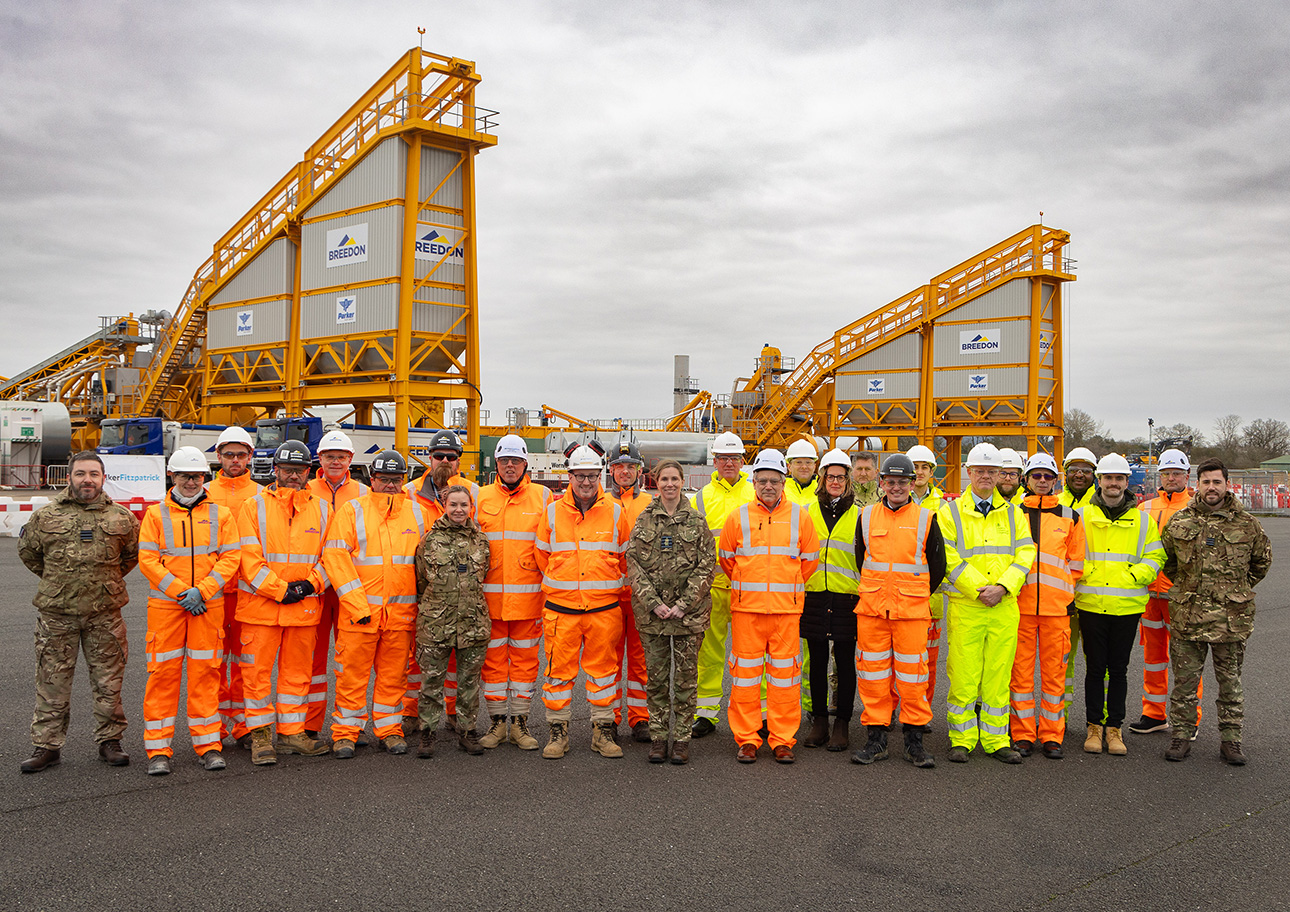
Aircraft have returned to RAF Brize Norton following a 16-week runway replacement programme, restoring the principal operating surface at one of the UK’s busiest military airfields.
The VolkerFitzpatrick works involved reconstructing the 3km runway with pavement quality concrete and grooved Marshall asphalt, selected to improve durability under heavy aircraft loading and higher temperatures. The first aircraft landed on the completed runway on 13 November, following the temporary dispersal of operations during construction.
Delivered through the Defence Infrastructure Organisation (DIO), the work forms part of a £180m airfield infrastructure contract. AECOM is providing technical services, with the wider programme incorporating taxiway refurbishment, drainage improvements, lighting, and associated infrastructure.
The runway handover marks completion of the principal pavement replacement rather than the end of the entire investment programme. Additional works are scheduled to continue towards late 2027.
The reconstruction required the existing surface to be replaced rather than repaired through isolated resurfacing operations. Runway pavements must accommodate repeated loading from aircraft whose wheel configurations, tyre pressures, and operating weights place different demands on the structure from conventional highway vehicles.
Pavement quality concrete provides structural resistance to these loads, while its properties can help limit deformation under demanding operating conditions. Structural performance also depends on the support beneath the pavement, the arrangement of joints, and the management of stresses caused by loading and temperature changes.
The Defence Infrastructure Organisation expects the use of pavement quality concrete to more than double the runway’s service life compared with the materials previously installed. That is a forecast based on the selected construction approach, not an operational lifespan already demonstrated by the new surface.
Grooved Marshall asphalt forms another important element of the pavement specification. Grooving provides channels that help water escape from the tyre contact area, reducing the risk of standing water compromising aircraft braking and directional control.
The effectiveness of the grooves depends on their dimensions, spacing, condition, and the wider drainage arrangements. Surface texture, pavement condition, aircraft characteristics, and weather also influence the friction available during landing and take-off.
The use of concrete and asphalt therefore addresses different but connected requirements. Structural capacity determines how the pavement carries repeated aircraft loads, while surface characteristics influence the interaction between aircraft tyres and the runway during operation.
Higher temperatures add a further design consideration. Asphalt stiffness changes with temperature, affecting resistance to deformation, while concrete pavements experience thermal movement that must be accommodated through suitable structural detailing.
DIO has linked the new materials to improved resilience under changing climate conditions. The completed pavement will still require inspection and maintenance, with actual service life determined by operational loads, environmental exposure, and the condition of its supporting systems.
The 16-week construction window imposed a substantial delivery constraint. Unlike an ordinary road scheme, where some traffic may be diverted around the works, closing the principal runway required the RAF to relocate aircraft operations while contractors occupied the airfield.
The dispersal allowed construction teams to work within a defined operating area, but the runway had to be returned in a condition suitable for aircraft movements. Pavement construction, surfacing, inspection, and operational acceptance therefore formed a connected sequence with limited scope for extending the closure.
Concrete pavement construction introduces particular scheduling requirements because freshly placed material must develop sufficient strength before it can carry the intended loads. Surface works, joint detailing, and associated installations must be completed without compromising the quality of the finished pavement.
The published project information does not identify the concrete mix proportions, curing schedule, or individual pavement layer thicknesses. Those details cannot be inferred from the material specification alone, although the structural and operational requirements explain why sequencing and quality assurance were critical.
The runway also operates as part of a wider airfield system. Taxiways must provide suitable access between parking areas and the runway, while lighting supports aircraft operations and drainage protects both the surface and underlying pavement structure.
Water entering defective pavement joints or accumulating in supporting layers can undermine long-term performance. Improvements to drainage therefore contribute to durability, rather than serving only to remove surface water after rainfall.
The wider programme also includes works on other aircraft operating surfaces and supporting infrastructure. Their construction must be coordinated with the return of routine activity at the base, creating a different operating environment from the full runway closure.
The £180m contract value covers this broader programme and should not be presented as the cost of the runway pavement alone. No separate final expenditure figure has been confirmed for the 16-week reconstruction phase.
RAF Brize Norton supports the Royal Air Force’s strategic air transport and air mobility operations. Maintaining a reliable runway is therefore directly connected to the ability to operate aircraft and sustain the infrastructure supporting those missions.
The completed pavement provides a renewed operating surface while further improvements continue across the airfield. DIO expects the overall programme to conclude in late 2027, with the runway’s projected longer service life forming a central part of the investment.