IN Brief:
- Hackney Council has entered a pre-construction services agreement with Wates for the Britannia housing project.
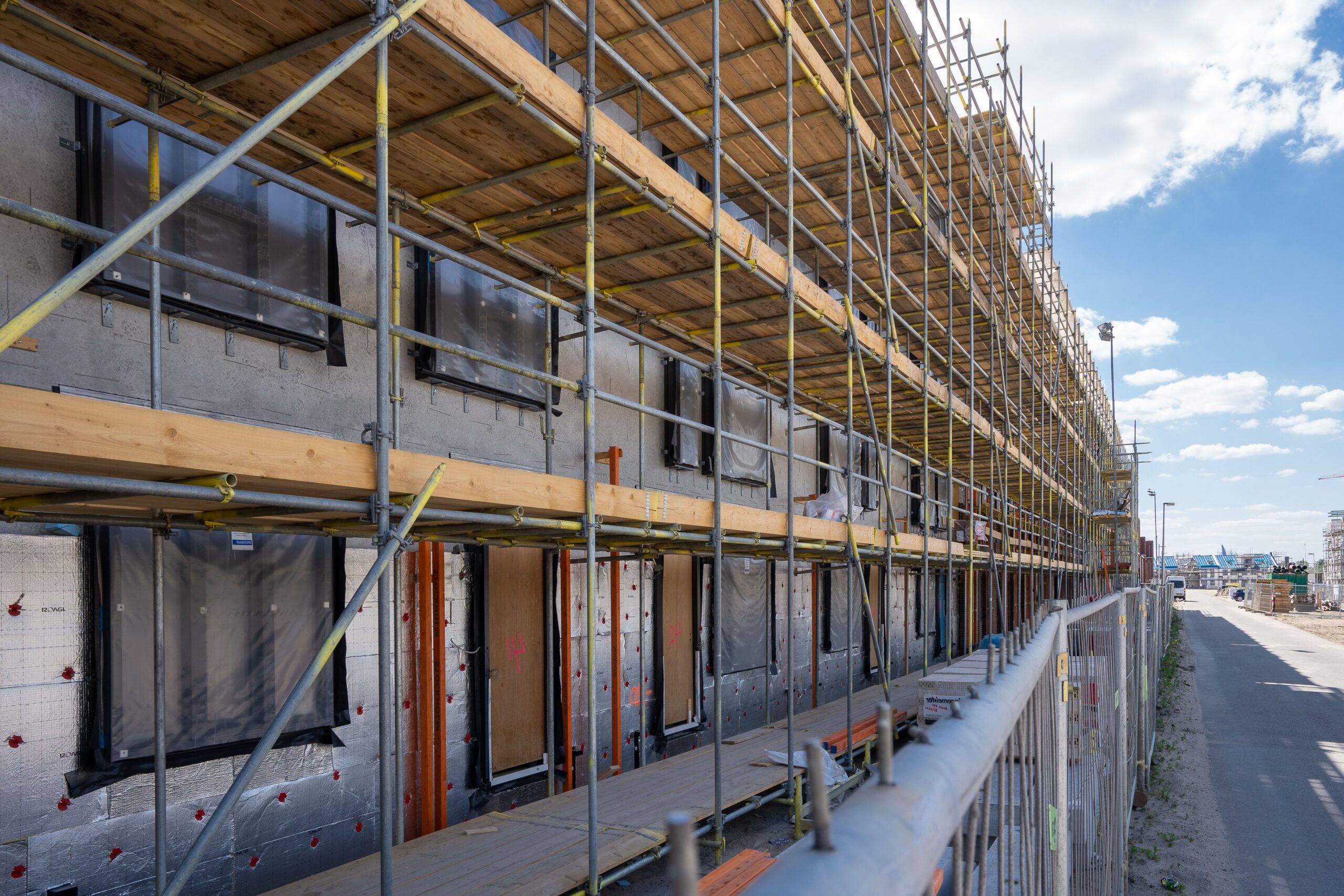
- Initial work is focused on assessing the incomplete buildings and completing the external envelope.
- The 371-home phase stalled after Ardmore Construction Group entered administration in June.
Wates has entered a pre-construction services agreement with Hackney Council as the authority prepares to restart its Britannia housing project following the administration of Ardmore Construction Group.
The agreement formalises Wates’ role after its residential construction team took over management of the site in July. Hackney is initially concentrating on the external envelope of four residential buildings while the contractor assesses completed work, outstanding scope, defects, damage, and the condition of packages left unfinished when construction stopped.
Britannia’s residential phase comprises 371 homes on the former leisure-centre site, including 51 for social rent, 30 for shared ownership, and 290 for private sale. Receipts from the private homes form part of the funding structure for the wider regeneration programme, which has already delivered a new leisure centre and secondary school.
Ardmore was appointed in 2023 to deliver the final phase under a contract reported at £197m. Its construction businesses entered administration on 11 June 2026 after nearly three years on site, leaving Hackney with an advanced but incomplete development and a substantial exercise in securing, surveying, and rebuilding the contractual structure around it.
The council terminated Ardmore’s contract in early July and brought Wates onto the project to manage the site while completion options were assessed. Hackney’s 27 August update confirms that the relationship has now progressed into a formal PCSA, ahead of a recommendation on recommencing construction.
The first priority is weather protection. Completing façades, roofs, windows, and associated envelope elements reduces the risk of water ingress and deterioration while internal packages are reviewed and reprocured. On four partially completed residential buildings, leaving the envelope open for an extended period would add defect and reinstatement work to a project already carrying the cost of contractor failure.
Taking over another contractor’s scheme requires considerably more investigation than starting on a cleared site. Wates has to establish what has been installed, whether it corresponds with current design information, which inspections and approvals are complete, what materials remain on site, and where warranties or subcontractor responsibilities still survive.
The supply chain is another immediate issue. Trade contractors may have unpaid balances or terminated contractual relationships following Ardmore’s administration, while some will have labour, materials, or specialist knowledge that could make them valuable to the completion programme. Re-engaging those businesses requires new commercial arrangements rather than simply reinstating the contracts that existed before June.
Hackney’s earlier project update allowed about three months for Wates and the council to determine how work could restart and to liaise with suppliers over new contracts. A recommendation on the full completion route is expected to go before the council’s Cabinet Procurement and Insourcing Committee in September or October.
A negotiated pre-construction period gives both sides time to price risks that would be difficult to quantify through a conventional completion tender. The incoming contractor inherits existing structures, design decisions, interfaces, and workmanship without having controlled how they were originally procured or installed. Those unknowns are normally converted into contingency, qualifications, or higher tender pricing when a replacement contract is put to market.
Contemporary reporting indicates that Hackney approached a wider group of contractors but found limited appetite for a competitive mini-tender because of the risks attached to taking over partially completed work. The direct route through an established framework allows Wates to investigate those risks before a final construction commitment is made.
Programme assumptions have already changed. Before Ardmore’s collapse, completion was expected around November 2026, although the scheme was already running behind its earlier programme. The council is now working towards an indicative handover in late summer 2027, subject to surveys, scope agreement, procurement, approvals, and successful remobilisation.
The replacement arrangement will also increase cost. Site security, professional fees, surveys, temporary measures, remobilisation, and an incoming contractor’s risk allowance all sit outside the straightforward value of completing the remaining physical works. Hackney has acknowledged that the final cost will exceed the original budget.
Some of those costs arise before production on site returns to anything resembling its previous level. Designers and consultants have to reconcile records, commercial teams have to establish package status, and the council has to determine which liabilities belong to the failed contractor’s estate and which must be absorbed to keep the project moving.
The tenure mix increases the pressure to resolve the programme. Fifty-one households are waiting for new council homes, while shared-ownership and private-sale units are part of the development’s broader financial structure. Delayed private completions also delay receipts intended to support the wider Britannia regeneration programme.
Wates’ PCSA does not yet amount to the final construction contract. Its immediate job is to establish enough technical and commercial certainty for Hackney to decide how completion should proceed, while stabilising the buildings through the external-envelope programme.
The next decisive step will be the council’s approval of a full restart package. By then, Wates should have a clearer picture of the condition of inherited work, the supply chain available to finish it, and the cost of turning a site left by an insolvent contractor back into a functioning construction project.