IN Brief:
- The Education for All Bill will establish new levels of targeted and specialist SEND support.
- Government plans include 60,000 specialist places and access to an inclusion hub for every school.
- Existing rooms, outdoor areas, and circulation spaces could be adapted without relying solely on new builds.
Pick Everard has urged schools and academy trusts to begin planning SEND estate improvements as the proposed Education for All Bill provides greater detail on the government’s intended model for inclusive education.
The legislation is expected to build on the Every Child Achieving and Thriving schools white paper, which proposes a clearer national structure for supporting children and young people with special educational needs and disabilities.
Mainstream pupils would receive a defined level of targeted support, while a new specialist support category would apply to children with the most complex requirements. Schools would also be expected to provide stronger access to specialist services and dedicated inclusion spaces.
The government has committed more than £3.7bn of capital funding towards 60,000 specialist places, including provision already delivered. Its plans include access to an inclusion hub or base for every school, although the size and form of that accommodation will vary according to local demand and estate constraints.
Pick Everard believes the policy direction gives education leaders sufficient grounds to review their buildings before the legislation is fully implemented. Early surveys and option appraisals can identify underused rooms, circulation space, external areas, and existing accommodation capable of conversion.
Sean Conneely, Director of Project Management specialising in education projects at Pick Everard, said: “The Education for All Bill will help to remove much of the uncertainty around the future direction of SEND provision. Schools will have a clearer picture of the support they will be expected to provide and can begin planning the spaces, facilities and environments needed to deliver it effectively.”
He added: “The most successful projects won’t necessarily involve major new-build programmes. In many cases, schools already have spaces that can be adapted into inclusion hubs, intervention rooms or specialist support areas.”
Capital funding will support substantial new capacity, including purpose-built schools such as the 300-place Balgores SEND School in Havering. The wider national requirement cannot, however, be delivered through new specialist buildings alone.
Many schools will need smaller interventions within operational estates. These may include calm rooms, intervention spaces, sensory environments, accessible hygiene facilities, therapy rooms, secure external areas, acoustic improvements, and layouts allowing pupils to move between mainstream and specialist support.
Adapting an existing building can be faster than commissioning new accommodation, but a room that appears surplus may still serve timetabling, pastoral, storage, circulation, safeguarding, or operational functions. Removing it can transfer pressure elsewhere within the school.
Option appraisals therefore need to consider the whole estate. Pupil movement, staff supervision, fire escape, access control, acoustics, ventilation, daylight, temperature, toilets, outdoor access, and arrival arrangements all affect whether an inclusion base works during the school day.
Sensory requirements place particular weight on details that may receive less attention in a conventional refurbishment. Lighting transitions, mechanical noise, reverberation, visual clutter, material texture, colour contrast, and the predictability of routes can all influence how pupils use the space.
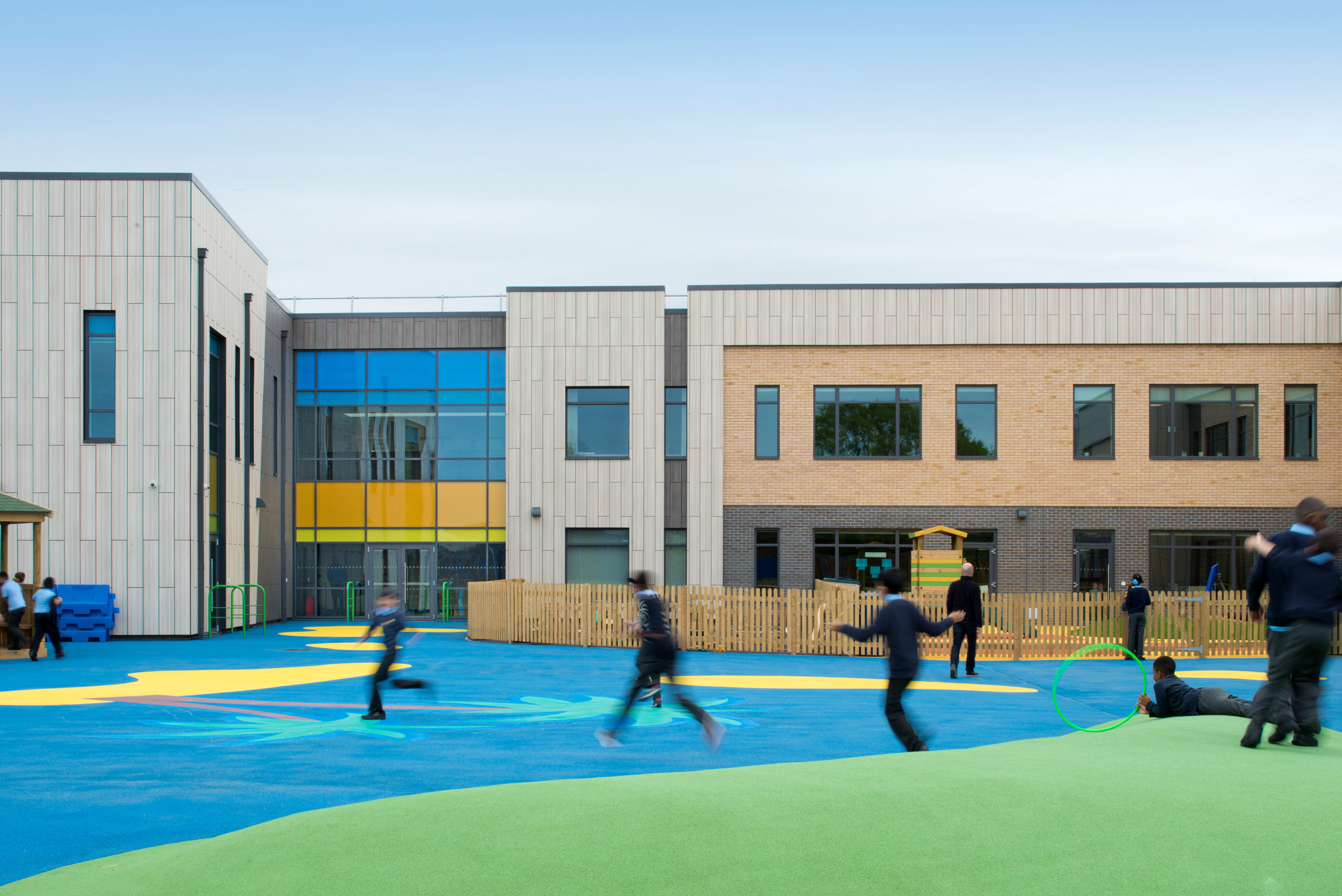
External areas require the same level of planning. Secure gardens, sheltered spaces, movement zones, quiet routes, and direct classroom access can support pupils who need a different environment during part of the day.
Leaving landscaping until late in the programme can weaken otherwise well-designed accommodation, particularly where external space forms part of therapy, regulation, or independent movement.
Schools must also consider how specialist areas will adapt as pupil cohorts change. Fixed layouts designed around one current need can become unsuitable within a few years, whereas flexible services, movable furniture, controllable lighting, robust finishes, and multi-use rooms can extend the value of the investment.
Construction within occupied schools introduces further constraints. Summer holiday windows remain useful for disruptive work, but surveys, asbestos findings, service isolations, long-lead materials, and unforeseen conditions can make a complete intervention difficult to fit into six weeks.
Phased delivery may therefore be necessary where schools cannot release enough accommodation at once. Temporary classrooms, protected circulation, safeguarding arrangements, noise controls, and access separation then become part of the construction strategy.
Local authorities and academy trusts will need to connect estate planning with demographic, educational, and clinical data. Building an inclusion hub without a defined operating model or in the wrong location can create capital expenditure without addressing the underlying demand.
Pick Everard has designed and managed more than 30 Department for Education projects with a combined value of approximately £500m during the past decade. Its advice is that schools should establish condition, need, feasibility, cost, and delivery priorities before new statutory duties create immediate deadlines.
The Education for All Bill must still complete the legislative process, and detailed guidance will shape individual projects. Even so, the policy direction allows estate teams to begin identifying where adaptation, modular provision, expansion, or new construction will be required.