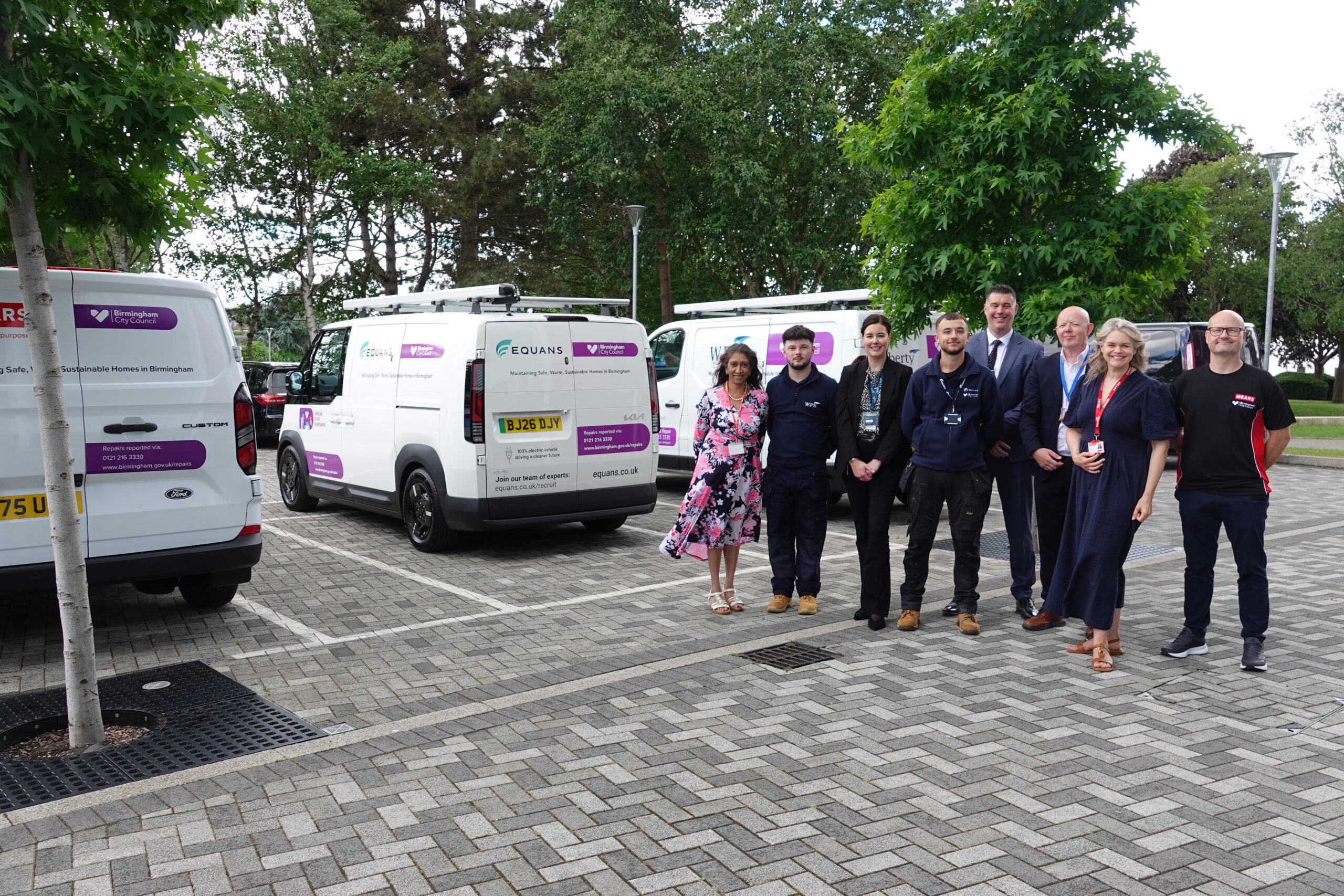
IN Brief:
- Birmingham City Council has launched a new repairs service for council tenants and leaseholders.
- Equans, WPS, and Mears will deliver day-to-day repairs across different areas of the city.
- The service includes a digitised repairs journey, clearer communication, appointment flexibility, and technology to track housing condition.
Birmingham City Council has launched a modernised repairs service for council tenants and leaseholders, introducing a delivery model intended to improve communication, appointment flexibility, and housing-condition data across the city.
The service went live on 1 July and allows tenants to report repairs through a more digitised journey. The council says residents can expect clearer communication about upcoming works, timeframes, and any changes, alongside greater freedom to reschedule appointments where needed.
Three contractors are responsible for day-to-day repairs under the new model. Equans will manage homes in the east of Birmingham, WPS will manage homes in the north and south, and Mears will manage homes in the central and west areas of the city.
The contractors will also work with the council on its wider investment programme for council homes. Birmingham is investing more than £200m a year in its housing stock, with 35,000 upgrades delivered to 6,000 council homes over the past year. The new service is expected to work alongside that programme to minimise disruption for tenants and leaseholders.
Technology will play a central role in the new model. New systems will be used to track the condition of council homes, supporting decisions around warmth, energy performance, sustainability, and value for money. Better asset data should help the council identify recurring defects, prioritise investment, reduce emergency callouts, and coordinate planned works with responsive repairs.
Repairs and maintenance are becoming more strategically important for local authority landlords. Housing stock is ageing, resident expectations are rising, damp and mould enforcement has intensified, and energy performance requirements are becoming harder to meet through isolated works. A modern repairs service has to do more than send operatives to individual jobs. It needs to connect tenant reporting, scheduling, diagnostics, asset records, contractor performance, stock investment, and resident communication.
For contractors, that shifts the emphasis from transactional repair delivery to long-term service performance. Response times still matter, but so do first-time fix rates, tenant satisfaction, data quality, appointment reliability, safeguarding awareness, complaints handling, void turnaround, planned maintenance coordination, and the ability to identify wider asset issues while attending individual properties.
The division of Birmingham into contractor areas creates clearer operational responsibility, although the council will still need consistent standards across the city. Tenants should not experience different service quality because they live in a different area. Performance monitoring, shared data standards, contract management, and escalation processes will be important from the start.
The scale of Birmingham’s housing stock makes the launch significant for the wider housing maintenance market. Large local authority contracts create sustained workloads for trades, suppliers, call centres, planners, supervisors, surveyors, compliance teams, and specialist subcontractors. They also require strong mobilisation, particularly where new systems, resident interfaces, and contractor boundaries are introduced at the same time.
The service also sits within a broader challenge facing social landlords: improving homes while reducing disruption. Planned upgrades, energy works, damp and mould interventions, compliance checks, void works, adaptations, and routine repairs all compete for access to occupied properties. Without effective scheduling and communication, residents can face repeated visits and unclear timelines. A digitised repairs journey should help, provided it is backed by accurate data and enough operative capacity to meet demand.
There is also a sustainability dimension. Warmer, more efficient homes reduce fuel pressure for residents and support local authority carbon targets. Repairs data can reveal where fabric, ventilation, heating, roofing, windows, drainage, or condensation issues are recurring. When that information is connected to capital investment, councils can move from reactive work toward targeted improvement.
Birmingham’s new service will now be judged on delivery rather than structure. The city has set out a model built around clearer communication, appointment flexibility, contractor accountability, and better housing-condition intelligence. Its success will depend on whether those systems translate into faster repairs, fewer repeat visits, stronger resident satisfaction, and a closer link between day-to-day maintenance and the city’s £200m-a-year investment programme.