IN Brief:
- BAM has secured the first civil engineering package on Eastern Green Link 3.
- The early contractor involvement role covers design and buildability support for the Peterhead converter station.
- The 2GW HVDC link will connect Peterhead and Norfolk through onshore and subsea cable infrastructure.
BAM has secured the first civil engineering package for the northern converter station on Eastern Green Link 3, the proposed high-voltage power cable between Scotland and Norfolk.
The contractor has signed an early contractor involvement agreement with SSEN Transmission for the Peterhead converter station site in Aberdeenshire. BAM’s role covers design input, buildability planning, and early preparation for the civil engineering works needed before a main construction award expected in 2027.
Eastern Green Link 3 is being developed by SSEN Transmission and National Grid Electricity Transmission as part of a wider programme of grid reinforcement. The proposed 2GW, 525kV high-voltage direct current link will run for around 680km, using onshore and subsea cable infrastructure to move power between Peterhead and Norfolk.
The Peterhead package will support the converter station at the Netherton Hub, where planning in principle has been granted. Subject to approvals, construction is expected to begin in 2028, with the link due to be energised in 2033.
BAM’s early work will help define the civil engineering approach around access, drainage, structures, buildings, site preparation, temporary works, and the sequencing needed before specialist HVDC equipment is installed. The package follows BAM’s appointment to deliver civils work on Eastern Green Link 2 in partnership with Hitachi Energy, giving the contractor continuity across major transmission projects.
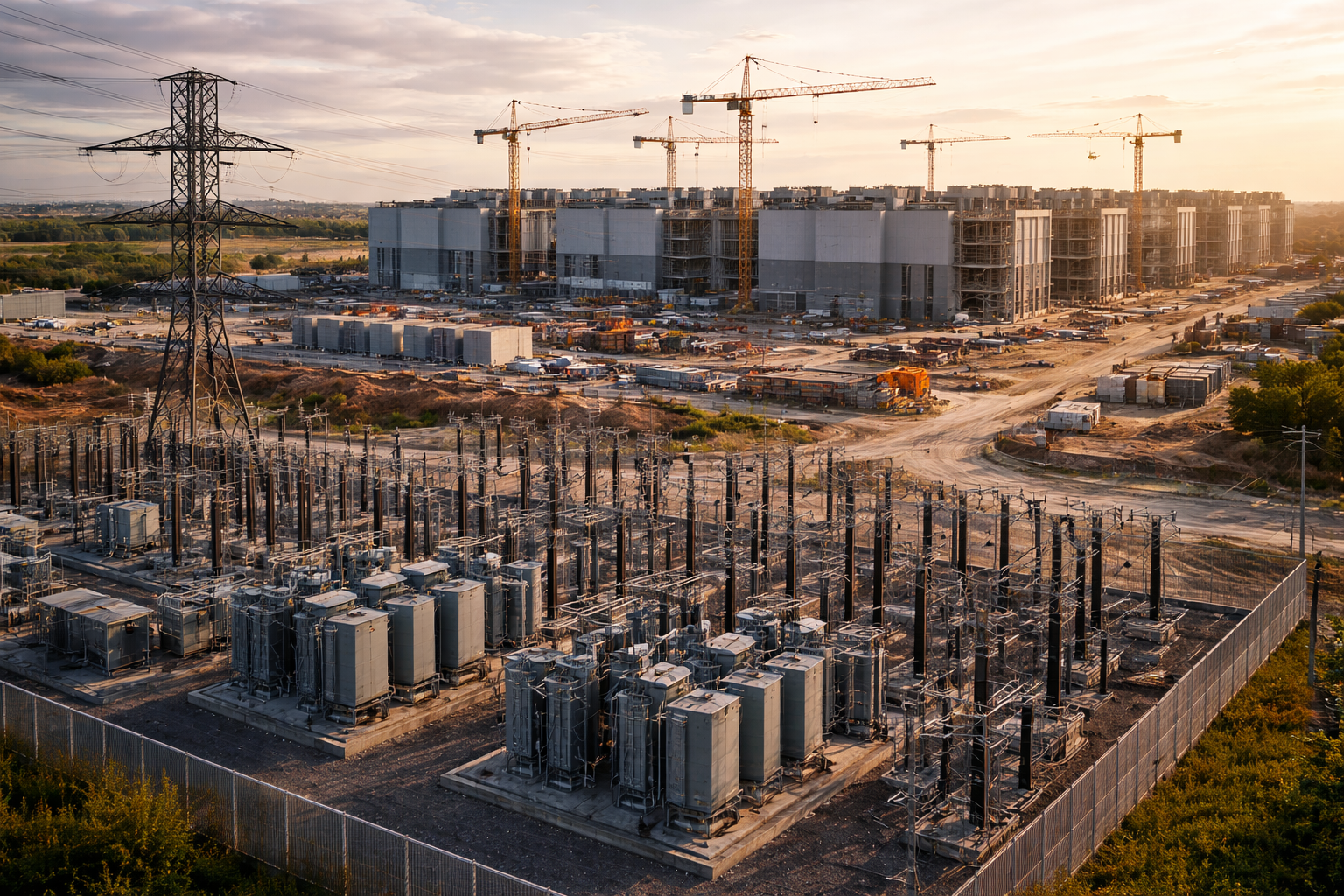
Although converter stations are electrical assets, their delivery depends on conventional construction disciplines being coordinated to high tolerances. Foundations, roads, compounds, drainage, earthworks, control buildings, security infrastructure, cooling systems, and cable interfaces all need to support the later arrival of specialist high-voltage equipment.
Early contractor involvement is particularly important on projects with this level of interface risk. Design maturity, ground conditions, logistics, abnormal loads, environmental constraints, and temporary access can alter cost and programme long before visible construction begins. Bringing the civils contractor into the process early gives the client team more opportunity to test assumptions before the main contract is fixed.
The award also reflects a broader shift in the UK construction pipeline. Grid reinforcement is becoming a major civil engineering workload as renewable generation, offshore wind, industrial electrification, data-centre demand, EV charging, and regional power flows place greater pressure on transmission networks. Substations, converter stations, cable routes, access roads, compounds, and enabling works are now central parts of the energy transition.
That workload is creating demand for contractors able to operate across both civil engineering and electrical infrastructure environments. The strongest delivery teams will need to understand how traditional works packages interact with commissioning, outage planning, network constraints, power equipment installation, and regulated client requirements.
Capacity remains a central challenge. Transmission projects across the UK are competing for designers, project managers, civil engineers, electrical specialists, cable contractors, ports, plant, and skilled labour. Long-lead equipment procurement can also dictate sequencing, making programme control more dependent on early coordination between civil and electrical teams.
The construction market has already seen power infrastructure begin to overlap with wider built-environment delivery, from grid connections for large industrial sites to transformer and substation works supporting digital infrastructure. Similar pressures are visible in large-scale transformer installation for data-centre power infrastructure, where energy availability is becoming a primary development constraint.
For BAM, the EGL3 role strengthens its position in a sector where regulated infrastructure investment is offering a more visible pipeline than parts of private building. For the wider market, the project shows how the low-carbon transition will be built through roads, foundations, compounds, steelwork, drainage, and programme control before the electrical systems can perform their role.