IN Brief:
- Vinci Construction has been awarded the second building contract for the New Reims Hospital.
- The works contract is worth €210m, with €157m allocated to Vinci Construction.
- The 58,000 sq m building will provide 498 beds and places over seven floors.
Vinci Construction has secured a €210m contract to build the second building of the New Reims Hospital complex for Centre Hospitalier Universitaire de Reims in France.
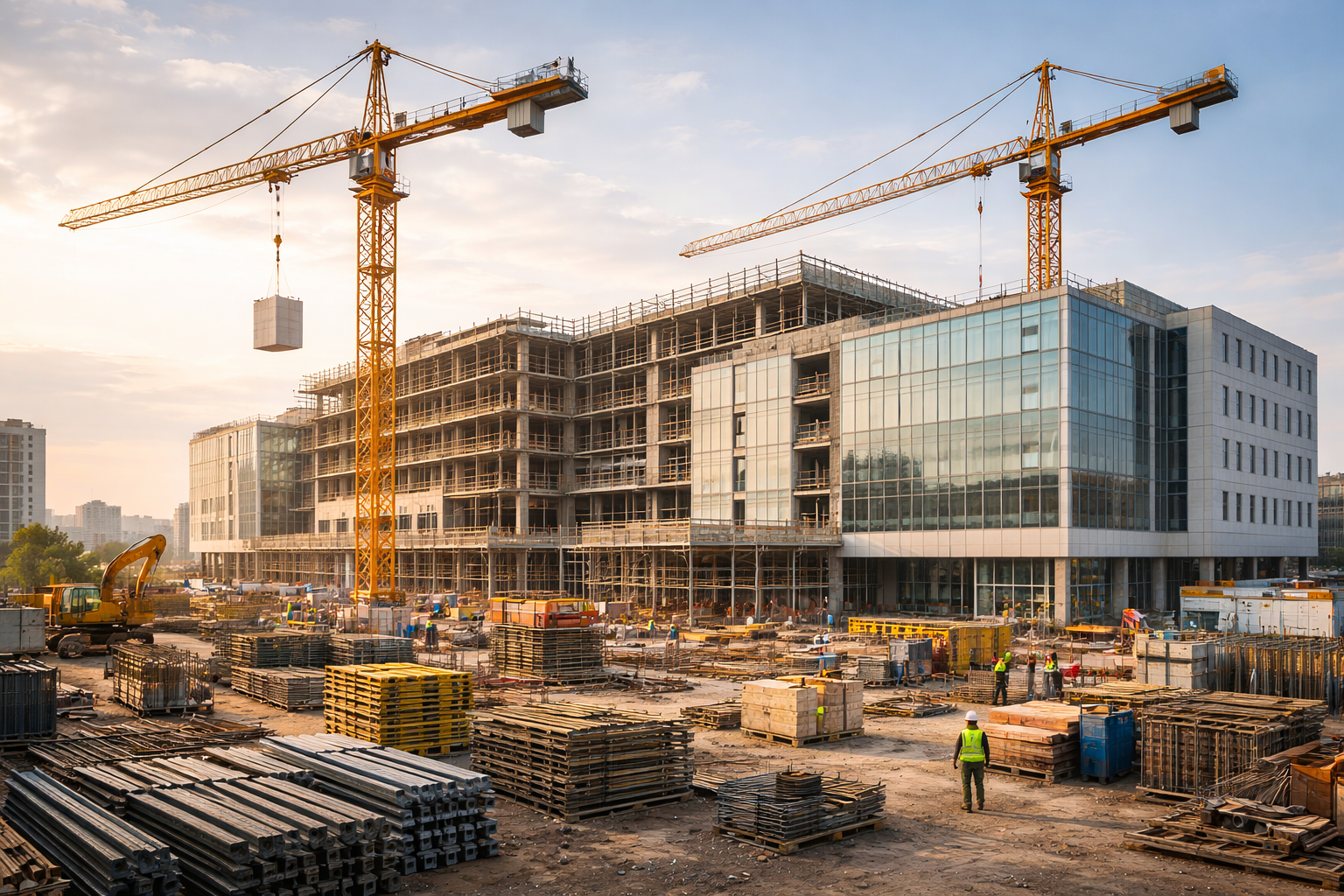
The contract covers construction of a 58,000 sq m building over seven floors, providing 498 beds and places, reception and diagnostic areas, high-tech medical platforms, inpatient space, a hospital pharmacy, logistics rooms, and technical control areas. Of the total works value, €157m is allocated to Vinci Construction.
The project will be delivered by a consortium led by Pargade Architectes. Works are scheduled to last 45 months and will take place while the existing hospital remains in normal operation, creating a constrained live-healthcare construction environment.
Vinci teams were already involved in the first building of the New Reims Hospital complex, giving the contractor continuity across a multi-phase healthcare programme. The second building forms part of a wider effort to modernise the hospital estate and improve clinical facilities for patients and staff.
Hospital construction remains one of the most technically demanding areas of public building work. Acute facilities combine high levels of mechanical and electrical engineering, medical gases, ventilation, digital infrastructure, logistics planning, resilience requirements, and infection control. Those systems are not secondary to the building; they define how the asset functions.
Delivering the works on a live campus will add another layer of complexity. The project team will need to manage phasing, vibration and noise control, construction access, temporary services, dust control, infection prevention, and safe separation between clinical operations and building activity. Those requirements can reduce production flexibility, but they are unavoidable where a hospital must continue operating during construction.
Across Europe, public health systems are trying to renew ageing estates without taking critical capacity offline. New-build replacement programmes can reduce some of that pressure, although many hospitals still require phased construction, expansion, or reconfiguration on active sites. The strongest delivery models are those that integrate construction planning with clinical continuity from the outset.
The Reims building also reflects the move towards larger, more integrated healthcare assets. Bringing diagnostics, inpatient care, pharmacy, logistics, and technical services into more efficient campus layouts can improve clinical flows and operational resilience, but it raises the coordination burden during design and commissioning. Contractors need to manage both the physical build and the systems integration that allows the building to work as a hospital.
For major contractors, healthcare remains attractive but exacting. Public clients require strong balance sheets, technical depth, design coordination, and long-term programme control. Margins can be pressured by risk allocation, specification changes, inflation, and specialist subcontractor demand, while delays in commissioning or validation can quickly affect handover.
Repeat involvement across phases can reduce some of those risks. Familiarity with the client, campus, design team, logistics routes, and existing services gives the contractor a stronger base from which to plan the next stage. On live hospital estates, that continuity can be as valuable as pure construction capacity.
The contract also reinforces the role of public building programmes in maintaining European contractor pipelines while some private commercial markets remain uneven. Hospitals, schools, energy infrastructure, and transport assets continue to generate workload, although they bring stricter scrutiny around value, performance, and public accountability.
Construction is expected to run over nearly four years. The main test will be whether the project team can maintain hospital continuity while delivering a major new clinical asset with the technical standards now expected of modern healthcare buildings. In hospital construction, handover is only one measure of success; the existing estate has to keep functioning safely while the new one is built around it.