IN Brief:
- Agratas has moved to a revised delivery model at its Bridgwater battery gigafactory.
- The project requires complex clean-room, power, process, and electrolyte-handling infrastructure.
- The contractor transition comes as the UK tries to turn battery manufacturing policy into operational capacity.
Agratas has changed the construction delivery model for its Bridgwater battery gigafactory, adding fresh pressure to one of the UK’s most strategically important industrial construction projects.
The Somerset facility is intended to supply batteries for Jaguar Land Rover’s next generation of electric vehicles, with the project backed as part of a wider attempt to build domestic battery manufacturing capacity. The site is not a conventional industrial box. It combines high-specification manufacturing space, process infrastructure, clean-room requirements, controlled humidity, high-capacity power, and specialist areas for battery electrolyte handling.
Under the revised approach, Sir Robert McAlpine has moved away from the next phase of the project, with Tonroe Group Ltd taking on delivery under a new arrangement. Agratas has said the next stage of the project requires a different model, after the first phase progressed with Sir Robert McAlpine’s involvement.
A contractor transition on a project of this type places immediate weight on design status, package handover, procurement records, programme ownership, and commercial clarity. The building cannot be treated separately from the production systems it is designed to house, because the handover route depends on construction completion, equipment installation, process commissioning, and utilities readiness lining up in sequence.
Battery plants sit closer to process-led advanced manufacturing than standard logistics or assembly buildings. Even where the shell progresses visibly, the critical path may sit in building services, grid connection, equipment platforms, process safety systems, clean-room performance, or commissioning access. A construction delay can therefore move quickly into manufacturing readiness, supplier scheduling, and customer delivery planning.
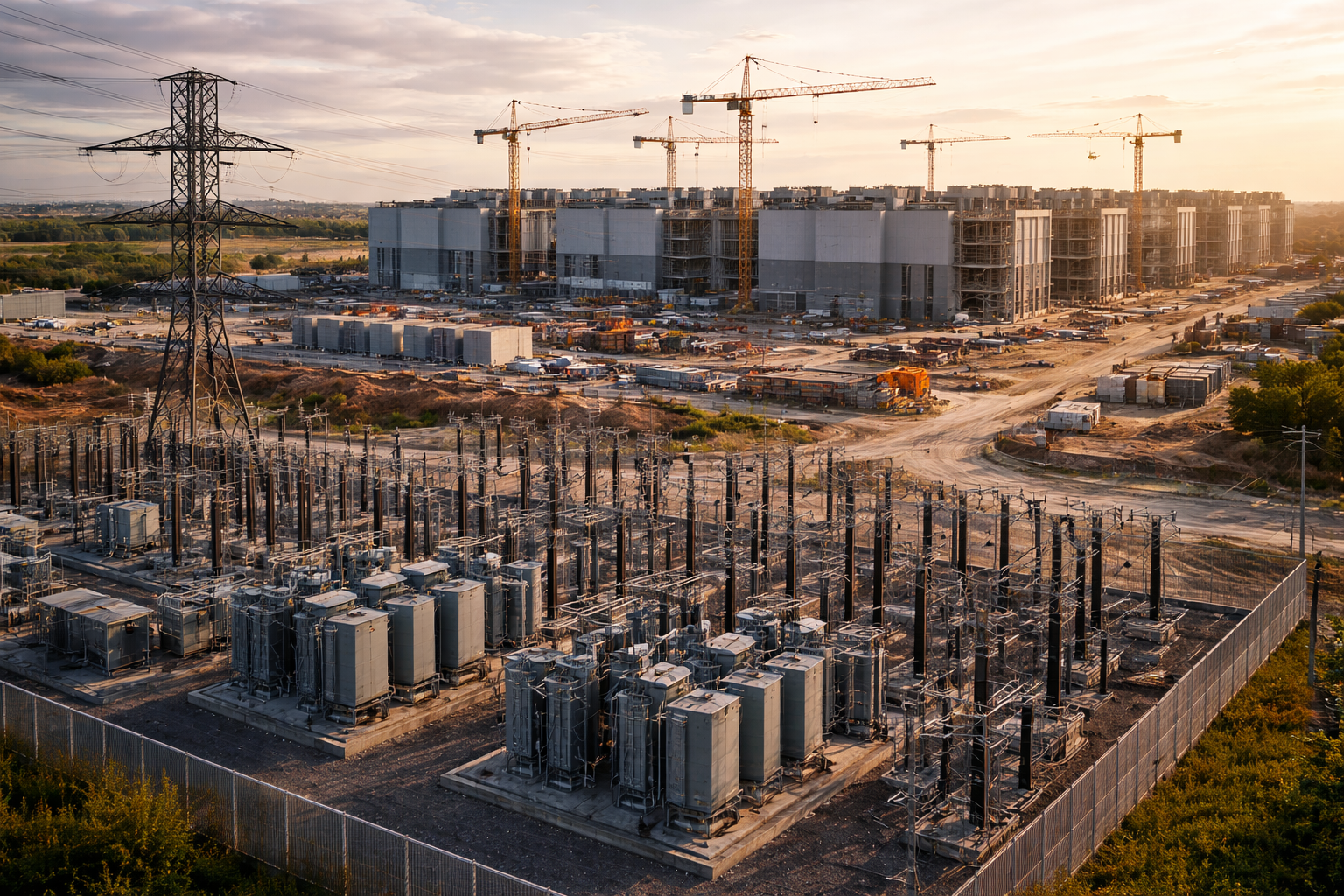
Power remains one of the most sensitive parts of the programme. Battery manufacturing requires resilient high-capacity electrical infrastructure, with long-lead components, grid interfaces, substations, switchgear, controls, and backup systems needing careful sequencing. Across advanced manufacturing, data centres, electrification schemes, and energy projects, power availability is increasingly shaping construction programmes as much as labour, materials, or planning consent.
The contractor change also lands in a market where the same specialist skills are being drawn into multiple sectors at once. Data centres, semiconductor facilities, laboratories, battery plants, energy projects, and high-specification industrial buildings all require experienced MEP teams, project controls, clean-room knowledge, commissioning capability, and strong package management. That creates pressure on clients and contractors to secure capacity early and avoid avoidable churn between work packages.
Bridgwater has become a practical test of whether the UK can convert industrial policy into operating manufacturing assets at sufficient speed. Gigafactories bring visible investment, regional employment, and domestic supply-chain value, but they also expose the difficulty of coordinating construction, equipment supply, utilities, specialist engineering, and production ramp-up across a compressed programme.
International competition adds another layer. Europe, North America, and Asia are using subsidy packages, planning reform, grid investment, and industrial incentives to attract battery production. Construction delivery is part of that investment case. Where programmes become uncertain, manufacturers and investors look beyond headline support packages and assess whether the market can provide reliable execution.
The Bridgwater project still has major strategic value. It has land, policy support, customer demand, and a clear role in the UK’s automotive transition. Its next phase will now be judged on whether the revised delivery model can stabilise programme risk, maintain specialist supply-chain confidence, and move the scheme from industrial ambition into a working battery production asset.