IN Brief:
- Costain has been chosen for the West Winch Housing Access Road near King’s Lynn.
- The 1.5-mile route will connect the A47 and A10, supporting up to 4,000 planned homes.
- Detailed design is due to begin this year, with construction expected to start in 2027.
Costain has been selected by Norfolk County Council to finalise detailed design and build the West Winch Housing Access Road near King’s Lynn.
The 1.5-mile route will connect the A47 with the existing A10, serving the West Winch Growth Area south of King’s Lynn and supporting up to 4,000 planned homes over the longer term. Once complete, the road is expected to become part of the A10.
The scheme includes new roundabouts providing access to housing areas, a cycle path alongside the new road, and dualling of just under one mile of the A47 trunk road. Detailed design is scheduled to begin this year, with construction expected to start in 2027.
Norfolk County Council is advancing the project to reduce pressure on existing routes through West Winch and North Runcton while creating the highway capacity needed for residential and community development. The road will run between existing villages and the planned growth area, with connections designed to support future movement across the wider development zone.
Housing-enabling infrastructure remains one of the sector’s most difficult delivery problems. Planning allocations and housing targets only become deliverable when roads, drainage, utilities, schools, public transport, and local services are funded, designed, consented, and constructed in the correct order. The access road therefore carries more than highway value; it is a precondition for the development capacity planned around it.
Road programmes across the UK are also being structured to bring delivery knowledge earlier into procurement. Transport Scotland’s A9 dualling framework, although larger and more complex, follows the same direction by seeking contractor input across design development, risk planning, and phased delivery.
The West Winch scheme will need similar discipline at a local scale. Early design decisions will shape earthworks, structures, utilities, drainage, active travel provision, environmental mitigation, lighting, landscaping, and interfaces with future housing plots. Weak assumptions in any of those areas can turn an enabling road into a programme constraint for the developments that depend on it.
The project also shows how highways work is being drawn closer to housing policy. Roads of this type are no longer judged only by traffic flow or journey-time gains. They are expected to unlock land, protect existing communities from traffic growth, provide safer walking and cycling routes, and create resilient access for new neighbourhoods before full build-out.
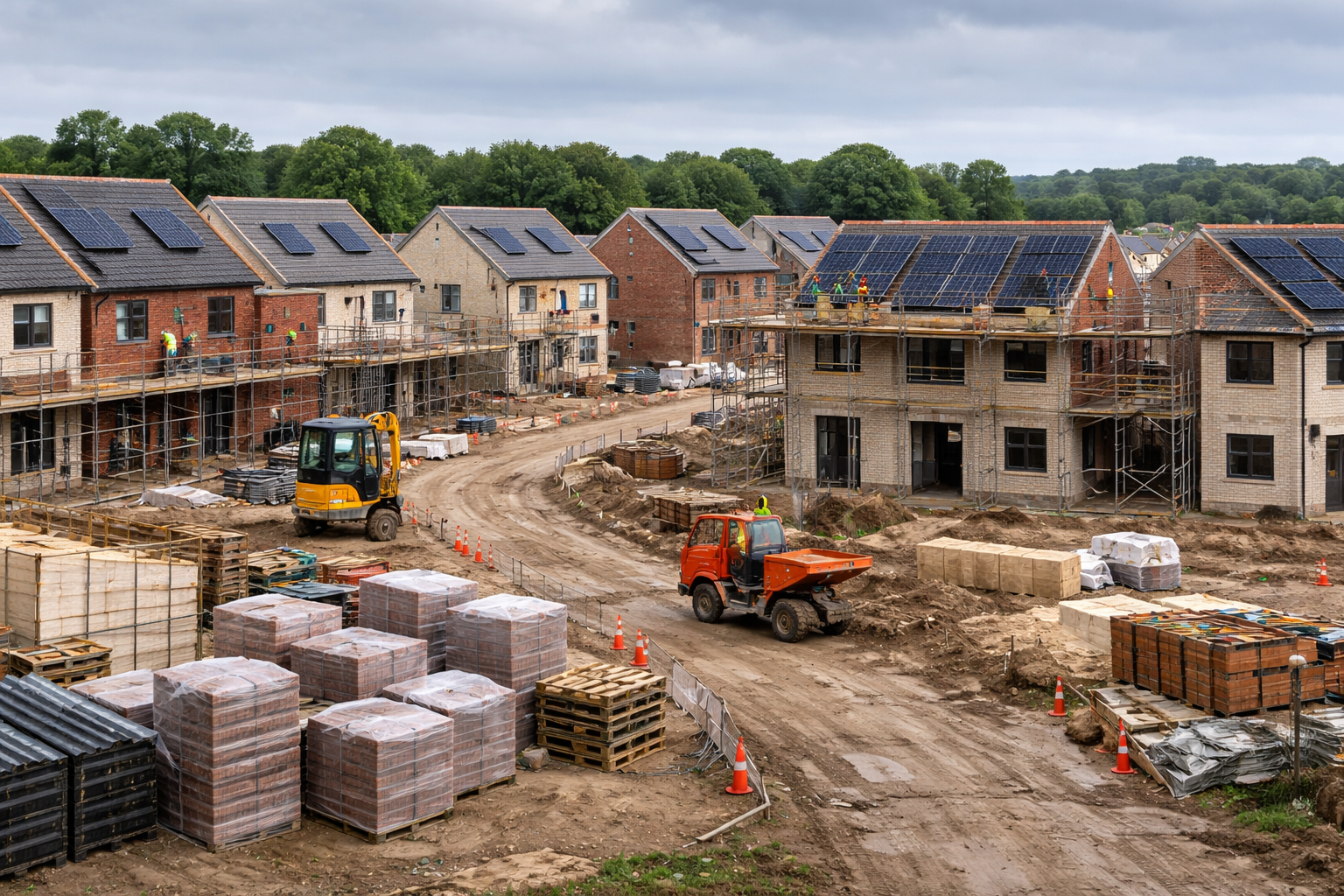
For the supply chain, the route will create civil engineering demand across earthworks, drainage, surfacing, structures, utility diversions, fencing, lighting, landscaping, signs, and traffic management. Delivery will also depend on sequencing that allows future housebuilding phases to connect into the road without repeated disruption or abortive work.
Cost pressure remains a live risk for housing-enabling infrastructure. Land acquisition, statutory processes, environmental requirements, utilities, and traffic management can all alter the cost profile before main works begin. A project funded on earlier assumptions can become more difficult to hold together if inflation, design change, or approval delay erodes contingency.
Costain’s early role in finalising the design should help test constructability before the programme reaches site. The contractor will need to work through buildability, logistics, temporary works, material sourcing, traffic phasing, and environmental controls while maintaining the route’s long-term function as a housing access corridor.
The West Winch appointment places another major enabling scheme into motion. Its success will be measured not only by the road’s completion, but by whether it gives Norfolk County Council, developers, and local communities the infrastructure certainty needed for the growth area to proceed.