IN Brief:
- Shetland Islands Council has opened a 12-week consultation on proposals for the new Brae High School campus.
- Ryder Architecture is leading the design for a campus covering early years, primary, secondary, and enhanced learning provision.
- The full business case is expected in early 2027, following approval of the outline business case in 2024.
Shetland Islands Council has opened consultation on proposals for a new Brae High School campus, moving the island education project into its next stage of development.
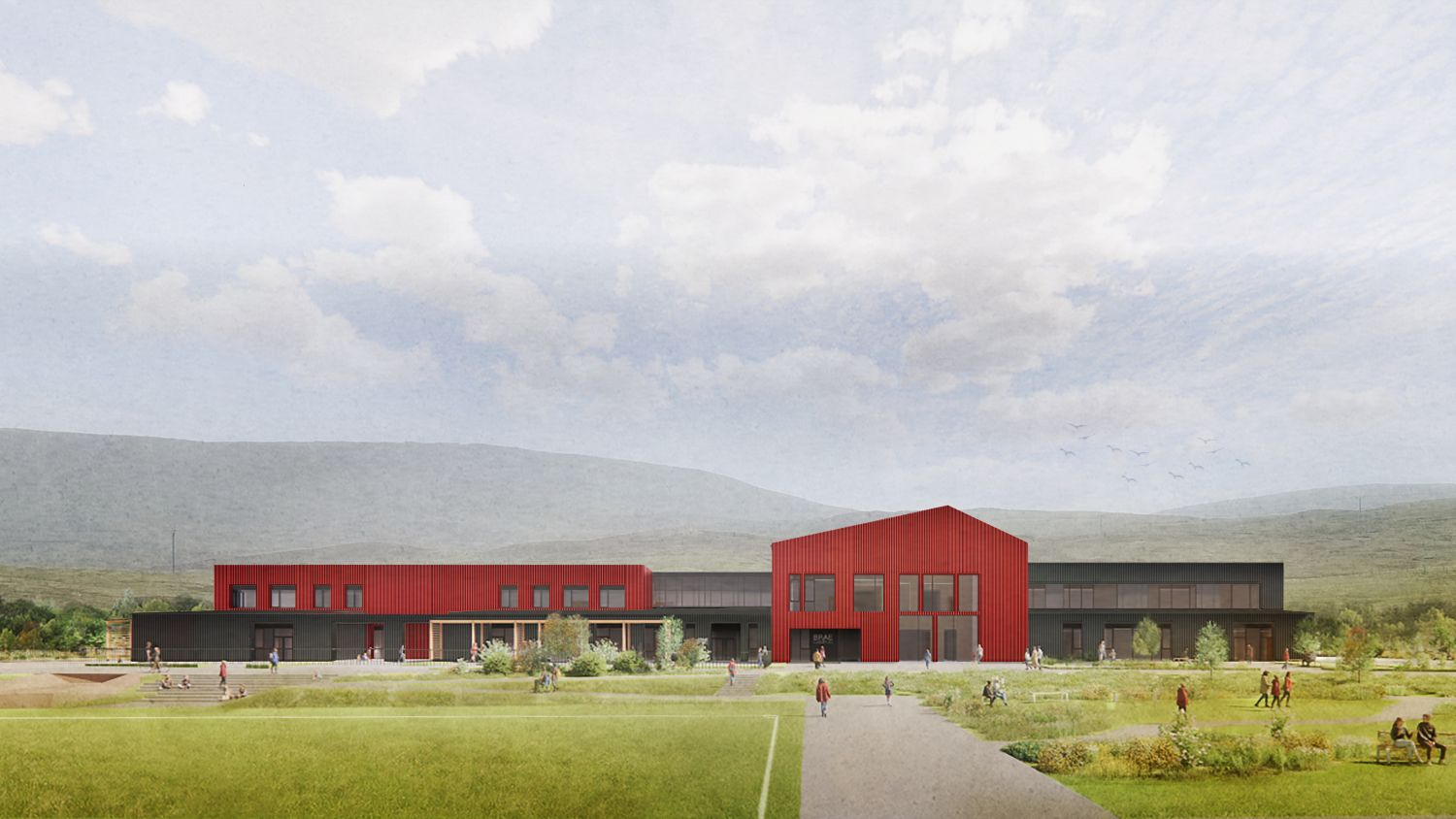
The 12-week consultation covers designs led by Ryder Architecture for a new learning campus on the existing Brae school site. The proposed development will bring together early years, primary, secondary, and enhanced learning provision, alongside parking, external areas, and landscaped spaces.
The project forms part of the North Schools Programme, a partnership involving Shetland Islands Council, Orkney Islands Council, Argyll and Bute Council, Moray Council, and Aberdeen City Council. The outline business case for Brae High School was approved in January 2024, with a full business case expected in early 2027.
The estimated cost previously attached to the scheme was around £42.5 million, subject to final approval. The consultation will allow local residents, staff, families, and other stakeholders to comment on the developing design before the project moves into its next approval stage.
Island school projects carry a different delivery profile from mainland schemes. Construction logistics, labour availability, materials movement, weather exposure, and temporary education arrangements can all shape cost and programme. Building on an existing school site adds further complexity, particularly where safeguarding, access, and continuity of learning have to be maintained throughout the works.
The Brae proposal also reflects a broader change in education estate planning. New schools are increasingly being designed as integrated campuses rather than single-use buildings, with greater emphasis on inclusive learning, early years provision, flexible teaching spaces, community use, energy performance, and external environments.
Enhanced learning provision within the campus places the scheme alongside a growing pipeline of specialist and inclusive education buildings. Recent contract activity for large SEND school projects has underlined demand for facilities that can support more complex pupil needs, resilient building operation, and carefully managed circulation.
All-through campuses require careful planning. A building serving multiple age groups and learning needs must balance security, supervision, acoustics, accessibility, shared facilities, external play, arrival arrangements, and community use. These decisions become even more important in rural and island communities, where the school often acts as a civic anchor as well as an education facility.
The North Schools Programme gives the project an additional layer of relevance. By grouping several authorities around school investment, the programme can support shared learning, procurement consistency, and technical knowledge across geographically dispersed schemes. Local constraints will still define each project, but a coordinated programme can reduce the risk of every school being treated as a fully bespoke exercise.
The consultation will now shape the next version of the Brae campus before the full business case is prepared. If approved, the project will become a major education build for Shetland, combining estate renewal with the particular demands of delivering construction in a remote island setting.