IN Brief:
- Apatura has submitted a planning application for a 55-acre data centre campus near Larbert.
- The project is expected to represent nearly £1 billion of inward investment if approved.
- The developer says the scheme could create more than 5,000 construction jobs and begin operations from 2028.
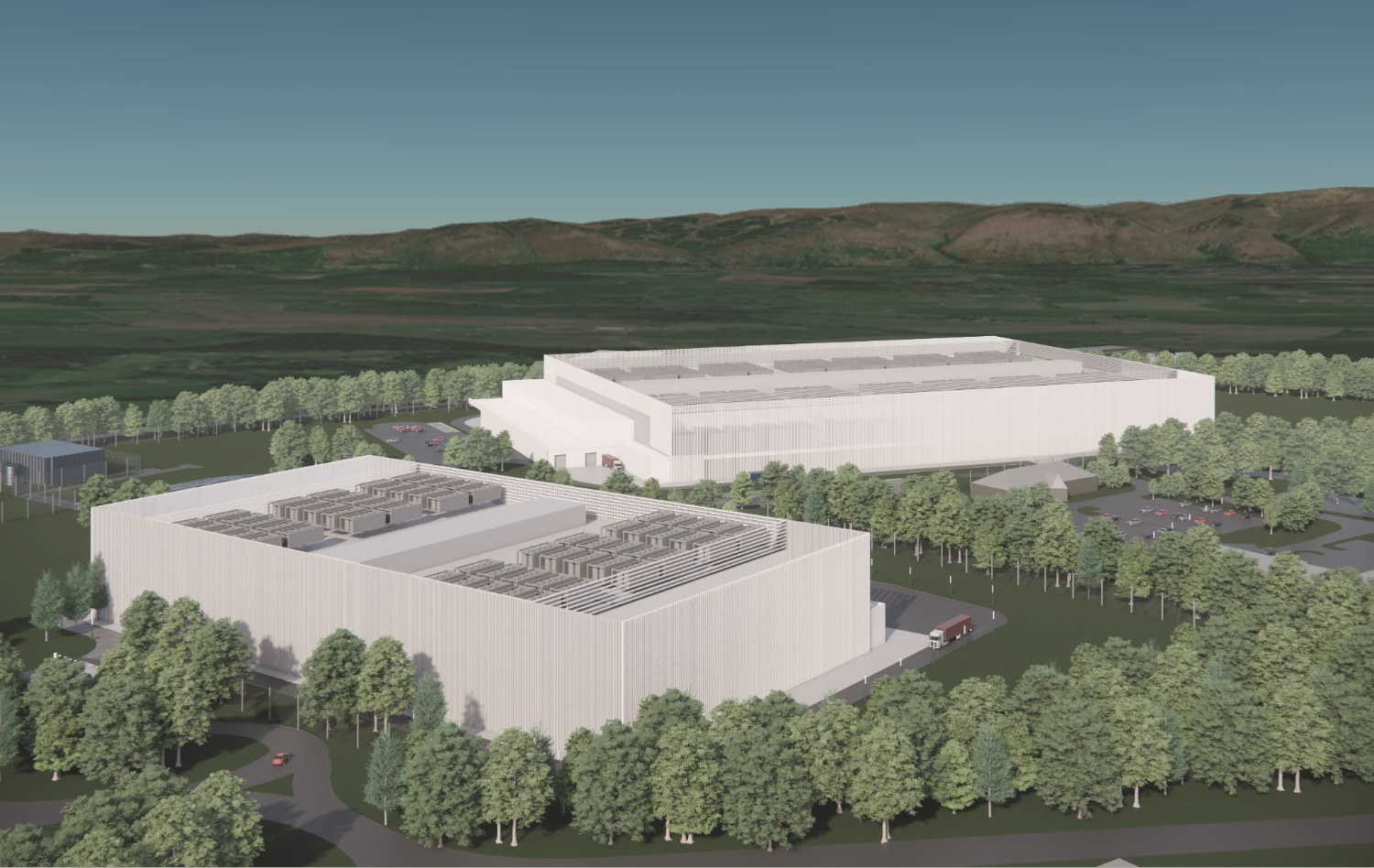
Apatura has submitted plans for a major data centre campus at Glenbervie Business Park near Larbert, setting out a project that could create more than 5,000 construction jobs if approved.
The proposed Larbert Data Centre Campus would be developed on a 55-acre site owned by Scottish Enterprise. The application has been received by Falkirk Council and is expected to represent nearly £1 billion of inward investment.
Apatura has said the project has a confirmed grid connection and could achieve first power and initial operations in 2028. The site is also expected to connect with the company’s consented battery energy storage system around two miles north of the proposed campus.
The company is bringing forward the scheme within the Scottish Government’s planning policy context for green data centres, which recognises such projects as essential infrastructure of national importance. Alongside the temporary construction workforce, the development is expected to support more than 1,300 long-term skilled operational roles.
Data centres have become one of construction’s most technically demanding growth markets. Large campuses combine building delivery with grid infrastructure, cooling, resilient power architecture, security, fire protection, civil engineering, and commissioning work that must perform under high operational loads from day one.
At Larbert, the building programme would sit close to wider energy infrastructure planning. A confirmed grid connection gives the proposal a stronger delivery base than speculative schemes still waiting for capacity, while the expected link to battery storage points to the increasing overlap between digital infrastructure and power infrastructure.
That overlap is reshaping early-stage construction planning. Data centre development needs land, grid access, planning consent, water and cooling strategies, utility corridors, and supply chain capacity before the main works can move at scale. The delivery sequence then has to coordinate civil works, building fabric, MEP systems, power resilience, and commissioning within programmes where delay to one package can affect the entire campus.
Scotland is seeking to attract more digital infrastructure investment around renewable generation, industrial land, and grid development. Major schemes are now being assessed not only by compute capacity or floor area, but by their treatment of electricity demand, heat reuse, water use, local employment, and community benefit.
The construction workload created by data centres can be substantial, although it is also highly specialised. Projects require groundworks, structural frames, envelope systems, substation interfaces, mechanical plant, electrical distribution, backup generation, cooling equipment, fire systems, controls, security, and high-quality commissioning records. The labour and subcontractor base overlaps with energy, defence, healthcare, and advanced manufacturing work, which could make capacity planning one of the main constraints on delivery.
Industrial land is also being recast around data, storage, and power uses across the UK. Large former energy and industrial sites are increasingly being prepared for lower-carbon, technology-led development, with demolition, enabling works, utilities coordination, and remediation becoming essential early stages before new buildings can rise.
If approved, Larbert would add to that pipeline while giving Scotland another major test of its ability to convert digital infrastructure ambition into buildable capacity. The project’s success will rest on planning progress, grid execution, construction sequencing, and the ability to mobilise specialist delivery teams without losing control of cost, quality, or commissioning risk.