IN Brief:
- Armacell has published EPDs for its ArmaComfort acoustic insulation portfolio.
- The declarations were issued by ITB and published on EcoPlatform.
- The move gives specifiers verified lifecycle data for acoustic insulation used in building services applications.
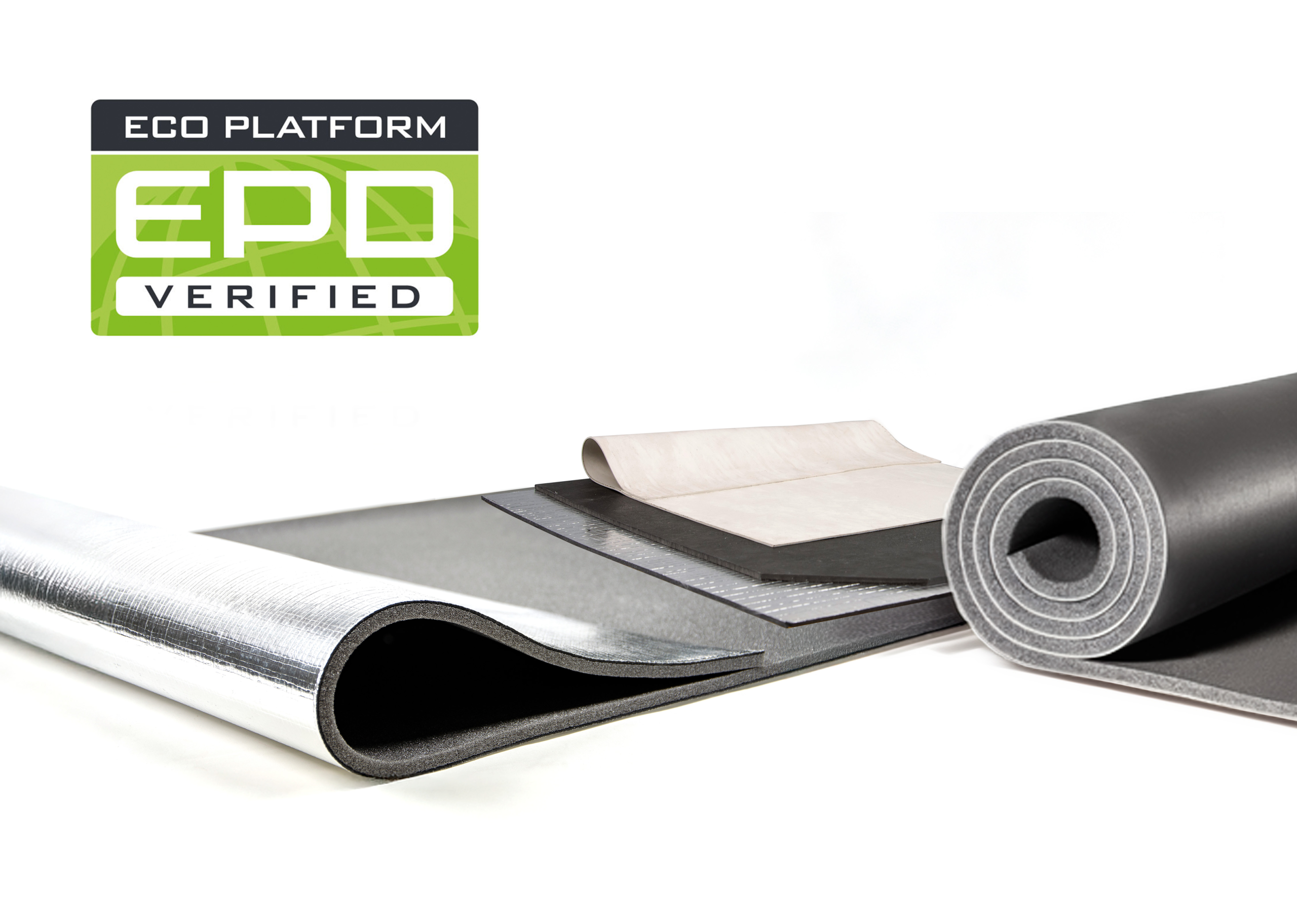
Armacell has published Environmental Product Declarations for its ArmaComfort acoustic insulation portfolio, expanding the verified sustainability data available to specifiers working on building services noise-control applications.
The EPDs were issued by the Instytut Techniki Budowlanej and published on EcoPlatform. They provide third-party verified information on the environmental performance of ArmaComfort products across their lifecycle, covering impacts from raw material extraction and manufacturing through use and end-of-life.
The declarations cover the ArmaComfort portfolio for noise control in building services, including the multilayer ArmaComfort AB range and ArmaComfort Barrier products. Armacell says the publication gives the company one of the most comprehensively EPD-covered acoustic foam insulation portfolios on the market.
EPDs are becoming more important in specification because sustainability claims are being pushed into auditable project evidence. Architects, engineers, cost consultants, sustainability assessors, and contractors are being asked to show how material choices affect embodied carbon, whole-life carbon, certification, procurement, and long-term asset performance.
For building services, the issue goes beyond thermal insulation. Acoustic control can be critical in residential, healthcare, education, hospitality, commercial, and mixed-use buildings, especially where plant rooms, risers, pipework, ducts, pumps, and drainage systems sit close to occupied space. Products that combine acoustic performance, fire safety, installation practicality, and verified environmental data are becoming more valuable in specification work.
The publication follows a wider push to make embodied-carbon decisions more visible across the built environment. The Future Homes Hub embodied carbon board has already shown how housing and construction stakeholders are trying to bring more structure to carbon measurement across materials, transport, and site activity.
Product-level documentation is part of the same shift. Designers and contractors increasingly need declarations that can be carried through digital planning, procurement, value engineering, and handover. Products without accessible, verified data may become harder to justify on projects targeting BREEAM, LEED, DGNB, or client-specific carbon requirements.
Using EPDs still requires care. Product comparisons depend on declared units, application scope, installation thickness, service life assumptions, end-of-life scenarios, and whether the product is being assessed on its own or as part of a wider system. Acoustic, thermal, fire, moisture, and installation performance also have to be considered together, particularly in complex service zones.
Even with those limits, verified declarations reduce uncertainty. They allow project teams to compare products using standardised lifecycle data rather than relying on broad sustainability claims. As digital specification and carbon tools become more embedded in design workflows, that data is likely to carry more weight at earlier project stages.
For Armacell, the new declarations strengthen the connection between technical insulation performance and sustainability evidence. For the wider materials market, they reinforce a direction already under way: construction products are now being judged not only on whether they perform, but on whether their performance can be evidenced clearly enough for design, procurement, installation, and handover.